Dan Electrician Daniel Markiewicz Dan Electrician Daniel Markiewicz

Protect Your Family: Identifying and Preventing Electrical Hazards in Your Liverpool Home

According to Home Office Fire Statistics, electrical distribution and appliances remain the leading cause of accidental house fires in the UK. At Dan Electrician, we believe "forewarned is forearmed." This guide breaks down the most common electrical hazards, how to spot them, and what you can do to ensure home safety.


We all love the character of a classic Liverpool terrace in Aigburth or the sturdy semis of Childwall. But behind those red bricks and freshly painted walls, a silent network of cables is working 24/7 to power our modern lives. While electricity is the heartbeat of the home, it can quickly become a hazard if ignored.

According to Home Office Fire Statistics, electrical distribution and appliances remain the leading cause of accidental house fires in the UK. At Dan Electrician, we believe "forewarned is forearmed." This guide breaks down the most common electrical hazards, how to spot them, and what you can do to ensure home safety.

Meet Your Expert: Dan Electrician

Dan , Lead Electrician at Dan Electrician, is a NICEIC Platinum Promise member and Part P Registered specialist with over 20 years of experience serving the Merseyside community.

"Our mission isn't just to fix wires; it’s to ensure every family in Liverpool sleeps soundly knowing their home is safe from preventable electrical risks."

1. The "Hidden" Hazard: Outdated Wiring

If your home hasn't been rewired in the last 25–30 years, it likely doesn't meet the current BS 7671 (18th Edition) safety standards. Old wiring struggles with the high-demand appliances of 2026, like EV chargers and heat pumps.

🚩 Red Flags to Watch For:

  • Flickering Lights: Especially when you turn on a high-power device like a vacuum.

  • Buzzing Sockets: Sounds like a bee is trapped in your wall? That’s an electrical arc.

  • The "Fishy" Smell: Burning plastic or a strange fishy odour is a sign of overheating insulation.

🏠 Liverpool Case Study: The Aigburth Victorian

Last month, we visited a stunning Victorian terrace near Sefton Park. The owner noticed a "click" whenever they used the microwave. We discovered original 1950s rubber-coated wiring that had become brittle and exposed. By installing a modern metal-clad consumer unit and partial rewire, we brought the home up to 2026 safety standards before a fire could start.

New consumer unit in place outdated fuse box

2. Overloaded Sockets & "Daisy-Chaining"

In our tech-heavy world, we often run out of wall sockets. However, plugging a multi-way lead into another extension lead (daisy-chaining) creates a massive fire risk.

💡 Safety Callout: The High-Wattage Rule

Never plug high-wattage appliances into an extension lead. These should go directly into a wall socket:

  • Washing Machines

  • Tumble Dryers

  • Electric Heaters

  • Kettles & Air Fryers

  • Dishwashers

3. Water & Electricity: A Deadly Mix

Kitchens and bathrooms are the highest-risk zones. In the UK, sockets must be at least 3 metres away from the edge of a bath or shower unless they are specifically designed for that environment (like shaver points).

  • RCD Protection: Ensure your fuse box has a working Residual Current Device (RCD). This life-saving switch cuts the power in milliseconds if it detects a leak (like water hitting a toaster).

🛠️ Interactive Safety Scorecard

How safe is your home? Tick the boxes that apply:

  • [ ] My consumer unit (fuse box) has a "Test" button that works.

  • [ ] None of my sockets feels warm to the touch.

  • [ ] I have no extension leads plugged into other extension leads.

  • [ ] All my light switches click firmly and don't flicker.

  • [ ] I have a valid EICR (Electrical Safety Certificate) from the last 10 years.

Result: If you missed more than two, it’s time for a professional check-up!


❓ Frequently Asked Questions (FAQs)

Q: Why does my circuit breaker keep tripping?

A: This is usually due to "circuit overload" (too many items on one wire) or a "ground fault" (where electricity is leaking). If it happens repeatedly, call a professional—don't just keep flipping it back on!

Q: Is it okay to use a cracked socket if it still works?

A:No. A cracked casing exposes live parts. Even a small crack can allow dust or moisture in, leading to a fire or shock. Replacement is quick and inexpensive.

Q: How often should I test my smoke alarms?

electrician Liverpool checking fire alarm date of made

A: Every single week. "Push the button every Monday" is a great habit to start.

What Our Customers Say

"Dan came out at short notice when our kitchen sockets stopped working. He explained everything clearly, found a dangerous loose connection behind the stove, and fixed it the same day. Highly recommend for any Liverpool homeowner!"Sarah J., Crosby

Final Takeaway: Don't Leave it to Chance

Your home’s electrical system is like your car—it needs regular maintenance to stay safe. By spotting these electrical hazards early, you aren't just saving money on repairs; you're protecting your family.

Ready for peace of mind?

Contact Dan Electrician today for a comprehensive home safety inspection. We’re local, we’re reliable, and we’re here to help Liverpool stay bright.

Book Your Safety Check Now | View Our Services

Read More
Dan Electrician Daniel Markiewicz Dan Electrician Daniel Markiewicz

Why Trust Matters: Real Stories from Your Local Liverpool Electrician

Finding a tradesman you can actually trust in Liverpool can feel like a game of Russian Roulette. We’ve all heard the horror stories: the "no-show" sparky, the hidden "extra" costs, or the messy wiring left behind. When it comes to your home’s electricity, "good enough" simply isn't safe enough.

So, how do you separate the experts from the amateurs? You look at the track record. At Dan Electrician, we don’t just claim to be the best; we let our work—and our customers—do the talking.

Finding a tradesman you can actually trust in Liverpool can feel like a game of Russian Roulette. We’ve all heard the horror stories: the "no-show" sparky, the hidden "extra" costs, or the messy wiring left behind. When it comes to your home’s electricity, "good enough" simply isn't safe enough.

So, how do you separate the experts from the amateurs? You look at the track record. At Dan Electrician, we don’t just claim to be the best; we let our work—and our customers—do the talking.

In this article, we’re sharing real-world success stories and Liverpool electrician reviews that showcase what happens when professional expertise meets local, friendly service.

⚡ The Emergency Save: "Powerless in Penny Lane"

The Problem: Sarah, a homeowner in South Liverpool, woke up to a complete power failure on a freezing Tuesday morning. With a young family and a home office to run, she needed more than just a repair; she needed it now.

The Experience:

"I called three 'emergency' electricians and got three voicemails. Dan answered on the second ring. He talked me through some safety steps over the phone before arriving within 45 minutes. He identified a faulty RCD in minutes and had the power back on before my first Zoom call of the day."Sarah J., Liverpool

The Lesson: When searching for customer testimonials, look for mentions of communication. A great electrician doesn't just fix wires; they fix the stress that comes with electrical faults.

🛠️ The Full House Rewire: Bringing a Victorian Beauty into 2026

The Problem: Mark and Elena recently bought a stunning Victorian terrace in Aigburth. The high ceilings were beautiful, but the 40-year-old rubber cabling behind the walls was a fire hazard waiting to happen.

The Experience:

"We were terrified of the mess a full rewire would cause. Dan and his team were incredibly respectful of our home. They used dust extraction tools, explained every step, and even helped us plan where to put extra sockets for our smart home setup. It’s rare to find a contractor who tidies up better than they found it!"Mark & Elena, Aigburth

🚗 The Green Revolution: EV Charger Installation in Crosby

The Problem: Local business owner Dave bought his first Tesla but was frustrated with the slow charging speeds from a standard wall plug. He needed a safe, high-speed Level 2 charging station installed in his driveway.

The Experience:

"Dan is clearly an expert in EV tech. He advised me on the best charger for my needs, handled the load gateway installation so I didn't blow my main fuse, and even helped me set up the app on my phone. Professional, fast, and very competitively priced."Dave H., Crosby

What Do the Best Liverpool Electrician Reviews Have in Common?

When you are browsing Google Maps or Checkatrade, don't just look at the star rating. Look for these three "Green Flags" in the comments:

  1. Transparency: Did the electrician provide a clear quote upfront?

  2. Certification: Do the reviews mention EICR certificates or Part P compliance?

  3. Cleanliness: This is the #1 complaint against tradespeople. If people are praising their tidiness, they are likely high-quality professionals.

Your Home Deserves 5-Star Treatment

Whether it’s a flickering light, a landlord safety certificate (EICR), or a complete electrical overhaul, your home is your biggest investment. Don't leave it to chance.

Summary

  • Search for specifics: Look for reviews that match the job you need (e.g., "EV charging" or "Consumer unit").

  • Prioritise communication: A good sparky stays in touch.

  • Value over price: The cheapest quote often leads to the most expensive repairs later.

Join the Success Stories

Are you ready to experience the 5-star service your neighbours are talking about? We’d love to add your story to our next blog post.

Click Here to Request Your Free, Transparent Quote Today

Have a question or a story to share? Drop a comment below—we respond to every single one!

Read More
Dan Electrician Daniel Markiewicz Dan Electrician Daniel Markiewicz

🕒 The "Five-Year Rule": How Old is Too Old?

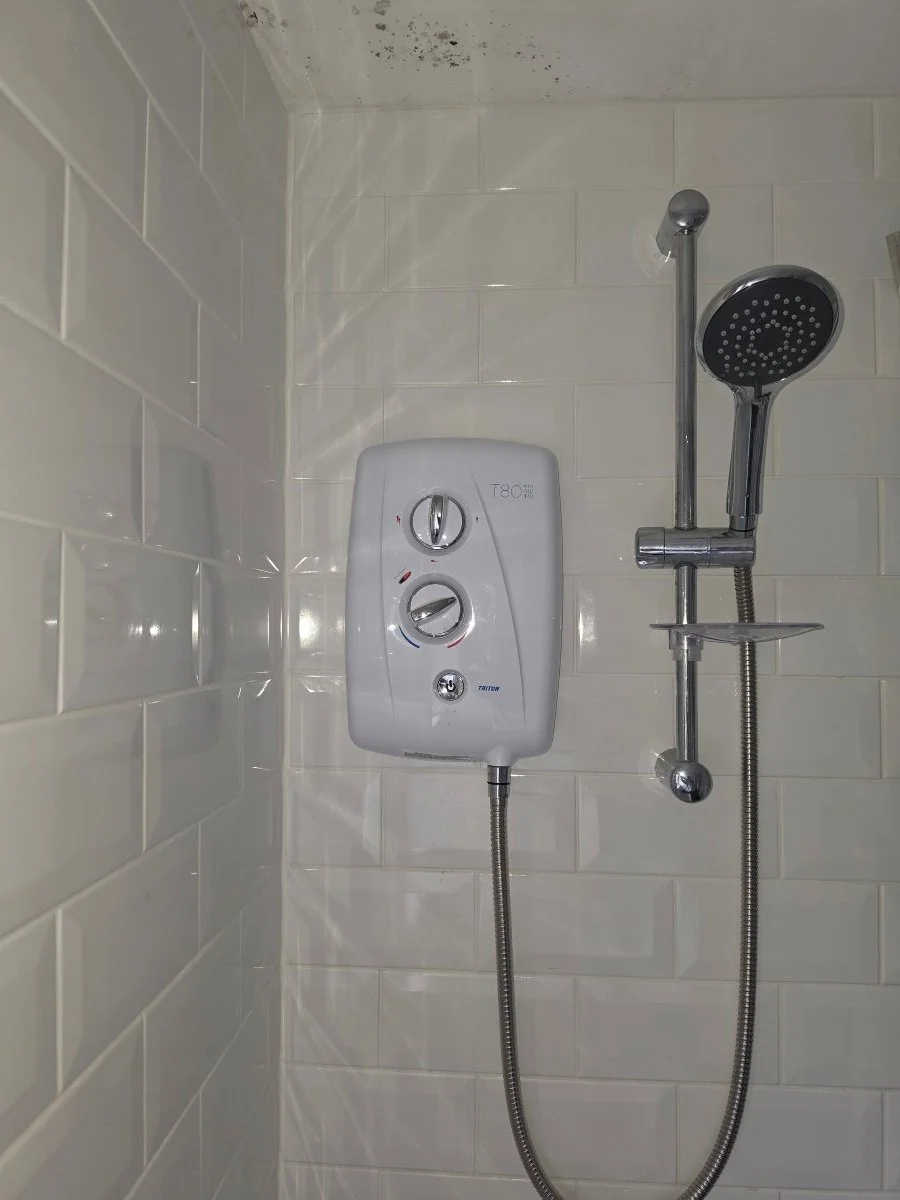
did you know your electric shower is the most powerful appliance in your home? It uses more juice than your oven and your kettle combined—all while you're standing in water. 🚿

Is your morning shower a refreshing start to the day or a potential safety hazard? It’s a question most of us never think to ask until something goes wrong.

At Dan Electrician, we see it all the time in homes across Liverpool: a flickering light, a faint smell of plastic, or a pull-cord that feels a bit "sticky." While an electric shower is one of the most convenient appliances in a modern home, it is also one of the most complex. It is the only place in your house where high-voltage electricity (up to 40 amps) meets high-pressure water in a confined, wet space.

So, is your electric shower safe? In this guide, we’ll break down the warning signs, the regulations you need to know in 2026, and how to ensure your family stays protected.

Most homeowners believe an electric shower should last decades. In reality, the internal heating elements and high-draw wiring are under constant thermal stress.

Expert consensus suggests that a well-maintained electric shower has a lifespan of about 5 to 10 years. If your unit is pushing a decade, it may no longer meet the current BS 7671 (18th Edition) wiring regulations.

Signs Your Shower is Failing:

  • Fluctuating Temperatures: If the water jumps from freezing to scalding, the internal thermostat or heating element is likely degraded.

  • The "Fishy" Smell: A faint smell of burning plastic or "fish" is a classic sign of arcing—where electricity jumps across a loose connection. Stop using it immediately.

  • Casing Discolouration: If the white plastic cover is turning yellow or brown near the controls, it’s a sign of internal overheating.

  • Frequent Tripping: If your consumer unit (fuse box) trips every time you hit the shower power button, there is a serious electrical fault.

🛡️ The Invisible Lifeline: RCD Protection

In 2026, electrical safety standards are stricter than ever. The most important safety feature for any electric shower is a Residual Current Device (RCD).

An RCD is a life-saving switch that monitors the flow of electricity. If it detects even a tiny "leak" of current—perhaps through a person touching a faulty unit—it shuts off the power in less than 40 milliseconds.

Important for Liverpool Landlords: As of May 2026, new national legislation requires all existing tenancies (including social housing) to have a valid Electrical Installation Condition Report (EICR). If your rental property’s shower isn’t RCD-protected, it will likely fail the safety check.

📐 Understanding "Bathroom Zones"

To keep you safe, the UK's IET Wiring Regulations divide your bathroom into "Zones." These determine exactly what type of electrical equipment can be installed and where.

  • Zone 0: Inside the shower tray or bath. Only low-voltage (12V) and IPX7-rated equipment is allowed here.

  • Zone 1: The area directly above the bath or shower up to 2.25m from the floor. This is where your shower unit sits. It must be at least IPX4 rated (splash-proof).

  • Zone 2: The area stretching 0.6m outside the perimeter of the bath/shower.

If your shower unit was installed by a "DIY enthusiast" who didn't respect these boundaries, you could be at risk of water ingress into the high-voltage components.

🛠️ 3 Actionable Tips to Keep Your Shower Safe

You don't need to be a qualified electrician to perform basic safety maintenance. Follow these three steps:

1. The Limescale Cleanse

In hard water areas (though Liverpool's water is relatively soft), limescale can block the shower head. This creates back-pressure that can trigger the Pressure Relief Device (PRD)—a safety valve inside the unit. A blocked head makes the heater work harder, leading to burnout. Soak your shower head in white vinegar once a month.

2. Test Your RCD

Go to your consumer unit and find the button marked "T" or "Test." Press it. The shower circuit should trip instantly. If it doesn't, your safety protection is faulty. (Note: Do this when no one is actually in the shower!)

3. Check the Pull-Cord

The ceiling pull-cord is an isolator switch. If the cord feels hot to the touch or if you hear a "crackling" sound when you pull it, the internal connections are loose. This is a common fire starter in Liverpool homes.

🛑 When to Call a Liverpool Electrician

Electric showers are not a DIY project. Because they involve both plumbing and high-load electrics, they fall under Part P of the Building Regulations.

You should call a professional if:

  • You are upgrading to a higher kilowatt (kW) shower (your existing cables may not be thick enough and could melt).

  • The unit is leaking from the bottom.

  • You see any sparks or smoke.

At Dan Electrician, we provide comprehensive safety audits for homeowners across Merseyside. We’ll check your cable thickness, your earthing, and your RCD response times to ensure your "refreshing start" stays safe.

Summary: Don't Gamble with Bathroom Safety

Your electric shower is a marvel of modern engineering, but it requires respect. By keeping an eye on the age of your unit, ensuring you have modern RCD protection, and keeping the shower head clear of debris, you can enjoy your morning routine with total peace of mind.

Is your shower acting up? Or are you unsure if your home meets the 2026 safety standards?

Contact Dan Electrician today for a Professional Safety Check

Read More
Dan Electrician Daniel Markiewicz Dan Electrician Daniel Markiewicz

Stop the Shock: Avoiding Costly Electrical Mistakes During Home Renovations

Dan Electrician on way for emergency. we serve Liverpool and Wirral area

One of the biggest electrical mistakes occurs before a single hammer is swung. Many homeowners assume their existing wiring can simply "handle" the extra load of a new induction hob or a power-hungry media wall.

Renovating your home is a thrilling journey of transformation. Whether you’re finally knocking through that wall to create an open-plan kitchen or turning a dusty loft into a sleek home office, the excitement is palpable. But beneath the fresh plaster and trendy Farrow & Ball paint lies the heartbeat of your home: the electrical system.

Sadly, for many homeowners in Liverpool and the Wirral, the "spark" of a renovation can quickly turn into a high-voltage nightmare. Electrical mistakes are among the most common, expensive, and—most importantly—dangerous errors made during property upgrades. From flickering lights to invalidated insurance and house fires, the stakes couldn't be higher.

In this guide, we’ll walk you through the most frequent renovation mistakes and, more importantly, how you can avoid them to ensure your dream home stays safe, compliant, and powered for the future.

1. The "Invisible" Error: Skipping the Pre-Renovation Audit

One of the biggest electrical mistakes occurs before a single hammer is swung. Many homeowners assume their existing wiring can simply "handle" the extra load of a new induction hob or a power-hungry media wall.

The Mistake: Jumping into demolition without an Electrical Installation Condition Report (EICR). If your wiring is over 25 years old, it may not have an earth wire in the lighting circuit or might still be using outdated rubber insulation that’s prone to crumbling.

How to Avoid It:

  • Book an EICR: Before the builders arrive, have a qualified expert like Dan Electrician perform a full safety check. This identifies "hidden" hazards like DIY "bodge jobs" from previous owners.

  • Assess Capacity: Your consumer unit (fuse box) is the brain of your home. Ensure it has enough "ways" (space) for new circuits. If it’s an old-style fuse box with rewirable wire, it likely needs upgrading to a modern RCD-protected unit.

2. The DIY Disaster: Ignoring Part P Regulations

We all love a bit of DIY, but when it comes to electricity, "having a go" can be a criminal offence. In the UK, electrical safety in dwellings is governed by Part P of the Building Regulations.

The Mistake: Carrying out "notifiable" work yourself. This includes installing a new circuit, replacing a consumer unit, or any work in "special locations" like bathrooms or saunas. Doing this yourself doesn't just risk your life; it makes your home legally "unsaleable" without proper certification.

How to Avoid It:

  • Hire an NICEIC-Approved Professional: A registered electrician can self-certify their work and notify Building Control on your behalf.

  • Keep Your Paperwork: Always demand an Electrical Installation Certificate (EIC) or a Minor Works Certificate upon completion. You will need these when you sell or remortgage your property.

Pro Tip: If a contractor tells you "you don't need a certificate for this," they are likely not registered. Walk away.

3. Underpowering Your Life: Poor Socket & Lighting Placement

There is nothing more frustrating than finishing a £20,000 kitchen renovation only to realise you’re using an extension lead to reach the toaster.

The Mistake: Placing sockets and switches based on where they used to be, rather than how you will actually use the room. This leads to "socket fatigue" and dangerous "daisy-chaining" of extension leads.

How to Avoid It:

  • The Rule of Threes: In high-use areas like kitchens and bedrooms, always plan for three more sockets than you think you need.

  • Think Ergonomically: Plan for USB-integrated sockets at bedside height and "hidden" sockets inside cupboards for hoovers or charging stations.

  • Layer Your Lighting: Don't just stick four spotlights in the middle of the room. Think about Ambient (general), Task (over the counter), and Accent (LED strips in alcoves) lighting.

4. The "Cheap Fix" Trap: Using Non-Certified Components

With the rise of cheap online marketplaces, it’s tempting to save £50 by buying designer-look switches or "bargain" LED downlights from unverified sellers.

The Mistake: Using components that don't meet BS 7671 (UK Wiring Regulations) standards. These items often lack proper heat dissipation or internal shielding, making them a significant fire risk.

How to Avoid It:

  • Buy Local & Certified: Only use reputable UK wholesalers or let your electrician supply the materials.

  • Check for the Mark: Look for the CE or UKCA marks, but remember that even these can be faked on low-quality imports. Trusting a professional’s supply chain is your safest bet.

5. Future-Proofing Fails: Forgetting Tomorrow’s Tech

A renovation is the only time you’ll have the floorboards up and walls chased out. If you don't plan for the next five years now, you’ll pay double to add it later.

EV installation Wirral

The Mistake: Only wiring for today’s needs.

How to Avoid It:

  • EV Readiness: Even if you don't have an electric car yet, have your electrician run the heavy-duty cabling for an EV Charger while the driveway or garden is being dug up.

  • Hardwired Data: Wi-Fi is great, but for a home office or gaming room, nothing beats a hardwired Cat6 ethernet cable.

  • Smart Home Hubs: Ensure there is a neutral wire at your light switches—many smart switches require one to function.

    Conclusion: Don't Let Your Dream Home Become a Hazard

    Home renovations are about improving your quality of life, but that foundation must be built on safety. Avoiding these common electrical mistakes isn't just about following rules—it’s about protecting your family and your biggest financial asset.

    At Dan Electrician, we’ve helped hundreds of Liverpool and Wirral homeowners navigate complex renovations with ease. From initial safety audits to final certifications, we ensure your project is "bright" for all the right reasons.

    Ready to start your renovation the right way?

  • Click here to book your Pre-Renovation Electrical Audit with Dan Electrician today!

Read More
Dan Electrician Daniel Markiewicz Dan Electrician Daniel Markiewicz

Kitchen Renovations Electrical Plan Before You Buy Your New Appliances

In the excitement of choosing finishes and faucets, the kitchen electrical wiring is often an afterthought. However, failing to plan your electrics before you buy your appliances can lead to costly delays, ruined cabinetry, and even legal headaches.

In this guide, we’ll explain why an electrical plan is the foundation of any successful kitchen renovation and why "Notifiable Work" means you need a professional NICEIC electrician in Liverpool rather than a general handyman.

Imagine this: You’ve just spent weeks scrolling through Pinterest, you’ve finally picked out that sleek induction hob and double-integrated oven, and your dream kitchen cabinets are on order. But when the delivery truck arrives, your electrician delivers some bad news—your current wiring can’t handle the load, and the layout doesn't meet safety regulations.

In the excitement of choosing finishes and faucets, the kitchen electrical wiring is often an afterthought. However, failing to plan your electrics before you buy your appliances can lead to costly delays, ruined cabinetry, and even legal headaches.

In this guide, we’ll explain why an electrical plan is the foundation of any successful kitchen renovation and why "Notifiable Work" means you need a professional NICEIC electrician in Liverpool rather than a general handyman.

1. The "Power Gap": Why Modern Appliances Demand More

Twenty years ago, a kitchen might have had a fridge, a basic oven, and a toaster. Today, we have boiling water taps, wine coolers, air fryers, and high-performance induction hobs.

Many homeowners make the mistake of assuming a new appliance can simply "plug in" where the old one was. Here is why that is rarely the case:

  • Induction Hobs: These require a dedicated high-power circuit. If you’re switching from gas to electric, you likely don't have the heavy-duty cabling required.

  • Integrated Appliances: The position of your sockets matters. If a socket is directly behind a dishwasher, the unit won't sit flush against the wall.

  • Circuit Overload: Adding extra sockets for the kitchen to accommodate coffee machines and blenders can overload older "ring mains," leading to tripped breakers or, in worst cases, fire hazards.

2. Understanding "Notifiable Work" and Building Regs

One of the biggest misconceptions in home DIY is that anyone can "run a few wires." In the UK, kitchen electrics fall under Part P of the Building Regulations.

Because kitchens are considered "special locations" (due to the proximity of water and electricity), most electrical work here is Notifiable.

What counts as Notifiable Work?

  • Installing a new circuit (e.g., for a new electric range).

  • Replacing a consumer unit (fuse box).

  • Alterations to existing circuits in "high-risk" areas.

Why does this matter? When you sell your home, the buyer’s solicitor will ask for a Building Regulations Compliance Certificate. If you had a handyman "do a bit of wiring" without a certificate, you may have to pay for a full rewire or an indemnity policy to close the sale.

Expert Tip: Hiring an NICEIC electrician in Liverpool ensures that your work is self-certified. We handle the paperwork and notify the local authority for you, giving you peace of mind and a valid certificate for your records.

3. The Anatomy of a Kitchen Electrical Plan

Before you click "buy" on that appliance package, sit down with your kitchen designer or electrician to map out the following:

The "Zone" Strategy

Regulations dictate exactly where sockets can be placed in relation to sinks (usually at least 300mm away horizontally) and cookers. A professional plan ensures you have enough extra sockets for your kitchen islands and worktops without violating safety codes.

Dedicated Circuits

High-draw appliances shouldn't share a circuit. Your plan should specify dedicated lines for:

  1. The Oven/Hob

  2. The Dishwasher/Washing Machine

  3. The Fridge-Freezer (to prevent food spoilage if a different appliance trips the circuit)

Lighting Layers

Don't just settle for a single central light. Consider:

  • Task Lighting: LED strips under cabinets to see what you’re chopping.

  • Ambient Lighting: Dimmable ceiling spots.

  • Feature Lighting: Pendant lights over a breakfast bar.

    4. Common Mistakes to Avoid

  • Mistake;

  • Buying appliances first, they may not fit your power capacity. Get an electrical survey before purchasing.

  • Hiring a "multi-trade" handyman with no Part P certification for the work. Always use a registered NICEIC electrician

  • 5. Why Local Expertise Matters (Liverpool Focus)

    If you live in a classic Liverpool terrace or a Victorian villa in Sefton Park, your home’s original wiring was never designed for the 21st century. These properties often require a "consumer unit upgrade" before a modern kitchen can be safely installed.

    As a local NICEIC electrician in Liverpool, Dan Electrician understands the specific challenges of the region's housing stock. We don't just "fix wires"; we ensure your home improvement project adds real value and meets every safety standard.

    Conclusion: Plan First, Shop Second

    A beautiful kitchen is useless if it isn't functional—or worse, if it's unsafe. By creating a comprehensive electrical plan before buying your appliances, you save money, avoid project delays, and ensure your home remains compliant with UK law.

    Don't leave your dream kitchen to chance. Ensure your kitchen electrical wiring is handled by the experts.

    Ready to start your kitchen transformation the right way? Contact Dan Electrician today for a consultation on your kitchen wiring and ensure your project is fully certified and safe.

Read More
Dan Markiewicz Dan Markiewicz

5 Signs Your Liverpool Home Needs an Urgent Consumer Unit Upgrade

  • According to 2024 Home Office data, there were over 38,000 building fires in England, with faulty electrics and overloaded circuits remaining a top cause of domestic incidents.

  • According to Merseyside Fire & Rescue, 2 out of 10 fatalities result from accidental electrical fault fires.

    A consumer unit upgrade in Liverpool isn't just about convenience; it’s about meeting the life-saving BS 7671:2018 (18th Edition) wiring regulations.

1. Introduction: The Silent Risk in Merseyside’s Heritage Homes

  • The Problem: Many of Liverpool’s beautiful Victorian and 1930s semi-detached homes (common in areas like Aigburth and Crosby) are still powered by "fuse boxes" designed for an era before air fryers, EVs, and heat pumps.

  • The Shocking Stat: According to 2024 Home Office data, there were over 38,000 building fires in England, with faulty electrics and overloaded circuits remaining a top cause of domestic incidents.

  • According to Merseyside Fire & Rescue, 2 out of 10 fatalities result from accidental electrical fault fires.

    A consumer unit upgrade in Liverpool isn't just about convenience; it’s about meeting the life-saving BS 7671:2018 (18th Edition) wiring regulations.


2. Sign #1: You Still Have Rewirable Fuses (The "Fuse Wire" Era)

  • Technical Standard: Old-style "cast iron" or plastic boards with ceramic pull-out fuses are now considered obsolete. They lack the precision of modern Miniature Circuit Breakers (MCBs).


  • The Risk: If you’ve ever had to "rewire" a fuse with a thin piece of wire, you are at risk. Incorrect wire thickness can lead to cables overheating behind your walls before the fuse ever blows.

  • Expert Insight: "A modern consumer unit acts like a high-speed computer for your home's safety—detecting faults in milliseconds that an old fuse wire would ignore for minutes." — Dan, Lead Electrician.


3. Sign #2: Absence of RCD Protection (The Modern Life-Saver)

  • What is an RCD? A Residual Current Device monitors the "leakage" of electricity. If it detects current flowing through a person instead of a wire, it shuts off the power instantly.


  • The Statistics: RCD protection benefits are undeniable; they are estimated to prevent over 90% of fatal electric shocks in the home.

  • Current Regulation: Under the 18th Edition Amendment 2, almost all domestic circuits now require RCD or RCBO protection to be legally compliant.

4. Sign #3: Your Board is Made of Plastic

  • Official Standard Reference: Since January 2016, Amendment 3 of the 17th Edition (and carried into the 18th) requires all new consumer units in domestic dwellings to be made of non-combustible material (usually steel).


  • The Liverpool Context: If your board is in a high-traffic area, such as a hallway or under a wooden staircase (common in terraced houses), a plastic board is a "C3" or "C2" recommendation on an inspection because it cannot contain a fire.

5. Sign #4: Planning for the Future (EVs and Solar)

  • The Innovative Solution: Modern boards now include Surge Protection Devices (SPDs) to protect your expensive electronics from external power surges and Arc Fault Detection Devices (AFDDs), which prevent fires caused by loose "sparking" connections.


  • Local Case Study: “We recently upgraded a 1950s home in Bircenhead, where the owner wanted a Tesla Wallbox. The original board had no room and no RCD. We installed a 12-way metal RCBO board with SPD, ensuring the home was future-proofed for the next 25 years.”

6. Homeowner’s 60-Second Self-Assessment Checklist

Use this to check if you need a professional safety audit:

  • [ ] Is the box made of wood or plastic? (Old standard)

  • [ ] Do you see "buttons" labelled 'T' or 'Test'? (If no, you likely lack RCD protection)

  • [ ] Are there any scorch marks or a "fishy" smell? (Sign of arcing)

  • [ ] Does the box buzz or hum under load? (Loose connection risk)

  • [ ] Is there an "18th Edition Compliant" sticker? (If not, it’s likely outdated)

Term Meaning

Consumer Unit: The modern version of a fuse box; the "brain" of your home's electrics.

RCD Residual Current Device: A safety switch that prevents fatal shocks.

RCBO: A device that combines a circuit breaker and an RCD for individual circuits

The Gold Standard. BS 7671The UK national standard for electrical installations.

EICR Electrical Installation Condition Report—a formal "MOT" for your home's wiring.

8. Frequently Asked Questions

  • How much does a consumer unit upgrade cost in the UK (2025)? Typically, prices range from £450 to £850, depending on the number of circuits and if Surge Protection is included.


  • How long does it take? A standard swap takes 4–6 hours, including the mandatory full-system testing.

  • Do I get a certificate? Yes. You must receive an Electrical Installation Certificate (EIC) and a Part P Building Regulations notification.


9. Conclusion: Trust the NICEIC Platinum Promise

Upgrading your board is the most effective way to protect your family from the two biggest electrical risks: fire and shock. At Danelectrician.uk, all our work is backed by NICEIC accreditation and the Platinum Promise, ensuring your Liverpool home meets the highest national standards.

Read More
Dan Electrician Daniel Markiewicz Dan Electrician Daniel Markiewicz

The "Death Trap" Install: Why I Refused to Connect a Tesla Charger

The client was right—a builder had been there. But what he left behind wasn't a "ready-to-go" supply. It was a fire hazard and a potential electrocution risk rolled into one.

I had to refuse the job immediately. Here is exactly why this installation (pictured below) is illegal, dangerous, and why you should never let a general builder touch your electrics.

Category: Electrical Safety, EV Charging, Real Life Horror Stories Reading Time: 5 Minutes

Yesterday, a client called me for what should have been a routine job. He wanted a Tesla Wall Connector installed. He told me, "The builder has already done the heavy lifting; the supply is there, ready for you to hook up."

I arrived, walked to the meter cupboard, and felt a pit in my stomach.

The client was right—a builder had been there. But what he left behind wasn't a "ready-to-go" supply. It was a fire hazard and a potential electrocution risk rolled into one.

I had to refuse the job immediately. Here is exactly why this installation (pictured below) is illegal, dangerous, and why you should never let a general builder touch your electrics.


1. The Silent Killer: No Incoming Earth

The most terrifying thing about this installation isn't what you can see—it's what is missing.

There is absolutely no incoming Earth wire connected.

The "Earth" is your primary safety net. If a fault occurs—say, a live wire touches a metal casing—the electricity flows down the earth wire and trips the fuse. Without an earth, the casing becomes live. If you touch it, you become the earth path. Verdict: Immediate danger of death.

2. The "Meltdown" Wire (Undersized Cabling)

The builder installed a single 2.5mm wire from the isolator to feed this new board. Here is the math: A Tesla charger typically draws 32 Amps continuously for hours. A 2.5mm cable is generally rated for around 20-27 Amps max. If I had plugged a car into this, that wire would have overheated, melted its insulation, and likely started a fire within the first hour of charging.

3. Illegal Interference with the Meter

This is a serious legal issue. The builder broke the official seals on the electricity meter. He then supplied his own 100A fuse to install "tails" (the thick cables).

  • The Problem: These tails are far too long and are completely unsupported. They are literally hanging from the meter, putting massive physical strain on the terminals.

  • The Law: Only the Distribution Network Operator (DNO) or an authorised meter operator is allowed to touch these seals. This is illegal interference with the supplier's equipment.

4. Exposed Live Copper

If you look closely at the meter tails, you can see visible copper sticking out where they enter the terminals. The insulation has been stripped back too far. In a cupboard where homeowners reach blindly to read a meter or store a vacuum cleaner, exposed live copper at 230V is unforgivable.

5. Zero Cable Protection (The "Razor" Edge)

Cables are entering the consumer unit (fuse box) through jagged holes with no glands, grommets, or protection. Vibration or movement will cause the sharp edges of the box to slice through the cable insulation, causing a short circuit and potentially electrifying the metal box itself.

6. The Missing Tests

Finally, the client confirmed that no testing was done.

  • No Earth Loop Impedance Test: We don't know if the fuse will trip fast enough in a fault.

  • No Insulation Resistance Test: We don't know if the cables are damaged inside.

In the electrical world, if you haven't tested it, you haven't installed it. You've just guessed.

The Outcome

I explained to the client that this wasn't just "unsuitable for a Tesla"—it was unsafe for anything.

To fix this, we need to:

  1. Contact the DNO immediately to fix the earthing and reseal the meter.

  2. Rip out the undersized 2.5mm cabling.

  3. Install a proper, fire-rated metal consumer unit with glanded cable entries.

  4. Run correctly sized (6mm or 10mm) cabling supported by cleats.

  5. Test and certify every single connection.

The Lesson: A builder might be great at laying bricks, but when it comes to high-power EV electrics, you need a specialist. Don't risk your home or your life on a "favour" from a builder.

Worried about recent electrical work in your home? If your fuse board looks anything like this, or if you have no certificate for the work, contact Dan Electrician immediately for a safety audit.

Read More
Dan Electrician Daniel Markiewicz Dan Electrician Daniel Markiewicz

Outside Electrical Installation in Winter

Winter is arguably the time when we need reliable outdoor electricity the most. The days are shorter, calling for security lighting to guide us to the front door. The festive season demands holiday lighting displays. Perhaps you've even bought an Electric Vehicle (EV) and need a charging point installed to keep moving through the cold months.

Can you install outdoor electrics in the rain? Discover the essential safety rules, IP rating guides, and winter installation tips to keep your home powered and safe this season.

Introduction: When Water Meets Watts

Winter is arguably the time when we need reliable outdoor electricity the most. The days are shorter, calling for security lighting to guide us to the front door. The festive season demands holiday lighting displays. Perhaps you've even bought an Electric Vehicle (EV) and need a charging point installed to keep moving through the cold months.

However, glancing out the window at the driving rain or frozen ground often leads homeowners to ask a critical question: "Is it safe to perform outside electrical installations in rainy or winter conditions?"

We all know the golden rule of physics: water and electricity do not mix. But does that mean all work must cease until spring? Not necessarily. While DIY attempts in wet weather are a recipe for disaster, professional electrical installation during winter is entirely possible—provided strict protocols, correct equipment, and safety standards are met.

In this guide, the Dan Electrician team breaks down everything you need to know about weather-proofing your power, understanding the "waterproof" ratings, and why winter might actually be the perfect time to upgrade your exterior electrics.

Can You Install Electrics in the Rain? The Safety Reality

The short answer is: It depends on the severity of the weather and the method of installation.

While we never work on live circuits exposed to direct rainfall, professional electricians use specific techniques to ensure work can continue safely during the damp winter months.

1. The Dangers of Moisture

The primary risk isn't just getting shocked (though that is a major one). Moisture trapped inside a component during installation can cause:

  • Corrosion: Rusting contacts leading to resistance and fire hazards later.

  • Short Circuits: Immediate tripping of your RCD (Residual Current Device).

  • Long-term Failure: Water ingress that expands when frozen, leading to cracked casings.

2. How Professionals Manage the Risk

When you hire Dan Electrician for a winter install, we don't just "hope for the best." We utilise:

  • Temporary Shelters: Pop-up gazebos or tarpaulins to keep the specific working area bone dry.

  • Isolation: We isolate the supply at the consumer unit (fuse box) indoors, ensuring no power flows to the outside until the unit is completely sealed and watertight.

  • Cable Preparation: We use cables specifically designed to resist temperature fluctuations and moisture (like SWA - Steel Wire Armoured cable).

Pro Tip: Never attempt to repair an outdoor extension lead or fix a garden light while it is raining. Even if the power is off, moisture can get into the wires and cause a blow-out the moment you switch it back on.


The Science of "Waterproof": Understanding IP Ratings

If there is one thing you take away from this article, let it be an understanding of IP Ratings. You will see these numbers on every piece of outdoor electrical equipment, from sockets to floodlights.

IP stands for Ingress Protection. It consists of two numbers (e.g., IP65).

  • The First Digit (Solids): Protection against dust and dirt (Scale 0-6).

  • The Second Digit (Liquids): Protection against water (Scale 0-9).

The Winter Standard

For any outside electrical installation in the UK or regions with wet winters, you generally need equipment that meets the following:

  • IP44 (Splash Proof): Okay for sheltered areas (like under a porch). It can handle water spraying from any direction, but it isn't meant for heavy jets or submersion.

  • IP65 (Jet Proof): The gold standard for garden lighting and exposed sockets. It can withstand low-pressure water jets (heavy rain) from any angle.

  • IP67/IP68 (Immersion): Required for anything installed in the ground (like decking lights) or ponds, where the unit might be temporarily or permanently submerged in water or snowmelt.

The Dan Electrician Rule: We rarely install anything below IP65 for exposed garden work to ensure longevity against driving winter rain.

Specific Winter Installation Challenges (And Solutions)

Installing electrics in July is easy. Installing them in December presents unique environmental hurdles.

1. The Frozen Ground Issue

If you are looking to run power to a garden office or shed, we need to bury cables. Regulations (such as BS 7671 in the UK) require cables to be buried at a sufficient depth (usually 600mm) to prevent accidental damage.

  • The Challenge: Digging trenches in frozen or waterlogged soil is difficult and messy.

  • The Solution: We use Steel Wire Armoured (SWA) cables, which offer high mechanical protection. If the ground is too frozen to dig, we may recommend containment systems (conduit) along walls or fences as a temporary or permanent alternative.


2. Brittle Cables

Standard PVC insulation can become stiff and brittle in freezing temperatures. Bending a cold cable can cause the insulation to crack, exposing the live copper inside.

  • The Solution: Professionals store cables in a warm environment (the van or indoors) until the moment of installation and handle them with care to prevent microscopic cracks.

3. Daylight Hours

With the sun setting as early as 4:00 PM, complex installations often run into the dark.

  • The Solution: We bring our own battery-operated site lighting. However, for homeowners, this means you should book your electrician early in the season or expect the work to potentially span across two days.

    Top 3 Winter Electrical Upgrades

    Despite the weather, winter is actually a popular time for specific upgrades. Here is what is trending at Dan Electrician:

    1. Outdoor Security Lighting

    Dark evenings increase the risk of burglary.

    • Recommendation: Motion-sensor LED floodlights. They are energy-efficient and activate instantly when movement is detected.

    • Installation Note: These must be angled correctly to avoid "light pollution" into neighbours' windows while covering your blind spots.

    2. Weatherproof Outdoor Sockets

    Essential for holiday lights, pressure washers, and car vacuums.

    • Recommendation: A lockable, IP66-rated double socket with an RCD (safety trip switch) built in. (If your consumer unit operates an RCD or RCBO, don’t install additional RCD)

    • Why: This adds an extra layer of safety. If water gets into your Christmas lights, the socket cuts the power locally rather than tripping the main power to your house and turning off your freezer!

      3. EV Charging Points

      EV batteries struggle in the cold, often requiring longer charging times.

      • Recommendation: A dedicated 7kW home charger.

      • Winter Benefit: Smart chargers allow you to "pre-condition" your car while it's plugged in, warming the battery and the cabin using mains electricity so you don't lose range driving off in a cold car.

      Maintenance: Winterising Your Existing Electrics

      If you aren't planning a new installation, you still need to protect what you have.

      • Inspect Seals: Check the rubber gaskets on existing outdoor lights. Over the summer, UV rays can dry them out. If they look cracked, water will get in this winter.

      • Clear Debris: Ensure leaves aren't piling up around ground-level lights or outdoor transformers. Wet leaves create a soggy "blanket" that can cause overheating or water ingress.

      • Test your RCD: Press the "Test" button on your fuse box or outdoor socket. It should snap off instantly. If it sticks or delays, call a professional immediately.

      Why Choose Dan Electrician?

      Electricity is dangerous. Electricity in the rain is lethal.

      While you might be tempted to run an extension cord through a window for your holiday lights, this compresses the cord, creates a fire hazard, and leaves a gap for freezing drafts.

      At Dan Electrician, we provide:

      1. Certified Safety: All work complies with the latest Wiring Regulations.

      2. Weather-Ready Gear: We come equipped for the mud, rain, and cold, so you don't have to worry.

      3. Peace of Mind: We provide certification for all outdoor works—vital for your home insurance validity.

      Summary: Stay Safe, Stay Powered

      Don't let the weather dictate your comfort or safety. Outside electrical installation in rainy and winter conditions is not only possible but, when done correctly, ensures your home remains secure and functional through the darkest months.

      From understanding IP65 ratings to choosing the right armoured cabling, the secret lies in professional preparation and respect for the elements.

      Key Takeaways:

      • Avoid DIY electrical work in wet conditions.

      • Ensure all outdoor equipment is rated at least IP44 (sheltered) or IP65 (exposed).

      • Install RCD protection for all outdoor circuitsReady to weather-proof your home?


      If you need outdoor sockets for your festive display or security lighting for those dark driveways, Dan Electrician is ready to help.

      Contact Us Today for a free, no-obligation quote and let's get your outdoor space powered up safely.

Read More
Dan Markiewicz Dan Markiewicz

Answering Your Common Questions About Consumer Unit Replacement

When was the last time you thought about the metal box on your wall that controls all the electricity in your home? For most, it’s a case of "out of sight, out of mind" – until a strange flickering light or a tripping breaker forces you to confront it. That box is your consumer unit (often called a fuse box or distribution board), and it is, quite literally, the heartbeat of your home's electrical system.

Expert answers to common questions about consumer unit replacement. Learn why your fuse box needs an upgrade, the cost, the process, and essential electrical safety tips from Dan Electrician, a trusted Liverpool electrician.


Introduction: The Heartbeat of Your Home's Electricity

When was the last time you thought about the metal box on your wall that controls all the electricity in your home? For most, it’s a case of "out of sight, out of mind" – until a strange flickering light or a tripping breaker forces you to confront it. That box is your consumer unit (often called a fuse box or distribution board), and it is, quite literally, the heartbeat of your home's electrical system.

If you're a homeowner in Liverpool or the surrounding areas, chances are you've heard the phrase "consumer unit replacement" and perhaps have a few nagging electrical questions about what it entails, why it’s necessary, and how much it costs.

At Dan Electrician, we specialise in providing safe, reliable, and compliant electrical upgrades. We understand that diving into home electrics can be intimidating. That’s why we’ve compiled this detailed electrician FAQ to demystify the process, address your most pressing electrical questions, and ensure your home's safety is up to modern standards.

❓ What Exactly Is a Consumer Unit, and Why Might It Need Replacing?

A consumer unit is the main control panel for the electrical wiring in a building. It takes the main electricity supply and divides it into separate circuits, each protected by a fuse, circuit breaker, or RCD (Residual Current Device).

The Replacement Necessity: Old vs. New

Older Units (Fuse Boxes): If your home still has an old-style fuse box with rewirable fuses, it’s a major indicator that you need a consumer unit replacement. These older units offer very basic protection and are non-compliant with current electrical safety standards (BS 7671).

The Main Reason for a Replacement: Safety.

  • RCD Protection: Modern consumer units are fitted with RCDs and RCBOs (Residual Current Breaker with Overcurrent protection). These devices can detect a minor earth leak (often caused by touching a live wire or a fault in an appliance) and trip the power in milliseconds, preventing severe electric shock and saving lives.

  • Fire Safety: Since 2016, all new or replacement consumer units must have an enclosure made of non-combustible material (e.g., metal) to contain any fire that may start inside the unit due to a fault. This dramatically reduces the risk of the fire spreading.

  • Capacity: Older units may not be able to handle the load of modern appliances (induction hobs, EV chargers, power showers), leading to nuisance tripping or overheating.

🛠️ The Replacement Process: What to Expect

The thought of an electrician messing with your home's main power supply can be daunting. Here is a step-by-step breakdown of the typical consumer unit replacement process, giving you confidence in the work being done by your Liverpool electrician.

1. Initial Assessment and Quotation

Your Dan Electrician will first perform a visual inspection of your existing unit and some circuit testing. We'll ask about your electrical usage (e.g., do you plan on installing an electric shower or an EV charger?) to ensure the new unit is future-proofed. This allows us to provide an accurate, fixed-price quote with no hidden costs.

2. Isolation and Removal

On the day of the work, the power supply will be completely isolated and locked off at the meter. The old unit is safely disconnected and removed.

3. Installation of the New Consumer Unit

The new modern consumer unit (usually a metal unit for compliance) is mounted, and the existing wiring for each circuit is tidied up, terminated, and clearly labelled on the new breakers.

4. Testing and Commissioning

This is the most crucial step. A qualified electrician must perform a rigorous set of tests to ensure every circuit is safe and functioning correctly according to BS 7671 regulations. This includes:

  • Continuity of Protective Conductors: Checking the earthing connections.

  • Insulation Resistance: Ensuring the wiring insulation is not damaged.

  • Polarity: Checking that wires are connected correctly.

  • RCD Trip Time: Crucially, ensuring the RCDs trip fast enough to protect against electric shock.

5. Certification and Paperwork

Once testing is complete, the circuit breakers are switched on, and power is restored. Your Dan Electrician will issue you with an Electrical Installation Certificate (EIC), which is essential for home insurance and when selling your property. We will also notify your local authority (e.g., Liverpool City Council) under Part P of the Building Regulations.

💰 Cost and Disruption: Practical Electrical Questions

Q: How much does a consumer unit replacement cost?

A: The cost of a consumer unit replacement can vary widely based on several factors, including:

  • Size: The number of circuits (e.g., a 10-way vs. a 16-way board).

  • Type of Property: The complexity of the existing wiring (e.g., an old terraced house in Liverpool might be more complex than a new build).

  • Incoming Supply: Whether any earthing or bonding upgrades are needed to meet current standards.

Actionable Tip: Always get a detailed, fixed quote from a reputable NICEIC-approved electrician like Dan Electrician. Do not choose a provider based on price alone; safety and compliance are paramount.

Q: How long will the power be off during the replacement?

A: For a standard replacement in a typical domestic setting, the power is usually off for 4 to 8 hours. We aim to have the job completed within a single working day. We will always communicate the exact timeframe to minimize disruption.

Q: Do I need to redecorate after the unit is replaced?

A: In most cases, no. The new unit will typically fit neatly into the space of the old one. We take great care to ensure a tidy installation, often with minimal, if any, damage to the surrounding plaster or paintwork.

🛑 Safety and Compliance: Your Most Important Electrician FAQ

Q: What is an RCD, and why are they so important?

A: An RCD (Residual Current Device) is a life-saving device that detects earth current faults—the kind that can occur if you accidentally cut a cable or an appliance malfunctions. It trips the circuit almost instantly.

Personal Anecdote: We recently worked on an older property in Liverpool where the client’s existing unit had no RCD protection. During the testing of the new unit, the RCD tripped immediately on one circuit, revealing a hidden, potentially lethal fault in a garden socket. A modern consumer unit saved them from a serious accident.

Q: Does a consumer unit upgrade cover the rest of my home's wiring?

A: No. A consumer unit replacement only addresses the control panel itself and the protection it provides. It does not replace the wiring within your walls. If your wiring is very old (e.g., rubber or lead-sheathed cables), we highly recommend a full Electrical Installation Condition Report (EICR) to assess the condition of the entire system.

Q: Are Dan Electrician services certified and insured?

A: Absolutely. As a leading Liverpool electrician service, Dan Electrician is fully qualified, insured, and registered with a competent person scheme (e.g., NICEIC or NAPIT). This certification is your guarantee that all work is compliant with the latest IET Wiring Regulations (BS 7671).


Conclusion: Don't Compromise on Electrical Safety

Your home is your sanctuary, and its electrical system should be the last thing you have to worry about. A modern consumer unit replacement is not just an upgrade; it's an investment in the safety and peace of mind of your family and property.

By addressing these common electrical questions and choosing a certified professional like Dan Electrician, you ensure that your home meets the highest standards of safety and compliance. Don't wait for a dangerous fault to force your hand.

Ready to secure your home with a modern, safe consumer unit?

Contact the trusted Liverpool electrician team at Dan Electrician today for a free, no-obligation assessment and quote.

Would you like to schedule an EICR to assess the current condition of your home's wiring?

Read More
Dan Markiewicz Dan Markiewicz

Understanding Wattage: The Secret to Lower Bills & Safer Homes

Have you ever opened your electricity bill, jaw dropped, wondering, "What on earth used that much power?" You aren't alone.

We often buy appliances based on how shiny they look or how fast they promise to work, but we rarely look at the small print on the back. That tiny sticker holding a number followed by a "W" is the key to understanding your home's energy diet.

I’m Dan, your local Liverpool Electrician. Today, we are going to strip back the jargon. We aren't just talking about saving a few quid (though we will cover that)—we’re talking about wattage, why it matters for the safety of your wiring, and how understanding it can prevent electrical overloads.

Let’s dive in.

Have you ever opened your electricity bill, jaw dropped, wondering, "What on earth used that much power?" You aren't alone.

We often buy appliances based on how shiny they look or how fast they promise to work, but we rarely look at the small print on the back. That tiny sticker holding a number followed by a "W" is the key to understanding your home's energy diet.

I’m Dan, your local Liverpool Electrician. Today, we are going to strip back the jargon. We aren't just talking about saving a few quid (though we will cover that)—we’re talking about wattage, why it matters for the safety of your wiring, and how understanding it can prevent electrical overloads.

Let’s dive in.


What Exactly is a "Watt"? (The Water Analogy)


To understand electricity, it helps to imagine water flowing through a pipe.

  • Volts (V) are the Pressure: The force pushing the water through. In the UK, this is standardised at roughly 240V.

  • Amps (A) are the Flow: The volume or thickness of water moving through the pipe.

  • Watts (W) are the Power: The total work the water can do (like spinning a water wheel).

The relationship is simple. To find the wattage (Power), you multiply the pressure by the flow.


P (Watts) = V (Volts) \times I (Amps)


Why does this matter to you?

Because you don't pay for volts or amps individually. You pay for Watts—specifically, how many thousands of watts you use over time.

Dan’s Pro Tip: Think of Wattage as the "appetite" of your appliance. A high-wattage device is a hungry beast that eats electricity quickly!


The "Heavy Hitters": Which Appliances Cost the Most?


Not all appliances are created equal. Some sip electricity, while others gulp it down. Understanding the difference is the first step to lowering your bills.


1. The Heating Element Heroes (High Wattage)


Anything that generates heat is usually a high-wattage appliance. To make things hot, you need a lot of energy.

  • Electric Showers: 7,000W – 10,500W (Massive usage!)

  • Kettles: 3,000W

  • Tumble Dryers: 2,500W

  • Hair Dryers: 1,800W – 2,000W


2. The Mechanical Movers (Medium Wattage)


Devices with motors generally use a moderate amount of power.

  • Washing Machine: 500W – 2,000W (Higher when heating the water)

  • Vacuum Cleaner: 700W – 1,400W

  • Fridge/Freezer: 150W – 400W (But remember, these run 24/7!)


3. The Digital Sippers (Low Wattage)


Modern electronics are surprisingly efficient.

  • LED Lightbulb: 5W – 10W

  • Laptop Charger: 45W – 85W

  • Smart Speaker: 2W – 5W

Anything that makes heat (Showers, Kettles, Dryers) eats electricity 100x faster than lights or laptops.


The Math: How to Calculate Running Costs


Here is the formula to work out exactly what an appliance costs you. In the UK, electricity is billed in Kilowatt Hours (kWh).

  1. Find the Wattage (W) on the label.

  2. Divide by 1,000 to get Kilowatts (kW).

  3. Multiply by the hours you use it.

  4. Multiply by your energy provider's Unit Rate (pence per kWh).

The Formula:

Cost=watts/1000 x hours x price/kwh


Real World Example:

Let's say you run a 2,000W electric heater for 4 hours, and your rate is 28p per kWh.

2000W \div 1000 = 2kW

2kW \times 4 \ hours = 8kWh

8kWh \times 0.28 = \pounds2.24

It costs you £2.24 to warm that room for the evening. Do that every night for a month, and that heater alone adds £67 to your bill!


Wattage and Safety: When Good Wiring Goes Bad


This is where I put my electrician's hat on. Wattage isn't just about money; it’s about safety.

Your home’s sockets and extension leads have limits. In the UK, a standard plug socket is rated for 13 Amps, which is roughly 3,000 Watts.

The Danger Zone:

If you plug a heater (2,000W) and a heavy-duty iron (1,500W) into the same extension lead, you are drawing 3,500W.

  • Result: The fuse in the extension lead should blow.

  • Worst Case: If the fuse has been tampered with or the extension lead is cheap/damaged, the wire can overheat, melt the insulation, and start a fire.

Signs you are overloading a circuit:

  • Fuses blowing regularly in plugs.

  • Circuit breakers tripping at the main consumer unit.

  • Wall sockets feeling warm to the touch.

  • A slight burning smell near the socket (See our post on 5 Critical Signs Your Wiring Needs an Upgrade).


Dan’s 3-Step Guide to Efficiency & Safety


1. Audit Your "Vampires"


Appliances left on standby still draw power (often called "Vampire Power"). A TV, microwave, and game console on standby can collectively add up over a year. If you aren't using it, switch it off at the wall.


2. Check the Energy Label


When buying new appliances, look at the UK Energy Rating label (A to G). An 'A' rated washing machine might cost more upfront than a 'G' rated one, but the wattage difference will pay for itself in lower bills within a few years.

Energy Efficient


3. Respect the Extension Lead

Never daisy-chain extension leads (plugging one into another). Keep high-wattage appliances (Heaters, Washing Machines, Kettles) plugged directly into the wall whenever possible.

Summary

Understanding wattage gives you the power to control your bills and keep your family safe. By knowing which appliances are the energy-hungry beasts and ensuring you don't overload your sockets, you make your home smarter and safer.

Key Takeaways:

  • Watts = Power. It’s the "appetite" of the appliance.

  • Heat costs money. Kettles, showers, and heaters are the most expensive things to run.

  • Safety limit: Never exceed 3,000 Watts on a single extension lead.

Are your lights flickering when you turn on the kettle? That could be a sign that your circuits are struggling to handle the load. Don't guess—get it checked.

Contact Dan Electrician Today for a Safety Inspection. Let’s make sure your wiring is ready for the load!

Read More
Dan Markiewicz Dan Markiewicz

Is Your Home Safe? 5 Critical Signs Your Wiring Needs an Upgrade

If your fuse box has a wooden back, cast iron switches, or ceramic fuses that require manual rewiring, your system is likely 40 to 50 years old. Critically, these older boxes lack RCD protection.

Is your Liverpool home’s electrical system stuck in the past? Discover the critical warning signs that your wiring is unsafe, the real cost of a rewire, and why upgrading is the smartest investment you can make.

The Hidden Danger Behind Your Walls

When was the last time you thought about what’s happening behind your walls? For most homeowners in Liverpool and Merseyside, the electrical wiring is "out of sight, out of mind." We plug in our high-powered appliances—air fryers, gaming PCs, electric vehicle chargers—expecting our homes to keep up.

However, wiring has a shelf life. According to Electrical Safety First, electricity causes over 20,000 accidental house fires each year in the UK, significantly more than any other source. If your property is over 30 years old and hasn't had a significant upgrade, you may be living with a potential hazard.

At Dan Electrician, we don't just fix lights; we protect families. We have updated this guide to help you identify the definitive signs that your wiring needs an upgrade, complete with costs, timelines, and a jargon buster to help you understand exactly what your electrician is saying.


🚨 At a Glance: The 5 Warning Signs

Don't have time to read the full deep dive? Here are the red flags you need to watch for:

  • The Fuse Box: It has a wooden back or rewirable fuses.

  • The Smell: A persistent "fishy" odour near the sockets.

  • The Trip: Circuit breakers cut power repeatedly.

  • The Flicker: Lights dim when appliances turn on.

  • The Cable: Wiring is covered in black rubber, lead, or fabric.

1. Your Fuse Board Looks Like a Museum Piece

old MK fuse box Liverpool


The heart of your home’s electrical system is the Consumer Unit (fuse box). If yours looks like it belongs in a history museum, it’s the single biggest indicator that your wiring is unsafe.

If your fuse box has a wooden back, cast iron switches, or ceramic fuses that require manual rewiring, your system is likely 40 to 50 years old. Critically, these older boxes lack RCD protection.

electrical fault short circuit

Did You Know?

Current BS 7671 Wiring Regulations require RCDs (Residual Current Devices) for almost all circuits in a home. An RCD monitors the flow of electricity and cuts the power in milliseconds if it detects a leak (like a person touching a live wire), potentially saving your life.

Checklist:

  • Does it have a wooden backboard?

  • Are the fuses ceramic or rewirable wire?

  • Is there a missing "RCD" or "Test" button?

  • If you ticked any of these, you need an upgrade immediately.


2. Discoloured Sockets and "Fishy" Smells

Have you noticed a brownish scorch mark on your white socket faceplates? Or perhaps you’ve walked into a room and caught a whiff of something that smells like old fish?

Do not ignore this.

That distinctive "fishy" smell is the chemical odour released when plastic insulation on electrical wires overheats and melts. This is often caused by Arcing, where loose connections cause electricity to jump through the air, creating intense heat.


3. Persistent Tripping of Circuit Breakers

Dan Electrician Safety Fix


It is normal for a breaker to trip occasionally—it’s doing its job. However, if your sockets trip every time you turn on the kettle and the washing machine simultaneously, your system is overloaded.

Liverpool's Victorian and terrace housing stock wasn't built for modern demands. In the 1970s, a home might have had 15 electrical appliances. Today, the average UK household has over 50. Old wiring cannot handle this amperage, leading to overheating and constant tripping.


4. Flickering or Dimming Lights

Do your lights flicker when the washing machine spins? While a single flickering bulb might be loose, whole-house flickering suggests a systemic voltage issue or a loose connection in the mains.

A Note on Earthing:

In older properties, we often find lighting circuits with no Earth wire. If you install stylish metal light switches or chandeliers on these circuits, they can become live during a fault.

  • The Test: If you have metal switches but your wiring is pre-1990s, ask us to verify your Earthing arrangement immediately.


5. You Spot "Vintage" Cabling Style

If you are renovating, take a look at the cables. Modern UK wiring is PVC-insulated (usually grey or white).


🔌 Electrician’s Glossary: Jargon Buster


We know technical terms can be confusing. Here is what they mean:

  • Consumer Unit: The modern term for a fuse box. It distributes electricity and protects you from shocks.

  • RCD (Residual Current Device): A life-saving device that switches off electricity automatically if there is a fault.

  • EICR (Electrical Installation Condition Report): Like an MOT for your house. A formal inspection to check the safety of your electrics.

  • Bonding: Safety wires connecting your gas and water pipes to the earth terminal to prevent shocks.

  • First Fix / Second Fix: First Fix is the messy part (chasing walls, laying cables). Second Fix is connecting the sockets and lights after plastering.


The Rewire Reality: Costs, Timeline, and Mess

Many homeowners put off rewiring because they fear the cost and the mess. We believe in transparency. Here is what you can typically expect for a standard Liverpool property.


Estimated Timeline


  • Small Apartment: 2-4 Days

  • 3-Bed Terrace/Semi: 5-8 Days

  • Large Detached: 10+ Days

The Process

  1. Preparation: Furniture is covered or moved. Carpets may need to be lifted.

  2. The Chase (First Fix): We channel out walls to hide new cables. This creates dust, but we use dust-extraction chasers to minimise this.

  3. The Connection (Second Fix): New modern sockets and switches are fitted.

  4. Testing: We perform rigorous safety tests and issue your certificate.


What About the Mess?


The Dan Electrician Guarantee: We treat your home like our own. We use professional floor protectors and industrial vacuums. While some plaster touch-ups are inevitable with a full rewire, we leave your home broom-clean every evening.


Why Choose Dan Electrician?


You have plenty of options in Liverpool, but safety isn't something to gamble with.

  • Fully Certified: We are registered with NICEIC/NAPIT, meaning our work is government-approved and regularly assessed.

  • Part P Compliant: We handle all building control notifications for you.

  • Local Expertise: We know Liverpool housing stock—from Aigburth terraces to Crosby semis—and the specific electrical quirks they have.

"I was dreading the rewire, but Dan and the team were fantastic. They explained everything, turned up on time, and the plastering damage was minimal. I finally feel safe in my own home."

— Sarah J., Wavertree


Summary: Don't Wait for a Spark


If your home is showing any of these five signs, it is time to act. A rewire adds value to your property, ensures your insurance is valid, and, most importantly, keeps your family safe.

Ready to check your safety?

We offer a Comprehensive Visual Electrical Inspection. We can assess the age of your installation and give you honest advice—no scare tactics, just facts.


Book Your Safety Inspection Today

Call us at 07400238767 or click here for a free quote.


W

Read More
Dan Markiewicz Dan Markiewicz

💡 Power & Protection: The Essential Guide to Electrical Work and Your Home Insurance Policy

Are you planning an electrical upgrade, thinking of a full house rewire, or just need a local electrician in Liverpool for some urgent electrical repairs? As a responsible homeowner, your primary concerns are safety and ensuring the work is completed to the highest standard. But there's another crucial factor you must consider: The Impact of Electrical Work on Home Insurance Policies.

It might sound complicated, but understanding the link between your home's electrical health and your insurance coverage is essential. In Liverpool, having a reliable and certified electrician like Dan Electrician (contact number: 07400238767) handle your needs is the first step toward peace of mind. This comprehensive guide will illuminate how proper electrical work can affect your premiums, offer troubleshooting tips, debunk safety myths, and provide expert advice on managing your home’s power demands.


⚡ How Electrical Upgrades Affect Home Insurance Rates

cheaper insurance witch new installation

Make it stand out

Whatever it is, the way you tell your story online can make all the difference.


The condition of your home's electrical system is a major factor in how insurers assess the risk of fire and accidental damage. This, in turn, directly influences your home insurance premiums and the validity of your policy.


The Good News: Professional Upgrades Can Reduce Premiums


Installing a new, modern consumer unit (fuse box) or carrying out a full electrical rewire using a qualified, certified electrician can be seen as a significant risk reduction measure by your insurer.

  • Modern Safety: Older wiring (like rubber-insulated or lead-sheathed cables) and outdated fuse boxes are considered higher risk. Upgrading to a modern consumer unit with Residual Current Devices (RCDs) provides superior protection against electric shock and fire.

    Reduced Fire Risk: New electrical systems are designed to handle modern power demands without overheating, which drastically lowers the chance of an electrical fire.

  • Increased Property Value: Major upgrades, like a full rewire, increase your property's overall value and safety, making it a better risk for the insurer.

Actionable Tip: Always provide your insurer with a copy of the Electrical Installation Certificate (EIC) after major work. This formal documentation proves the work was done to the latest BS 7671 Wiring Regulations and can lead to a more favourable premium.


The Warning: Failing to Notify or DIY Work


Failing to inform your insurer about significant electrical work, or attempting complex DIY electrical installations can have serious consequences.

  • Invalidating Your Policy: If a fire or electrical fault occurs, and the insurer discovers uncertified or non-compliant work, they may refuse your claim, arguing you misrepresented the risk or violated the policy's terms.

  • Increased Premiums (Temporary): If the work involves major structural changes, there may be a temporary increase in premiums during the construction phase due to the heightened risk of accidents or theft (Source: Mail Finance UK). However, this often returns to normal or is reduced once the certified work is complete.

  • The Rebuild Cost: Major projects (e.g., loft conversions requiring new circuits) will increase the rebuild cost of your home. You must update your policy to reflect this new value to ensure you are not underinsured.

    Don't ignore the warning signs of a faulty electrical system. While complex electrical fault finding is a job for a professional, identifying the symptoms is your first step to safety.


    🚨 When in Doubt, Call the Expert: For any issue involving sparks, smoke, scorch marks, or a persistent fault, immediately turn off the main power switch at your consumer unit and call a qualified Liverpool electrician like Dan Electrician on 07400238767. NEVER attempt repairs on exposed or live wiring yourself.


    🚫 Debunking Common Misconceptions About Electricity and Safety


    Electrical safety is often clouded by old wives' tales and dangerous assumptions. Separating myth from fact is critical for protecting your family and your property.


    Myth 1: Low Voltage is Always Safe.


    • The Truth: While high voltage is instantly more dangerous, a low voltage can still deliver enough current (amperage) to cause a fatal shock, especially if the current passes through your heart. Current, not just voltage, is the killer. Always treat any electrical circuit with extreme caution.


    Myth 2: Old Wiring is Fine If It Hasn't Caused Problems Yet.


    • The Truth: Old wiring (e.g., before the 1960s/70s) was not designed for the modern demands of multiple high-power appliances (electric showers, ovens, EVs, etc.). Even if it hasn't failed, it is under constant strain, and the insulation degrades over time. It is a ticking fire hazard. A professional EICR is the only way to confirm if your old system is safe and compliant.


    Myth 3: Circuit Breakers Protect Against All Electrical Hazards.


    • The Truth: Standard circuit breakers protect against overloads and short circuits. They do not provide full protection against electric shock. That's the job of an RCD (Residual Current Device) or RCBO (Residual Current Breaker with Overcurrent protection). Modern UK regulations require RCD protection for most circuits to significantly reduce the risk of electrocution.


    🌡️ Managing Seasonal Demands: Preparing Your Home's Electrical System


    Seasonal changes, especially the high demand of winter or the outdoor needs of summer, can stress an older electrical system.


    Winter Demands (Heating & Lighting)


    • Heating: Electric heaters and heated blankets place a substantial load on circuits. Avoid plugging multiple high-wattage devices into a single extension lead or older circuit.


    • Lighting: The darker months mean longer hours for indoor lighting. Switching to energy-efficient LED bulbs reduces the load and cuts down on your electricity bills.

    • Preparation: Before winter, consider a quick inspection of your electrical system. Check for damaged cables, especially those used for temporary festive lighting.


    Summer Demands (Outdoor & Utility)


    • Air Conditioning/Fans: While less common in the UK, portable air conditioning units draw high power. Ensure the socket they use is in good condition and on a healthy circuit.

    • Utility Spaces: Utility rooms house essential, power-hungry appliances. Dedicated circuits should be used for fixed appliances like electric ovens and washing machines. Ensure the electrical outlets in these damp-prone areas are appropriate and in good working order.


    🌳 Guidelines for Safely Wiring Outdoor Recreational and Structural Systems


    Extending power outdoors requires careful planning and adherence to strict UK electrical regulations (Part P and BS 7671). This work should always be carried out by a certified electrician.


    Safely Wiring Outdoor Structures (Sheds/Garden Rooms)


    1. Dedicated Circuit: The power supply to an outbuilding, such as a garden room or large shed, must be a new, dedicated circuit run from the main house consumer unit. It should not be simply wired off an existing ring main.

    2. Armoured Cable: The cable run underground must be a specialised Steel Wire Armoured (SWA) cable. It should be buried at a sufficient depth and often protected with warning tape.

    3. Circuit Protection: A separate consumer unit may be required in the outbuilding, and the circuit must be protected by an RCD at the main house consumer unit to ensure instant cut-off in case of a fault.

    4. IP-Rated Fixtures: All outdoor sockets, switches, and light fittings must have an appropriate IP (Ingress Protection) rating to protect against water, dust, and weather elements.


    Outdoor Recreational Use (Ponds, Hot Tubs)


    • RCD Protection is Non-Negotiable: Any temporary or permanent outdoor socket used for items like hot tubs, patio heaters, or pond pumps must be protected by an RCD. If your home's consumer unit doesn't have RCD protection, use a plug-in RCD for temporary power.

    • Fixed Outdoor Sockets: These must be securely mounted, IP-rated, and installed at a safe height to avoid being submerged or easily damaged.


    💡 Analysing Your Electricity Bills and Energy Efficiency


    Understanding your electricity bills and making your home more energy-efficient is key to saving money and reducing strain on your electrical system.


    Interpreting Your Bill


    Your bill is typically composed of two main elements:

    • Standing Charge (Daily Rate): A fixed daily cost to cover the cost of supplying your home with electricity, regardless of how much you use.

    • Unit Rate: The cost for each kilowatt-hour of electricity you consume. This is the part you can directly influence by reducing usage.

    Key Factor: If your bills are inexplicably high, it could indicate a fault in your electrical system, causing an abnormal draw (a common form of electrical wastage), which a certified electrician can investigate via an EICR.


    Actionable Energy Saving Tips


    • Switch to LED: Replacing old halogen or incandescent bulbs with LED lighting saves up to 80 per cent on lighting energy costs.

    • Combat 'Vampire' Power: Appliances left on standby (TVs, chargers, games consoles) still draw power. Use a power strip and switch it off at the wall or unplug items when not in use.

    • Use Appliances Wisely: Run washing machines and dishwashers on a full load and at lower temperatures to save significant energy.


    🔑 Conclusion: Power Your Home Safely and Smartly


    Electrical work is more than just fixing a broken socket; it's an investment in your home's safety, efficiency, and future value. It is also an integral part of maintaining valid home insurance coverage. By choosing a reputable, local electrician in Liverpool like Dan Electrician (07400238767) for all your repairs, upgrades, and outdoor wiring projects, you ensure compliance with UK regulations, enhance your home's safety, and secure your financial protection.

    Don't wait for a flickering light or a tripping breaker to act. Take control of your home’s electrical system today.

    Call to Action: Is your fuse box old? Do you need a new circuit for your garden office? Contact Dan Electrician today on 07400238767 or visit liverpoolelectrician.uk for a certified EICR and professional, safe electrical work that protects your family and your insurance policy.

    Would you like to find out the approximate cost of a full house rewire in a typical Liverpool three-bedroom terraced house?


Read More
Dan Markiewicz Dan Markiewicz

⚡️ The Hidden Dangers of Builder-Done Electrical Work: Why Your Extension Could Be a Fire Hazard

You've poured tens of thousands into your dream home extension. The architect signed off, the builder finished the last coat of paint, and your new kitchen gleams under perfect downlights. But six months later, the dream turns into a nightmare: nothing works. The consumer unit trips relentlessly, lights flicker like a strobe show, and the breakers are dangerously hot.

This isn't a rare fault; it's a common, catastrophic reality when unqualified personnel handle sensitive electrical installations. Here at Dan Electrician, your trusted Liverpool Electrician (Call 07400238767), we've seen these failures first hand. We recently encountered two shocking cases—in Crosby and Formby—that illustrate the devastating financial and safety risks of bypassing a fully qualified, registered electrician.


You've poured tens of thousands into your dream home extension. The architect signed off, the builder finished the last coat of paint, and your new kitchen gleams under perfect downlights. But six months later, the dream turns into a nightmare: nothing works. The consumer unit trips relentlessly, lights flicker like a strobe show, and the breakers are dangerously hot.

This isn't a rare fault; it's a common, catastrophic reality when unqualified personnel handle sensitive electrical installations. Here at Dan Electrician, your trusted Liverpool Electrician (Call 07400238767), we've seen these failures firsthand. We recently encountered two shocking cases—in Crosby and Formby—that illustrate the devastating financial and safety risks of bypassing a fully qualified, registered electrician.

In this comprehensive guide, we'll uncover the hidden dangers of builder-done electrical work, provide a step-by-step guide to spotting and fixing bad wiring, and give you the essential knowledge to keep your family and home safe from preventable electrical fires.


The Case Studies: When a "Saving" Costs You Everything


The temptation is high: let the builder’s team handle the wiring to "streamline" the project. But as our clients in Crosby and Formby discovered, this decision can cost more than the original installation.


Case 1: Crosby's £55k Extension Disaster


A client in Crosby invested £55,000 in a major kitchen extension designed by an architect. The builder's team completed the wiring and power points, planning to have a 'friend'—who they claimed was an electrician—simply issue the Electrical Installation Certificate afterwards. Six months post-completion, the system failed spectacularly:

  • Symptoms: Consumer unit tripping, sockets failing, lights flashing, and hot, stressed circuit breakers.

  • The Shocking Discovery: The builder had connected all sockets, the oven, and the microwave—high-demand appliances—to a single 40A MCB (Miniature Circuit Breaker). Worse, they used a single 2.5mm conductor for this entire circuit.

    • The Danger: A 2.5mm cable is typically rated for a maximum of 20A or maybe 25A, depending on installation methods, but is nowhere near safe for a 40A breaker. The cable overheated, posing an extreme fire risk.

  • The Cost to Fix: The entire electrical system in the new extension required stripping and replacement. Estimated cost: £3,000 plus re-decoration costs, essentially doubling the electrical budget and causing immense stress.


Case 2: The Formby Family's £700 EV Charger Loss


An identical situation in Formby led to a family not only losing the use of their new extension but also the failure of their brand-new EV charger.

  • The Problem: Unqualified wiring necessitated a full consumer unit replacement and damaged a £700 EV charger circuit.

  • The Cost to Fix: Estimated electrical work and parts to safely re-wire and replace the damaged charger: £2,800.

These hard-working families paid the architect and the Manchester Builder company for a finished, but were left with unsafe, non-functioning, and uninsurable electrical systems. Always insist on seeing the credentials of the specific electrician who will be doing the work, and always ask about the certificate.


Step-by-Step Guide: Identifying and Solving Frequent Electrical Issues


You don't need to be an electrician, but knowing these common red flags can prevent disaster.

Issue: Immediately circuit Breaker Trips (MCB or RCD). Overload: Too many appliances on one circuit (Crosby Case).

Short Circuit Earth Fault: Damaged wiring insulation (possible fire risk). Unplug all appliances on that circuit. Reset the breaker. If it trips immediately, Call Dan Electrician (07400238767), Hot Sockets or Switches, Loose Connections: High resistance generates heat (a major cause of fires).

Overloading: Appliance draw exceeds the socket rating. Turn off the power at the main switch. Do not use that socket. Call a professional electrician

Flickering or Dimming Lights: Loose Wiring, Faulty Bulb: In the circuit or consumer unit.

General Overload: System struggling to cope. Change the bulb first. If flickering persists, the fault is likely in the wiring. Get an Electrical Inspection.

Buzzing, Cracking, and Arcing: Electricity jumping a gap due to a loose connection. This is an imminent fire risk. Turn off the power to the circuit (or the whole house). Get an Emergency Electrician fast.

Searching for a Local Electrician Liverpool or Emergency Electrician Formby should lead you to certified experts like Dan Electrician.


Tackling Common Misconceptions About Electricity and Safety


Many homeowners make assumptions that lead to dangerous cost-cutting.

  • Misconception 1: "The Builder will get the certificate from an electrician mate later."

    • The Reality: An electrician can only certify work they have fully designed, installed, or rigorously tested. A genuine, qualified electrician will rarely put their name on dangerous work they didn't complete. If they do, they are risking their own registration. A certificate is only as good as the wiring it covers.

  • Misconception 2: "Electrical work is just connecting wires; it's easy."

    • The Reality: Correct wiring requires in-depth knowledge of BS 7671 (The IET Wiring Regulations), cable sizing, insulation types, current-carrying capacity, earthing arrangements, and discrimination (ensuring the right breaker trips). Miscalculations, like the 40A MCB on a 2.5mm cable in Crosby, are lethal errors.

  • Misconception 3: "If it works, it's safe."

    • The Reality: Dangerous wiring often works for a period, potentially for months, until a high load (like a new oven or prolonged use) exposes the fatal flaw. Safety is about resilience and protection, not just functionality.


Handling Seasonal and Outdoor Electrical Demands


Your electrical system faces different demands throughout the year. Ensure your wiring is prepared for the extremes.


1. Ensuring Your System Handles Seasonal Demands


  • Winter: Heating demands are high. Check that your boiler circuits, electric heaters, and immersion heaters are on dedicated, correctly rated circuits. A modern consumer unit replacement may be necessary to handle the load of modern living.

  • Summer: Air conditioning, garden pumps, and power tools stress the system. Ensure all outdoor electrical systems are RCD protected and weather-rated (IP rated).


2. Guidelines for Safely Wiring Outdoor Structures and EV Chargers


  • EV Charger Circuit Installation: EV chargers draw significant continuous current. A dedicated circuit is mandatory, often using 6mm or 10mm cable, protected by a specific Type A or RCD/RCBO and installed according to the latest IET Code of Practice for EV Charging Equipment Installation. Do not trust this to a general builder.

  • Outdoor Structures (Sheds/Garages): Power to an outbuilding must be a dedicated circuit from the main consumer unit, run with suitable armoured cable (SWA) or conduit, and properly terminated. All sockets must be RCD protected.

  • Recreational Systems (Hot Tubs/Saunas): These are high-load, high-risk items requiring a completely separate, dedicated, and highly protected supply. Consult a specialist electrician.


Essential Electrical Outlets and Appliances in Utility Spaces


A well-designed utility space needs more than just one or two sockets.

  • Kitchen/Utility: Dedicated circuits are required for all high-current appliances: Oven/Range, Electric Hob, Cooker Hood, Washing Machine, Tumble Dryer, Dishwasher, Microwave, and Fridge/Freezer. Placing these on a builder's overloaded ring circuit is dangerous.

  • Garage/Workshop: Multiple sockets (minimum 4-6) on an RCD-protected circuit. Ensure you have a Spur for tools like compressors or bench equipment, ensuring you don't use extension leads permanently.


Analysing Electricity Bills: Interpreting Your Usage


A significant, unexplained spike in your electricity bill could be a sign of poor wiring or inefficiency, not just high usage.

  • High Consumption: If your bill is unexpectedly high, it could indicate faulty or inefficient appliances or, critically, a hidden electrical fault (like an earth leakage) causing wasted power.

  • Interpreting Tariffs: Look at your kWh usage. If this figure is high, something is drawing too much power. If you suspect an issue, Dan Electrician can perform a load test and insulation resistance test to identify problems that lead to energy waste and unsafe conditions.


Conclusion: Trust the Expert, Protect Your Investment


The two tragic case studies in Crosby and Formby are a stark reminder: cutting corners on electrical work is not a saving; it’s a dangerous and costly gamble.

When planning any extension or renovation, you must insist on a fully registered, qualified electrician who can provide a legally binding, insured Electrical Installation Certificate upon completion.

Protect your family, your home, and your investment. Don't let your dream extension turn into a costly nightmare.

For safe, certified, and compliant electrical installations in Liverpool, Crosby, Formby, and surrounding areas, trust Dan Electrician.

📞 Call Dan Electrician today for a certified and safe installation: 07400238767


Read More
Dan Markiewicz Dan Markiewicz

Dead Outlets? Your Ultimate Guide to Troubleshooting Home Electrical Problems Safely

Flickering lights or a tripped breaker? Our ultimate guide helps you troubleshoot common electrical problems safely. Learn DIY tips, understand your bill, and know when to call a pro. | Dan Electrician Blog

Flickering lights or a tripped breaker? Our ultimate guide helps you troubleshoot common electrical problems safely. Learn DIY tips, understand your bill, and know when to call a pro. | Dan Electrician Blog

🏠 Don't Be Left in the Dark

We’ve all been there. You’re about to blend a smoothie, and poof—the kitchen goes dark. Or maybe it’s that one annoying flickering light in the hallway that’s driving you crazy. Electrical problems are more than an inconvenience; they can be confusing and, frankly, a little scary.

As your trusted local experts, the team at Dan Electrician Blog believes in empowering homeowners. While many issues require a professional, some of the most common electrical problems can be safely diagnosed (and sometimes solved) with a little know-how.

This guide will walk you through step-by-step troubleshooting, bust common electrical myths, and help you understand your home's electrical system—from seasonal demands to that confusing monthly bill.


⚡ Safety First: Debunking Common Electrical Myths


Before you even think about opening your electrical panel, let's clear the air. Misinformation is dangerous. Here are the top misconceptions we hear all the time.

  • Myth : "If I turn off the light switch, it's safe to work on the fixture."

    • Fact: A light switch breaks the circuit, but it doesn't guarantee the wires are dead. Always turn off the corresponding breaker at your main electrical panel and use a voltage tester to confirm the power is off before starting any work.

  • Myth : "My breakers keep tripping, so I'll just put in a bigger one."

    • Fact: This is critically dangerous, a major fire hazard, and a direct violation of the British Standard electrical regulation. A breaker is a safety device sized for the wire it protects. If it trips, it's doing its job. Installing a bigger breaker allows the wires to overheat, melt, and start a fire.


🔧 Your Step-by-Step Troubleshooting Guide


Got a problem? Don't panic. Follow this logical triage to identify the source.


Problem 1: The Tripped Circuit Breaker


This is the most common electrical problem. A breaker trips to protect your home from overloads or shorts.

  • Step 1: Locate Your Panel. Find your main electrical panel (often in the garage, basement, or a utility closet).

  • Step 2: Identify the Tripped Breaker. Look for a breaker handle that is in the "OFF" position

  • Step 3: Investigate the "Why." Before you reset it, think. Did you just turn on the microwave and the toaster at the same time? That's an overload. Unplug one of the devices.

  • Step 4: Reset the Breaker. To reset a breaker from the "middle" position, you must first push it firmly to "OFF" and then flip it back to "ON."

  • What if it trips again immediately? This likely indicates a short circuit. See our flowchart below.


💡 Troubleshooting Flowchart: What to Do With a Tripped Breaker


Breaker tripped?

-> Go to the room area and unplug all devices on that circuit.

-> Go back to the panel and reset the breaker

-> Did it stay on?

YES: Great. You have an overload.

Go back to the room and plug in your devices one by one. The one that makes the breaker trip is the problem. Stop using it.

NO (It tripped again immediately):

You likely have a short circuit in the wiring. Leave the breaker OFF and call an electrician.


Problem 2: Flickering or Dimming Lights


This one is annoying, but it can also be a warning sign.

  • Simple Fix: Check the bulb! It might just be loose. Turn off the light, let the bulb cool, and then tighten it gently.

  • Medium Fix: Does it happen when a large appliance (like your A/C) kicks on? This can be normal. If it's severe or constant, the circuit may be overloaded.

  • Serious Problem: If the flickering is random, constant, or affects multiple rooms, it could signal a loose connection in your panel or at the utility service. This is a fire hazard. Don't wait—call a professional.


Problem 3: A Dead Outlet (or Group of Outlets)


You plug in the coffee maker, and... nothing.

  • Step 1: Check the Breaker. See Problem 1. This is always the first step


💡 Beyond the Quick Fix: Managing Your Home's Electrical System


Troubleshooting is reactive; smart homeownership is proactive.


Is Your Home Ready for Seasonal Demands?


Your electrical load isn't constant. Summer air conditioners and winter space heaters put a huge strain on your system.

  • Air Conditioners: Central A/C units require their own dedicated 240-volt circuit. Window units can easily overload a standard bedroom circuit.

  • Space Heaters: A single 1,500-watt heater can max out an entire 16-amp circuit. Never use them with an extension cord.

  • Actionable Tips:

    • Consider a panel upgrade if your breakers trip frequently during peak seasons.

    • Have an electrician install dedicated circuits for large, permanent appliances.


Decoding Your Electricity Bill


That seasonal demand leads directly to your bill. Here's how to read it.

  • kWh (Kilowatt-hour): This is the unit you are billed for. It's the equivalent of running a 1,000-watt appliance for one hour.

  • Peak vs. Off-Peak: Many utility companies charge more for electricity used during high-demand "peak" hours (like 4 PM - 9 PM).

  • How to Take Control:

    1. Analyze: Look at the "Usage" graph on your bill.

    2. Act: If you have time-of-use pricing, run the dishwasher and laundry during off-peak hours.

    3. Upgrade: The single biggest factor (after heating/cooling) is inefficient appliances. Swapping to ENERGY STAR® appliances can lead to significant savings.


🛠️ Powering Your Whole Property: Utility & Outdoor Spaces


Your electrical needs don't stop at the living room.


Essential Outlets for Utility Spaces


Garages, laundry rooms, and workshops have unique needs.

  • Your electric dryer needs a dedicated 240-volt outlet.


Safely Wiring Outdoor Structures (Sheds & Detached Garages)


Running power to an outbuilding is a fantastic upgrade, but it's a complex, code-heavy job.

  • The Right Way: Power must be run in a trench. The depth and type of wire are strictly regulated by local codes,

  • Subpanel: A subpanel in the shed gives you a local breaker box, which is essential for safety and convenience.


📋 Your Quick-Reference Safety Checklist


This is the perfect list to print and keep near your panel.

(We recommend you turn this into a branded, downloadable PDF for your readers!)


Monthly Electrical Safety Check


Test all rcd: Press the "TEST" button (power should cut off), then "RESET." Do this for all RCD or RCBO modules

Check Cords: Inspect appliance and extension cords. Are they frayed, cracked, or warm to the touch? If so, stop using them.

Don't Overload: Is one power strip running your entire home office? Distribute the load.

Check Outlets/Switches: Do you see any scorch marks or cracks?

Clear Your Panel: Is your electrical panel clear of clutter? You need 3 feet of clear space in front of it by law.

Test Smoke/CO Alarms: Press the "TEST" button on all detectors.


🧯 Know Your Limits: When to Hang Up the Toolbelt


A good troubleshooter also knows their limits. Call Dan Electrician immediately if you experience any of the following:

  • You smell burning or see scorch marks on outlets.

  • A breaker trips repeatedly, and you can't find the cause (a short circuit).

  • You get a shock (even a small tingle) from an appliance or switch.

  • Lights are flickering all over the house (a "whole-house" problem).

  • You hear buzzing or crackling from an outlet, switch, or your panel.

  • You're dealing with 240-volt circuits, a subpanel, or any outdoor wiring.


🔌 Your Home's Power, In Your Hands


From a simple tripped breaker to planning for a new workshop, understanding your home's electrical system is the first step to a safer, more efficient home. By following this guide, you can confidently troubleshoot common electrical problems, know when to tackle a simple reset, and—most importantly—know when to call for professional help.

Don't let a small electrical issue become a big problem.


📚 Your Handy Electrical Glossary


  • Circuit Breaker: A safety switch in your panel that automatically cuts power to a circuit during an overload or short circuit.

  • Bonding: Physically connecting all metal parts (pipes, pool frames, etc.) to equalise electrical potential and prevent shock. Different from grounding.

  • kWh (Kilowatt-hour): The unit of measurement for energy consumption that your utility company uses to bill you.

  • Overload: A circuit drawing more electricity than it's designed for (e.g., a toaster, blender, and microwave on one circuit). This causes the breaker to trip.

  • Short Circuit: A dangerous fault where a "hot" wire touches a "neutral" or "ground" wire, causing a massive, immediate surge of electricity. This instantly trips the breaker.

  • Subpanel: A smaller, secondary electrical panel that pulls power from the main panel to distribute it to a specific area, like a detached garage or a large addition.


👨‍🔧 Meet Your Guide: The Dan Electrician Team


Dan, a certified electrician from Dan Electrician.

This article is powered by the collective expertise of the Dan Electrician Team. With over 30 years of in-the-field experience, our team is led by Dan, a Certified Electrician and a member of the NICEIC.

All our advice is based on the British Electrical Safety Standard, decades of safely solving real-world problems for homeowners just like you. We are fully licensed, insured, and committed to empowering our community through education.


Need a Professional Eye?


Feeling overwhelmed by a persistent electrical issue or planning a big upgrade? Don't risk it. Contact the certified experts at Dan Electrician today for a safety inspection or a no-obligation quote.

Did this guide help you solve a problem? Have another electrical question? Share this post or drop a comment below!

Read More
Dan Markiewicz Dan Markiewicz

💡 Electrical Myths Debunked: Essential Safety & Efficiency for Every Liverpool Homeowner

Are you unknowingly risking your family’s safety or inflating your electricity bills based on outdated information? As your trusted local expert, Dan Electrician is here to set the record straight. Electricity is a powerful force, and misconceptions about it can lead to dangerous situations and unnecessary costs in your Liverpool home.

In this comprehensive guide, we'll tackle the most common electrical myths, equip you with vital home electrical safety knowledge, and provide actionable tips for managing your home's system, from seasonal demands to outdoor wiring and deciphering your energy usage. Get ready to power your home smarter and safer!


Are you unknowingly risking your family’s safety or inflating your electricity bills based on outdated information? As your trusted local expert, Dan Electrician is here to set the record straight. Electricity is a powerful force, and misconceptions about it can lead to dangerous situations and unnecessary costs in your Liverpool home.

In this comprehensive guide, we'll tackle the most common electrical myths, equip you with vital home electrical safety knowledge, and provide actionable tips for managing your home's system, from seasonal demands to outdoor wiring and deciphering your energy usage. Get ready to power your home smarter and safer!


🔥 Part 1: Common Electrical Myths & Safety Facts


The invisible nature of electricity has allowed many myths to persist. Here are the facts that every responsible homeowner needs to know to enhance electrical safety and protect their property.


Myth 1: Rubber Gloves and Shoes Make You Immune to Electric Shock


  • The Reality: This is one of the most dangerous myths. While pure, thick rubber is an insulator, your everyday rubber-soled shoes or household gloves are not rated to protect against household voltage. They often contain materials that can conduct electricity, or they are simply too thin.

  • Safety Tip: Never rely on standard footwear or gloves when dealing with potential electrical hazards. Always switch off the power at the consumer unit (fuse box) before attempting even simple maintenance. The rule is simple: if you do not have proven, certified voltage measuring devices, NEVER touch the metal in the cables and leave all repairs to a qualified Liverpool electrician.


Myth 2: A Surge Protector Offers Total Protection


  • The Reality: Surge protectors are essential for protecting sensitive electronics from small, internal spikes in power (like those caused by an appliance turning on). However, they offer limited protection against major, external events like a lightning strike or a massive grid surge.

  • Safety Tip: For maximum protection, consider installing a whole-home surge protector at your main electrical panel. During severe thunderstorms, the best protection for your most expensive electronics is to unplug them completely.


Myth 3: Flipping a Breaker On and Off Is a Maintenance Step


  • The Reality: Circuit breakers are safety devices designed to trip when they detect a fault, like a short circuit or an overload. Repeatedly resetting a tripping breaker without investigating the cause is extremely risky. It’s a sign of a deeper, potentially dangerous issue like faulty wiring or an appliance drawing too much current.

  • Actionable Tip: If a breaker trips once, unplug everything on that circuit and reset it. If it immediately trips again, do not touch it and call a professional Liverpool electrician right away.


Myth 4:

Power can Kill

Low voltage is not dangerous.

  • Reality: Even low voltage can be dangerous and cause serious injury or death, as current is what kills, not just voltage.

Myth 5:

Rubber and wood are completely safe insulators.

  • Reality: While rubber and wood are insulators, they can fail or have impurities (in the case of rubber gloves/shoes), making them unreliable for safety. Only professional, rated electrical safety equipment offers reliable protection.

Myth 6:

Turning off a circuit breaker is enough to make the wiring safe to touch.

  • Reality: This is false. There can still be a risk of the shock breaker can be faulty, so wires should be treated as live until confirmed otherwise by a professional.

Myth 7:

DIY electrical work is safe if you watch a few online tutorials.

  • Reality: Electrical work is extremely dangerous for untrained individuals. Online videos can be misleading and don't account for all potential risks.


Winter Readiness: Avoiding Overload


  • The Inspection: Before winter, have a professional inspect your consumer unit (fuse box). Modern homes should have an updated board with RCD protection. If your unit is older, consider a fuse box upgrade to handle modern demands.

  • The Heater Rule: Never plug a high-wattage space heater into an extension cord or a power strip. They should always be plugged directly into a wall outlet, and ideally, on a circuit with no other major appliances running.

  • Holiday Lights: Always use energy-efficient LED lights. Check all outdoor light strands for cracked insulation before use.


Summer Readiness: Protecting Against Heat and Moisture


  • AC Maintenance: Ensure your air conditioning units (if applicable) are running efficiently. Clogged filters force the unit to work harder, consuming more electricity.

  • Outdoor Outlets: Check that all your outdoor electrical outlets are equipped with an Ingress Protection (IP-rated) cover and are protected by a GFCI or RCD (Residual Current Device). This device is a lifesaver, cutting power instantly if it detects a fault (like a wet cable).


🌳 Part 2: Safely Wiring Outdoor Electrical Systems


Extending power outdoors for recreational use or to a garden shed requires adherence to strict UK electrical regulations (BS 7671 and Part P of Building Regulations). This is not a DIY job.


Guidelines for Outdoor Recreational Wiring


  • RCD Protection is Non-Negotiable: All outdoor circuits, including those for hot tubs, pond pumps, and garden lighting, must be protected by a 30mA RCD or a combined RCBO (Residual Current Breaker with Overcurrent protection).

  • Correct Cable Type: Use a proper steel wire armoured (SWA) cable for permanent outdoor installations. SWA cable has a tough outer layer that protects the inner conductors from physical damage.

  • Placement and Isolation: Ensure all external connections and equipment are IP-rated (e.g., IP65 or IP66) to protect against dust and water. All circuits should have an accessible, clearly labelled outdoor isolation switch so power can be cut instantly.


Wiring Outdoor Structures (Sheds/Garden Offices)


Powering an outbuilding like a garden office or a shed is effectively a mini-installation that requires its own set of rules:

  1. Dedicated Circuit: The power should be run from your home's main consumer unit on a dedicated new circuit. It should not be simply wired into an existing, indoor circuit.

  2. Cable Depth: If running an SWA cable underground, it must be buried at a sufficient depth (typically 450mm) and, in some cases, protected by ducting and warning tape.

  3. Local Consumer Unit: For a proper garden office, a smaller, dedicated mini consumer unit should be installed in the outbuilding. This provides its own circuit protection and isolation, just like a small house.

  4. Permitted Work: Under Part P, all new installations and extensions of circuits must be certified by a registered electrician or inspected by Building Control. For all outdoor electrical work in Liverpool, call Dan Electrician to ensure full compliance.


🧺 Part 3: Essential Electrics in Utility Spaces


The utility room or laundry space is a high-demand, high-moisture area that requires a specific and safe electrical setup. Getting this wrong is a prime cause of tripped circuits and potential fire hazards.


Key Electrical Requirements


  • Dedicated Circuits: Washing machines and tumble dryers (especially energy-hungry heat-pump models or older vented dryers) should ideally be on their own dedicated circuit. This prevents the high current draw from tripping breakers shared with other appliances.

  • RCD/RCBO Protection: Just like bathrooms and outdoor spaces, all outlets in a utility room must be protected by an RCD or RCBO due to the presence of water (pipes, sinks, etc.).

  • Isolation Switches: Fixed appliances (like a washing machine permanently tucked under a countertop) should have an easily accessible fused spur switch (also called an isolation switch) above the counter. This allows the appliance to be safely switched off without reaching behind it.


Appliances for Efficiency and Safety


  • Tumble Dryers: If upgrading, choose an A+++ rated Heat Pump Tumble Dryer. While the upfront cost is higher, they use significantly less electricity than traditional vented or condenser dryers, leading to large long-term energy bill savings.

  • Ventilation: A well-wired, effective extractor fan is crucial for removing moisture, which is essential for electrical safety, preventing mould, and complying with Building Regulations Approved Document F.


📈 Part 5: Understanding Your Electricity Bill and Saving Money


Your electricity bill isn't just a number; it's a window into your home’s energy consumption. Learning how to interpret it is the first step to reducing costs.


Factors That Contribute to High Bills


Your bill is fundamentally based on two main things:

  1. Unit Rate p/kWh: The price your supplier charges for each unit of electricity you consume (kilowatt-hour).

  2. Consumption (kWh): The total number of units your home has used, measured by your electricity meter.

Key Contributors to High Consumption (kWh):

  • Heating: Electric space heaters and electric showers are massive consumers of energy.

  • Tumble Dryer: Often the biggest energy drain in the utility room.

  • "Vampire" Power: Appliances left on standby mode or chargers left plugged in continue to draw a small amount of power.


Interpreting Your Bill and Taking Action


  • Check Your Tariff: Are you on a standard variable tariff or a fixed rate? Compare energy prices periodically (external link to Ofgem’s energy advice).

  • Read Your Meter: Don't rely on estimated readings. Submit an actual meter reading regularly, or better yet, install a smart meter to get a real-time view of your usage.

  • The Power of 1 kWh: Think of 1 kWh as powering a 100-watt light bulb for 10 hours. Your usage is the sum of these actions.


Actionable Energy Saving Tips


  • Abolish Standby: Use smart plugs or simply switch appliances off at the wall.

  • Switch to LED: If you haven’t already, swap all remaining traditional bulbs for energy-efficient LED bulbs.

  • Thermostat Adjustment: Lowering your room thermostat by just one degree Celsius can cut heating costs by a noticeable amount.

  • Wash Colder: Use the 30°C or Eco setting on your washing machine for most loads.


✅ Conclusion and Your Next Step


Debunking these electrical myths is the key to creating a safer, more energy-efficient home. From understanding that simple rubber doesn't guarantee safety to knowing the difference between a power strip and a whole-home surge protector, informed choices save lives and money.

Whether you're planning outdoor power for a new garden office or simply need a fuse box upgrade to handle seasonal demands, professional expertise is non-negotiable for any major electrical work in Liverpool.

Your Next Step for Safety: Don’t wait for a trip or a warm outlet. Call Dan Electrician today on 07400238767 for a thorough home electrical safety inspection and ensure your Liverpool home's wiring is safe, efficient, and up to current UK standards.

Read More
Dan Markiewicz Dan Markiewicz

💡 Seasonal Surge Safety: Your Expert Guide to Preparing Your Liverpool Home

Are your electricity bills suddenly spiking? Does your circuit breaker trip every time you plug in a garden feature or turn on the winter lights? As the seasons turn, the demands placed on your Liverpool home’s electrical system shift dramatically. From running energy-intensive air conditioning units in summer to relying on powerful central heating and festive lighting in winter, understanding and preparing for these changes is key to safety, efficiency, and saving money.


Are your electricity bills suddenly spiking? Does your circuit breaker trip every time you plug in a garden feature or turn on the winter lights? As the seasons turn, the demands placed on your Liverpool home’s electrical system shift dramatically. From running energy-intensive air conditioning units in summer to relying on powerful central heating and festive lighting in winter, understanding and preparing for these changes is key to safety, efficiency, and saving money.

Dan Electrician preparations, safe outdoor wiring practices, and how to finally take control of your electricity bill.

The difference in electricity demand between a summer and winter day in the UK can be over 35%. Preparing your indoor electrical system is the first step to avoiding frustrating faults and dangerous overloads.


Seasonal Electrical Check-Up Checklist


Season Primary Demand

Winter Heating, Lighting, Tumble Drying. Get an EICR before peak usage. Check fuse box integrity.

Summer Cooling: Outdoor Power, Refrigeration Inspect AC dedicated circuits. Ensure fan and fridge coils are clean.


Top 3 Winter Electrical Safety Tips


  1. Stop Overloading: Never plug high-wattage appliances (portable heaters, kettles) into extension leads. Plug them directly into a wall socket.

  2. Use Modern Lighting: Switch all old incandescent/halogen bulbs to LED lighting. This significantly reduces fire risk and lowers winter power consumption.

  3. Check Appliance Cables: Inspect cables on seasonal appliances (e.g., electric blankets, portable heaters) for fraying or damage before first use.


Must-Have Safety: Residual Current Devices (RCD)

Dan Electrician, rcd in control of circuit


Every outdoor circuit installed by a professional must be protected by a Residual Current Device (RCD). This device is mandatory for life safety as it instantly cuts power if a fault is detected (e.g., water ingress or a cable cut).

Expert Certification: Dan Electrician uses Type A RCDs on outdoor circuits to offer superior protection against DC faults that can be generated by appliances like heat pumps and electric car chargers.


Guidelines for Powering Outdoor Structures


Running power to a garden room or shed requires a dedicated, permanent circuit connected back to your main consumer unit.

  1. Use Armoured Cable (SWA): For permanent outdoor or underground wiring, Steel Wire Armoured (SWA) cable is mandatory. This cable has a protective steel layer to prevent damage.

  2. Safe Burial Depth: SWA cable should be buried at a sufficient depth (minimum 450mm or 18 inches) and often protected by ducting and warning tape.

  3. Dedicated Sub-Board: For high-use areas like garden offices, we install a separate, mini consumer unit (or sub-board) in the outbuilding. This separates the outdoor circuits from your main house circuits, enhancing safety and troubleshooting.

  4. IP-Rated Fixtures: All outdoor sockets and switches must have a suitable Ingress Protection (IP) rating (e.g., IP66) to seal against dust and water.


🛠️ Section 3: High-Demand Utility Spaces and Appliance Management


Utility rooms, kitchens, and laundry spaces are the engine rooms of your home, containing the most frequently used high-wattage appliances.

Key Appliance Wiring & Safety Considerations


Appliance Circuit Requirement Safety Tip

Electric Oven/Cooker Dedicated high-capacity circuit (32A or 45A).Must have an accessible isolation switch nearby.

Washing Machine/Dishwasher Dedicated spur or robust ring main connection. Avoid running multiple high-power appliances simultaneously

. Electric Shower Dedicated circuit (usually 40A or 50A) with cable 6-16mm. Safety is paramount; it should be checked during an EICR.

Innovative Service Highlight: We can install Smart Wi-Fi-enabled isolation sockets in utility spaces, allowing you to monitor high-usage appliances and switch them off remotely, saving standby power.


📈 Section 4: Decoding Your Electricity Bill: Usage vs. Price


Understanding why your bills fluctuate is the ultimate step in gaining control over your home's energy use. Your bill is a function of two main things: Consumption (kWh) and Cost (Unit Rate).


Factors That Inflate Your Electricity Bill


  1. Seasonal Consumption: Heating, tumble dryers, and seasonal lighting cause the largest spikes in kWh usage during winter.

  2. The Unit Rate (p/kWh): The price per kilowatt-hour, heavily influenced by global gas markets and the Ofgem price cap.

  3. Vampire Power: Appliances on standby (TVs, chargers, consoles) silently drain power. Over a year, this can account for 5-10% of your total bill.

  4. Inefficient Appliances: Older freezers, dishwashers, and ovens are major energy sinks that may require an upgrade.


❓ Section 5: FAQs and Essential Electrical Glossary


Frequently Asked Questions (FAQs)


Q: How often should I get an EICR?

A: The standard recommendation is every 10 years for owner-occupied homes and every 5 years for rented properties. Dan Electrician provides EICRs that meet all UK regulatory standards.

Q: Can I use an indoor extension cord outside temporarily?

A: Absolutely not. Indoor equipment lacks the necessary waterproofing and RCD protection required for safe outdoor use and poses a severe shock hazard.

Q: What is "Part P" certification?

A: Part P is a section of the Building Regulations in England and Wales that relates to electrical safety. Any significant electrical work (like installing a new circuit or consumer unit) must be done by a Part P registered electrician who can self-certify the work.


Glossary of Essential Electrical Terms


Term Definition

RCD Residual Current Device. A vital safety device that cuts power instantly if a small leak (fault) is detected, preventing electric shocks. EICR Electrical Installation Condition Report. A formal document confirming the condition of your electrical system, crucial for buying/selling property.

SWA Cable Steel Wire Armoured Cable. Heavy-duty cable used for permanent outdoor and buried installations for physical protection.

IP RatingIngress Protection Rating. A two-digit code that classifies the degree of protection provided by electrical enclosures against solids (dust) and liquids (water).


✅ Conclusion: Powering Your Home Safely and Smartly


Preparing your home for seasonal electrical changes is about more than just managing the lights; it’s about safety, regulatory compliance, and long-term savings. By understanding the demands of each season, installing necessary RCD protection for outdoor systems, and monitoring your kWh consumption, you gain full control.


Boost Your Trust: Hear from a Liverpool Customer


“Dan completed a full consumer unit upgrade and installed power to our new garden office. The service was professional, certified, and fast. Everything was explained clearly, especially the RCD requirements. Highly recommended!” - A. Smith, Anfield.

Don't leave the safety of your home to chance. If you live in Liverpool or the surrounding Merseyside area and require a professional electrical inspection, advice on a new consumer unit, or safe installation of outdoor wiring, trust the certified experts.


Ready to Secure Your Home Electrics?


Contact Dan Electrician at liverpoolelectrician.uk or call us directly on 07400238767 for a quote or a professional, certified EICR today. Share this guide with neighbours to help keep the whole community safe!

Read More
Dan Markiewicz Dan Markiewicz

🏊 Powering Your Paradise: Safe and Compliant Wiring for Your Pool or Hot Tub in Liverpool 🔌

Transforming your Liverpool garden with a sparkling new pool or a soothing hot tub is an exciting project, but the electrical installation is arguably the most critical part. Mixing water and electricity is inherently dangerous, making compliance with UK wiring regulations not just a recommendation, but a legal and life-saving necessity.

At Dan Electrician 07400238767, your trusted Liverpool Electrician, we specialise in safely and compliantly wiring outdoor recreational systems. This comprehensive guide breaks down the essential safety requirements and best practices for securing your outdoor power supply, covering everything from the pool's pump to your utility room appliances, and even offering tips on reducing electricity bills.

Transforming your Liverpool garden with a sparkling new pool or a soothing hot tub is an exciting project, but the electrical installation is arguably the most critical part. Mixing water and electricity is inherently dangerous, making compliance with UK wiring regulations not just a recommendation, but a legal and life-saving necessity.

At Dan Electrician 07400238767, your trusted Liverpool Electrician, we specialise in safely and compliantly wiring outdoor recreational systems. This comprehensive guide breaks down the essential safety requirements and best practices for securing your outdoor power supply, covering everything from the pool's pump to your utility room appliances, and even offering tips on reducing electricity bills.

⚠️ The Non-Negotiable: UK Electrical Safety and Compliance

When it comes to water features, the rules are stringent. In the UK, any new circuit or an alteration to an existing one in a special location (which includes a swimming pool, pool room, or is strongly recommended for outdoor hot tubs) is notifiable work under Part P of the Building Regulations.

  • BS 7671 (The IET Wiring Regulations): This is the national standard for electrical installation safety. For pools and hot tubs, Section 702 is the key, outlining zones and requirements to prevent electric shock.

  • Part P Certification: Your electrician must be a Part P registered competent person (like a member of NICEIC or an equivalent scheme). This allows them to self-certify that the work meets Building Regulations. If they are not, the work must be inspected and certified by a third-party or Local Authority Building Control. Failure to comply is a criminal offence and can invalidate your home insurance.

  • Essential Protection (RCD): The supply to your pool or hot tub must be protected by a 30mA Residual Current Device (RCD). This is a crucial trip switch that instantly cuts power if a fault or 'leak' to earth is detected, providing protection against lethal electric shocks.

The Hot Tub & Pool Dedicated Circuit

Your recreational system must be wired on its own dedicated fused spur straight back to your main consumer unit (fuse box). It should never share a circuit with other high-load appliances.

  1. Isolation Switch: A waterproof (IP65-rated) rotary isolation switch must be installed at least 2 metres away from the water's edge. This allows power to be immediately cut in an emergency or for maintenance without having to go inside the house.

  2. Cable Choice: Outdoor cabling should be suitable for burial and environmental exposure. Steel Wire Armoured (SWA) cable is typically used for its superior protection. The size of the cable must be carefully calculated by a professional based on the appliance's maximum current draw and the distance from the consumer unit to prevent voltage drop and overheating.

  3. Cable Burial: Buried cables should be protected against damage, ideally laid in protective ducting and buried at a depth of at least 500mm, with a route marker tape laid above it around 150mm below the surface.

Actionable Tip: Always insist on seeing your electrician's Part P Certificate and the final Electrical Installation Certificate (EIC) for the work. These documents are proof of compliance and are essential if you ever sell your home.

🏡 Wiring Outdoor Structures: Sheds, Garages, and Summerhouses

Extending power to any outdoor structure for pools, hot tubs, or general use follows similar rigorous safety protocols.

Key Steps for Safe Power Extension

  • Determine the Load: First, calculate the total potential power demand. Will it just be for lighting and a few sockets, or will it power a high-demand appliance like a hot tub or electric heater? This determines the necessary cable size and circuit protection.

  • Sub-Board Installation: For a large load or significant extension, a dedicated secondary consumer unit (sub-board) should be installed within the outdoor structure. This board provides local overcurrent protection and isolation.

  • Weatherproofing (IP Ratings): All electrical fittings, including junction boxes, consumer units, and sockets, must have an appropriate Ingress Protection (IP) rating to resist moisture and dust. For external use, a minimum of IP44 is often required, but IP65 is safer and recommended for exposed areas.

  • RCD Protection: Just like the pool, the main circuit supplying the outdoor building must be protected by an RCD or RCBO to ensure safety.

🧺 Essential Electrics in Utility Spaces: Kitchens and Laundry Rooms

The utility room is a high-demand area where water, heat, and multiple appliances converge. Proper wiring is paramount for both safety and appliance performance.

Focus on Dedicated Circuits and Isolation

  • High-Load Appliances: Appliances like washing machines, tumble dryers, and dishwashers should ideally each be on their own dedicated radial circuit or a circuit specifically rated for their combined load. This prevents circuits from overloading and repeatedly tripping.

  • Isolation Switches: For fixed appliances positioned under a counter (like an integrated washing machine), you must install an accessible isolation switch—typically a fused spur—above the worktop. This allows the appliance to be safely isolated for maintenance without having to move it.

  • Socket Placement: Sockets for permanent appliances should be placed so that the appliance can be easily unplugged if necessary, but the fused spurs should be the primary means of isolation. All sockets in the utility room must have RCD/RCBO protection due to the presence of water (BS 7671 Regulation 411.3.3).

  • Ventilation and Fire Safety:

    • Extractor Fan: An extractor fan, compliant with Building Regulations Approved Document F (Ventilation), is essential for removing moisture from washing and drying, preventing damp and mould.

    • Heat Detectors: Due to the heat generated by dryers, a heat detector (not a smoke detector, which can be triggered by steam) may be required under Building Regulations Approved Document B (Fire Safety) for new installations.

💡 Deciphering Your Electricity Bill and Cost Reduction

Understanding your electricity bill is the first step in managing your power consumption, especially with the added load of a hot tub or pool.

Understanding the Bill Components

Your bill is typically made up of three main parts:

Unit Rate: The cost of the energy you use. Measured in pence per kilowatt-hour (p/kWh). The biggest variable cost, directly impacted by usage.

Standing Charge: A fixed daily cost to cover the cost of getting the supply to your property. A fixed daily charge, regardless of energy usage. Essential, but check if different tariffs offer better rates.

VAT Government tax. Charged at the current rate (usually 5% for domestic use).Fixed percentage.

Factors Contributing to High Bills

  1. High-Wattage Appliances: Appliances that generate heat (kettles, ovens, heaters, hot tubs, tumble dryers) are the biggest consumers of kWh. A typical hot tub can use a significant amount of electricity, especially in winter.

  2. Poor Insulation: For outdoor water systems, poor thermal covers or lack of insulation means the heater runs more frequently to maintain temperature.

  3. Estimated Bills: If your supplier uses estimated meter readings (marked 'E' on the bill), you could be overpaying. Always submit an actual meter reading (marked 'A' or 'Smart') for accuracy.

  4. Inefficient Tariffs: Being on the wrong tariff, especially a default Standard Variable Tariff (SVT), can be more expensive than a fixed deal (when available)

Actionable Cost-Saving Tips

  • Pool/Hot Tub Efficiency: Invest in a high-quality, insulating cover and ensure the heater is working optimally. Running the pump during off-peak hours can save money.

  • Energy-Efficient Appliances: When replacing appliances, choose models with a high Energy Efficiency Rating (A-rated or better).

  • Install a Smart Meter. In addition, installing a metering tool provides real-time usage data from all circuits separately or even separated by appliances, allowing you to identify and adjust high-usage habits.

  • Regular Electrical Health Checks: Faulty wiring or inefficient circuits can cause energy waste. A check-up from a qualified electrician can spot issues that drain power unnecessarily.

✅ Final Check: Safety is Always #1

Wiring a pool or hot tub is one of the most complex and safety-critical jobs in domestic electrics. The guidelines set out in BS 7671 and Part P are designed to keep you and your family safe from severe harm.

For all your electrical projects, from the complex wiring of an outdoor spa to ensuring your utility room is compliant and efficient, trust the local experts. Don't risk a DIY job that could be dangerous and illegal—call Dan Electrician today.

📞 Ready to power your outdoor oasis safely? Contact Dan Electrician, your local Liverpool Electrician, on 07400238767 for a free, no-obligation compliance check and quote.

Read More
Dan Markiewicz Dan Markiewicz

⚡️ Introduction: Unlock the Full Potential of Your Outbuilding

Learn the safe, essential steps for wiring your shed or garage for power in the UK. Understand UK regulations, necessary outlets, and how to control your electricity bill. Contact Dan Electrician in Liverpool today!


Is your shed or garage just a dark, underutilised storage space? Are you dreaming of transforming it into a home office, a fully-equipped workshop, a gym, or a 'man cave' in Liverpool? To bring this vision to life, you need reliable, safe electrical power.

Running power to an outbuilding is not a simple DIY job—it's a significant electrical installation governed by strict UK Building Regulations and safety standards. Trying to cut corners or attempting a complex wiring project yourself is not only dangerous but can also invalidate your home insurance and lead to legal issues.

This comprehensive guide from Dan Electrician at liverpoolelectrician.uk will walk you through the essential steps for safely wiring your shed or garage for electrical outlets, discuss the necessary components for utility spaces, and even break down how your new setup might impact your electricity bill. We're your trusted, fully-qualified experts for all electrical services across Liverpool and Merseyside.


🔌 Step-by-Step Guide: Safely Wiring Your Outdoor Structure for Power


The process of running a new electrical supply to a detached garage or shed is known as a 'notifiable' task under Part P of the Building Regulations in England and Wales. This means it must be either carried out by a Registered Competent Person (like a NICEIC-accredited electrician) or signed off by your local building control body.

Crucially, Dan Electrician strongly advises against undertaking this work yourself unless you are a qualified professional.

Here are the key stages a professional Liverpool electrician will follow to ensure a safe, legal, and compliant installation:


1. Planning and Load Assessment


Before any wire is laid, thorough planning is essential.

  • Determine Your Needs: What exactly will you power? (e.g., lighting, power tools, heating, computer equipment). This determines the total electrical load and the required circuit size.

  • Consultation: A qualified electrician in Liverpool, like Dan, will visit your property to assess the existing main consumer unit (fuse box) in your home to ensure it can handle the additional demand.

  • Design: A circuit design that complies with the latest BS 7671 IET Wiring Regulations is created.


2. Connection to the Main Supply


The new supply is typically taken from a spare way in your main house consumer unit. This new circuit must be protected by a dedicated Residual Current Device (RCD) with a trip current not exceeding 30mA, or an RCBO (Residual Current Breaker with Overcurrent protection). This is a vital safety measure to prevent severe electric shock.


3. Running the Supply Cable to the Outbuilding


This is the most physically demanding and critical part of the installation:

  • The Cable of Choice: For an underground run, a Steel Wire Armoured (SWA) cable is the industry standard in the UK. SWA cable is robust, weatherproof, and designed to be buried, providing mechanical protection.

  • Trench Digging: The cable must be buried at a sufficient depth (typically at least 1 metre in domestic settings, but your electrician will advise based on site conditions) to protect it from damage by future digging or gardening. The trench should also contain warning tape above the cable.

  • Alternative Routing: In some cases, and only where practical and safe, the cable may be run overhead.


4. Installation of the Outbuilding Consumer Unit


For a workshop or office with multiple sockets and lights, a small secondary consumer unit will be installed inside the shed or garage. This unit typically contains a circuit breaker for the lighting circuit and a separate, higher-rated circuit breaker for the socket-outlet circuit.


5. Wiring the Final Circuits (Lights and Sockets)


  • Switches and Lighting: Durable, weather-resistant light fittings (often LED tube lights for workshops) and light switches are installed.

  • Socket-Outlets: Metal-clad sockets or industrial-grade sockets are typically used in utility spaces for their durability and protection. The placement of these electrical outlets is planned to maximise usability and safety.


6. Earthing and Bonding


A crucial technical step. Your Liverpool electrician will ensure correct earthing for the new consumer unit and may install a local earth electrode (creating a TT system) depending on the existing property's earthing arrangement. This ensures faults are cleared safely.


7. Inspection, Testing, and Certification


Once installed, the new circuit must be thoroughly inspected and tested to verify that it complies with BS 7671.

  • The Certificate: A NICEIC-registered electrician will issue an Electrical Installation Certificate (EIC). This certificate is your proof that the work is safe, compliant with regulations, and is essential for insurance purposes and when selling your home.

Actionable Tip: Even if you plan to only use a few lights now, talk to your Liverpool Electrician about installing a larger supply cable and consumer unit than you currently need. Future-proofing your outbuilding now will be significantly cheaper than upgrading a too-small system later! Call Dan Electrician on 07400238767 for a tailored plan.


🛠 Essential Electrical Outlets and Appliances in Utility Spaces


The electrical components you need depend on the intended use of your outbuilding. Here is a breakdown of what a professional electrician will typically recommend for a modern, functional workspace or utility area:

Power Outlets (Sockets) To run power tools, chargers, and general equipment. A minimum of 4-6 double sockets is advised. Metal-Clad 13A Double Switched Sockets (Highly durable) Lighting: Bright, even illumination for detailed work and safety . LED Batten Fittings (Energy efficient, long-life, high light output)Heavy-Duty Socket for powerful equipment like welders, large compressors, or an EV charger. 15A or 32A Commando Socket (Requires a dedicated circuit). Heating is essential for working in colder months. Wall-Mounted Panel Heater (Energy-efficient option)

Data/Internet For a fast, reliable connection. Ethernet Port run alongside the electrics


💰 Analysing Your Electricity Bill: Usage, Cost, and Interpretation


Once your shed electrics are professionally installed, you'll naturally want to keep an eye on your energy consumption. Understanding the factors that contribute to your electricity bill is key to managing costs.


Factors Contributing to Your Electricity Bill


  1. Unit Rate (p/kWh): The price your energy supplier charges for each unit of electricity you use (Kilowatt-Hour). Global wholesale energy market prices, including the price of natural gas, have the biggest influence on this.

  2. Standing Charge (p/day): A fixed daily charge to cover the cost of maintaining the power network, meter reading, and administration, regardless of how much energy you use.

  3. Appliance Consumption (kWh): How much energy your appliances use. High-power items like electric heaters, large power tools, and air conditioning units will increase your consumption significantly.

  4. Energy Efficiency: The overall efficiency of your home and outbuilding (e.g., insulation, double glazing) and the efficiency rating of your appliances. Older appliances, or non-LED lighting, use more power.

  5. Billing Type: If your bill is based on an inaccurate estimated meter reading rather than an actual reading, it could be too high or too low, leading to a large "catch-up" bill later.


Interpreting Your Bill


  • Check Your Usage (kWh): Look for the section detailing your consumption in kWh. If this figure has jumped dramatically after your new installation, review the usage of your outbuilding's appliances—the electric heater is often the biggest culprit!

  • Compare Unit Rates: Check the unit rate on your bill against what other suppliers are offering (internal link to an energy comparison site or a related Dan Electrician post about switching tariffs).

  • Identify 'Vampire' Energy: Standby power from devices like computer monitors, chargers, and routers (especially if left on 24/7 in your office/shed) can add up. Switching them off at the wall or using smart plugs can help save money.

Actionable Tip: Ask Dan Electrician, about installing a sub-meter in your shed or garage. This will allow you to track the electricity usage of your outbuilding separately from your main house, giving you precise data to manage your energy consumption and identify energy-hungry appliances.


📞 Conclusion: Ready to Power Up Your Liverpool Outbuilding?


Transforming your shed or garage with a safe, compliant, and well-designed electrical installation is one of the best ways to add value and usability to your home in Liverpool. Remember, this is a job that demands expertise to ensure safety and adherence to UK electrical regulations.

Don't risk dangerous DIY wiring. Choose the trusted, local experts at Dan Electrician. We handle everything from the planning and trench digging to the final certification, ensuring a stress-free experience.

Ready to start your project?

Contact Dan Electrician today for a professional, no-obligation quote:

  • Call us now on: 07400238767

  • Visit our website: liverpoolelectrician.uk

  • Email: www.liverpoolelectrician.uk/contact

Share this article to help your friends in Liverpool and Merseyside safely power their outbuildings!


Read More
Dan Markiewicz Dan Markiewicz

Powering Your Utility Space: Electrical Expertise for Safety and Savings

Your utility room is the unsung hero of your home, managing everything from muddy boots to mountains of laundry. But for this essential space to truly shine, it needs the right foundation—specifically, the right electrical setup. Are your appliances constantly tripping the breaker? Are you wasting energy with an outdated system? If you’re in Liverpool or the surrounding areas and looking to upgrade, optimise, or just understand the power needs of your utility space, you’ve come to the right place.

Introduction: Is Your Utility Room Working as Hard as You Are?


Your utility room is the unsung hero of your home, managing everything from muddy boots to mountains of laundry. But for this essential space to truly shine, it needs the right foundation—specifically, the right electrical setup. Are your appliances constantly tripping the breaker? Are you wasting energy with an outdated system? If you’re in Liverpool or the surrounding areas and looking to upgrade, optimise, or just understand the power needs of your utility space, you’ve come to the right place.

This comprehensive guide, brought to you by Dan Electrician (07400238767)dives deep into the essential electrical needs of a modern utility room. We'll cover everything from the crucial outlets you need to a simple breakdown of what's driving up your electricity bills, so you can ensure your utility room is efficient, safe, and fully functional.


Key Electrical Outlets and Requirements for Utility Spaces


The utility room is a powerhouse of appliances, and each one demands specific electrical attention. Getting the wiring right is not just about convenience; it's about safety and appliance longevity.


🔌 Dedicated Circuits and UK Standards


The most critical mistake in utility room wiring is overloading a single circuit. Major appliances like your washing machine and tumble dryer have high current demands and should be on dedicated circuits, especially if they are high-powered models.

  • Washing Machine & Dryer Circuits: These appliances typically require standard 13-amp sockets, but each should ideally be on its own dedicated radial circuit or a circuit specifically rated for the combined load. This prevents nuisance tripping caused by high start-up currents.

  • RCD Protection: All socket outlets in a dwelling, especially those in utility rooms where water is present, must be protected by a modern RCD (Residual Current Device) or RCBO. This is a critical safety requirement mandated by BS 7671: The IET Wiring Regulations (specifically Regulation 411.3.3).

  • Isolation Switches: Outlets for fixed appliances (like a washing machine permanently under a worktop) should be positioned so they can be isolated at any time, typically via a switch fused connection unit (fused spur) located above the worktop for easy access.


💡 Lighting, Ventilation, and Fire Safety


  • Ventilation: Proper ventilation (an extractor fan) is essential for removing moisture from washing and drying. This is crucial for preventing damp and is often a requirement under Building Regulations Approved Document F (for Ventilation), especially if the room is new or part of an extension.

  • Fire Safety: For new installations or significant alterations, a heat detector may be required in a utility room, which falls under Building Regulations Approved Document B (Fire Safety). Heat detectors are ideal for utility rooms as they trigger alarms based on a rapid temperature rise, avoiding false alarms from steam and humidity that affect smoke detectors.

Official Standard Reference: Electrical installations in UK dwellings must comply with Part P of the Building Regulations and be designed, installed, and inspected in accordance with BS 7671 (The Wiring Regulations). Always use a NICEIC Part P registered electrician for new circuits or consumer unit work.


Decoding Your Electricity Bill: Understanding Consumption


Your electricity bill isn't just a number; it's a breakdown of how your home is using power. Interpreting it correctly is the first step towards genuine energy savings.


💰 The Heat Pump Advantage: A Case Study in Efficiency


The biggest energy offender in the utility room is often the tumble dryer. Studies consistently show that upgrading to an A+++ rated Heat Pump Tumble Dryer yields huge long-term savings.

Typical Annual Cost (£) £100 - £140

Source: Based on data from the Energy Saving Trust and assumed UK average energy prices.

  • Heat Pump Technology: These dryers work by recycling hot air, using a refrigerant system rather than a traditional heating element, which can use up to 50% less electricity than older models. While the upfront cost is higher, the payback period is typically only 3-5 years, after which the savings are pure profit.


🧮 Interactive Energy Calculator (Conceptual Tool)


To determine the true cost of running your current appliances, use this formula:

Energy Cost = Appliance Wattage (W) x times x Unit Rate (£/kWh) / 1000


Actionable Tip: If your bill spikes, check your Washing Machine—90% of a washer's energy use goes into heating the water. Switching from 40°C to a 30°C wash can make a measurable difference.


Dan Electrician: Your Local Liverpool Experts


⭐ Customer Testimonial


"Dan and his team installed new dedicated circuits for my utility room renovation. The service was impeccable—quick, professional, and everything was fully certified with the paperwork provided instantly. I feel much safer knowing my appliances are powered correctly."

— Mrs. J. Thompson, Maghull, Liverpool

Utility room circuits overloaded


🏆 Our Certifications and Assurance


As a trusted Liverpool Electrician, we guarantee compliance and safety:

  • NICEIC Registered: We are routinely assessed to ensure our work meets the highest standards and complies with BS 7671.

  • Part P Compliant: All notifiable work is certified to meet UK Building Regulations.

  • Full Insurance: Complete peace of mind for all domestic and commercial work.


❓ FAQs and Troubleshooting Scenarios


Issue: Potential Cause, Breaker Trips When Dryer Starts: Circuit is overloaded; dryer likely sharing circuit with other high-power devices. Install a new dedicated radial circuit from the consumer unit for the dryer.

Outlets Feel Warm Loose wiring connection or socket is stressed by continuous high load. Emergency Call-Out: Immediately isolate the socket. Inspection and tightening/replacement of the socket terminal.

Excessive Damp/Mould Poor or non-existent ventilation, allowing humid air to condense. Install a properly sized, wired, and timed extractor fan (compliant with Doc F). Noisy Consumer Unit Loose connections or an aging main breaker. Full Inspection and Test (EICR): Rectify loose connections and advise on a modern Consumer Unit Upgrade with RCBOs.


📚 Glossary for Novices (Technical Terms Explained)


Term Simple Explanation RCD/RCBO Residual Current Device/Overcurrent Breaker: A safety switch that immediately cuts power if it detects a leak to earth (e.g., if you touch a live wire), preventing electrocution.

BS 7671The IET Wiring Regulations: The key British Standard that sets the rules and safety requirements for all electrical installations in the UK.

Dedicated Circuit: A separate, protected wire run from the main consumer unit directly to a single high-load appliance, preventing overloads on other circuits.

Part P UK Building Regulations: The specific section of law concerning electrical safety in dwellings. It dictates which electrical works are "notifiable" to the Local Authority.

kWh Kilowatt-hour: The standard unit of energy used to calculate your electricity bill. It represents 1,000 watts of power used for one hour.


Conclusion: Safety, Efficiency, and Peace of Mind


Your utility room should simplify your life, not complicate your energy bills or risk your safety. By prioritising the correct dedicated electrical circuits and embracing energy-efficient appliances like the heat pump dryer, you are investing in a safer home and lower long-term costs. Remember, professional installation and adherence to BS 7671 and Part P are non-negotiable for safety.

Ready to upgrade your utility room wiring or need a professional safety check? As the trusted electrician in Liverpool, Dan Electrician is here to ensure your utility room is powered to perfection.

📞 Call Dan today on 07400238767 or visit liverpoolelectrician.uk for a reliable, fully certified electrical service that saves you money and worry!

Do you have an old vented dryer? Share your energy consumption horror stories in the comments!

Read More
Dan Markiewicz Dan Markiewicz

⚡ Home Office Electrical Needs: Outfitting for Productivity and Efficiency 🏠

Are you one of the millions in Liverpool who’ve leapt to a full-time or hybrid work-from-home model? While the daily commute is a thing of the past, your home office has become a mission-control centre powered by electricity. But is your current electrical setup up to the task? A tangled mess of extension leads or a circuit that keeps tripping isn’t just an inconvenience—it's a productivity killer and a potential electrical safety hazard.

This comprehensive guide from Dan Electrician (07400238767) will walk you through everything you need to know, from the essential home office electrical needs to mastering your electricity bill and saving money. We’ll show you how to create an efficient, safe, and modern home office setup that powers your best work.

Are you one of the millions in Liverpool who’ve leapt to a full-time or hybrid work-from-home model? While the daily commute is a thing of the past, your home office has become a mission-control centre powered by electricity. But is your current electrical setup up to the task? A tangled mess of extension leads or a circuit that keeps tripping isn’t just an inconvenience—it's a productivity killer and a potential electrical safety hazard.

This comprehensive guide from Dan Electrician (07400238767) will walk you through everything you need to know, from the essential home office electrical needs to mastering your electricity bill and saving money. We’ll show you how to create an efficient, safe, and modern home office setup that powers your best work.

🔌 The Foundation: Essential Electrical Needs for Your Productive Home Office

A productive workspace starts with reliable power. For a modern home office in Liverpool, simply plugging a computer into an existing wall socket often isn't enough. You need to assess your total power demands and plan for safety and efficiency.

1. Sufficient and Strategically Placed Electrical Outlets

The number one issue we see is a severe shortage of electrical outlets. This forces homeowners to rely on hazardous daisy-chained extension leads.

  • The Power Audit: List every device you use: desktop/laptop, monitors, printer/scanner, smart speaker, phone/tablet chargers, desk lamp, and perhaps a small heater or fan. A dedicated home office may require four to six double sockets to handle the load safely.

  • Integrated USB Ports: Consider replacing a standard double socket with one that includes USB charging ports. This is a small, modern upgrade that frees up your plug sockets for bigger devices and reduces cable clutter.

  • Dedicated Circuit: If you plan on using high-power devices, such as a laser printer, server equipment, or a powerful electric heater, it may be necessary to install a dedicated electrical circuit in your office. This prevents overloading the circuit breaker that services the rest of your home. Dan Electrician can provide an inspection and installation to ensure your wiring can handle the extra demand.

2. Surge Protection: Safeguarding Your Sensitive Tech

Your computer, monitor, and external hard drives are filled with important work. A sudden power surge can instantly fry your delicate electronics, leading to costly replacements and devastating data loss.

  • Invest in Quality Surge Protectors: Do not confuse basic power strips with true surge protectors. Look for a surge protector with a high Joule rating (the higher, the better, ideally over 2000) and a fast response time.

  • Uninterruptible Power Supply (UPS): For true peace of mind, especially with sensitive work, a UPS provides a battery backup. If the power cuts out, it gives you a few minutes to safely save your work and shut down your equipment—an essential for video editors or those on critical video calls.

3. Perfect Lighting: Reducing Eye Strain and Boosting Focus

The right lighting is crucial for both comfort and productivity. Bad lighting contributes to headaches and eye strain, impacting your working hours.

  • Layer Your Light: Combine ambient lighting (general room light) with task lighting (a good desk lamp).

  • Switch to LED: Always opt for energy-efficient LED light bulbs. They last longer, use significantly less power, and are available in various colour temperatures, with daylight or cool white (4000K-5000K) often best for concentration. Smart bulbs or switches give you many options, like a timer or the colour of light

  • Dimmer Switches: Installing a dimmer switch allows you to adjust the brightness based on the time of day and task, saving energy and providing maximum comfort.

💡 Decoding Your Electricity Bill: Understanding Home Office Energy Costs

One of the biggest concerns for remote workers is the jump in their home electricity bill. To manage your costs, you first need to understand where your money is going.

Factors That Contribute to Your Electricity Bill

Your bill is calculated based on two main components: your usage and the cost your supplier charges.

  1. Unit Rate (p/kWh): This is the price you pay for each kilowatt-hour (kWh) of electricity you consume. A kWh is a measure of energy: a 1,000-watt appliance running for one hour equals 1 kWh.

    • Home Office Impact: Every device, from your laptop to your printer, is measured in Watts (W). The higher the Wattage, the more kWh it uses over time, and the more you pay.

  2. Standing Charge (p/day): This is a fixed daily fee that covers the cost of maintaining the electricity network (cables, infrastructure) and other regulatory costs, regardless of how much energy you use.

    • Home Office Impact: This is a constant cost, but lowering your usage (kWh) is the only way to significantly reduce your total bill.

  3. Taxes (VAT): Value Added Tax is applied to your total bill.

How to Interpret Your Electricity Bill Breakdown

Look for the "Consumption" section of your bill. This will show you:

  • Meter Readings: Your current and previous readings (Actual or Estimated).

  • Total kWh Used: This is the volume of electricity you used during the billing period.

  • Cost Calculation: This line multiplies your Total kWh Used by your Unit Rate (£/kWh).

Expert Tip: If your bill is estimated, provide your supplier with a regular, actual meter reading. Estimated bills can be wildly inaccurate, causing you to overpay or face a massive catch-up bill later. Consider installing a smart meter for real-time tracking and accurate readings.

💰 Energy-Saving Strategies: Reducing Your Home Office Power Consumption

A smart home office setup is not just about productivity; it’s about energy efficiency. Cutting down on wasted electricity is the fastest way to shrink that monthly bill.

Actionable Tips for Lower Energy Use:

Potential Saving Banish 'Vampire Power' Switch off monitors, laptop chargers, printers, and desk lamps at the wall socket when not in use. Appliances on standby can add up to £45 a year in the average UK home.

Laptop vs. Desktop laptop is significantly more energy-efficient than a desktop PC, and multiple external monitors’ high-spec desktop with multiple external monitors can use 4-5 times more power than a modern laptop.

Upgrade to Energy-Efficient Devices. Look for appliances and monitors with a high Energy Rating (A-rated is best) or the latest efficiency standards. New, efficient appliances use less power for the same performance

.Optimise Your Heating. Heating is the biggest energy drain. Use a smart thermostat to only heat your office when you are actually using it, not the whole house. Turning your thermostat down by just 1°C can save you around £100 a year (Energy Saving Trust). Embrace Natural Light. Position your desk near a window to rely on natural light during the day. Maximising daylight reduces the need to switch on your energy-guzzling electric lights.

The Standby Culprit

My own personal anecdote involves discovering my professional laser printer was a major power hog, even when 'off'. I now use smart sockets for the whole office setup, which allows me to completely cut the power to all devices with a single command when I'm finished for the day. This simple trick alone saves a noticeable amount on my monthly bills.

🛠️ Professional Electrical Services in Liverpool: Why Hire a Local Expert?

When designing or upgrading a home office electrical system, certain tasks should always be handled by a qualified, licensed electrician like Dan Electrician.

  • New Outlet Installation: Adding new sockets or moving existing ones is regulated work under UK electrical safety standards (Part P of the Building Regulations). A DIY job could invalidate your home insurance and create a fire risk.

  • Dedicated Circuits & Rewiring: Installing a new, high-power circuit requires professional expertise to ensure the main consumer unit (fuse box) can handle the load safely.

  • Safety Inspections (EICR): If you are setting up a home office in an older Liverpool property, a full Electrical Installation Condition Report (EICR) is a sensible investment to check the state of your existing home wiring.

Dan Electrician specialises in residential electrical services and ensures all work is compliant with the latest regulations, providing you with the necessary safety certification for your peace of mind.

For an expert consultation or to install new sockets in your home office, call Dan Electrician on 07400238767 or visit liverpoolelectrician.uk.

🎯 Conclusion: Powering Your Future Productivity

Creating the perfect home office setup goes far beyond a comfortable chair and a fast internet connection. It requires a safe, reliable, and energy-efficient electrical infrastructure to support your demanding technology and maximise your focus.

By planning for sufficient outlets, prioritising surge protection, upgrading to energy-efficient lighting and devices, and understanding the factors that drive your electricity bill, you can build an office that boosts your productivity while keeping your running costs low.

Don't let faulty wiring or inadequate power put the brakes on your career. Invest in professional electrician services to get your Liverpool home office wired for success today.

Need a licensed local electrician for your home office upgrade?

📞 Contact Dan Electrician now on 07400238767 for a free, no-obligation quote!

Read More