Merseyside is home to some of the most diverse and beautiful property stock in the UK. From the grand Georgian townhouses of the Liverpool City Centre and the sprawling Victorian villas of Oxton to the classic 1930s semi-detached family homes in Prenton and Childwall, our local architecture has character in abundance.
However, beneath those historic brick facades and beautiful plaster mouldings lies an infrastructure that many homeowners take for granted: the electrical system.
Home electrical needs vary. EV charging, solar generation, battery storage and other additions may change the demands on an installation; they need assessment rather than assumptions about what a typical local home contains.
If records are missing or an inspection is due, arrange an assessment. Time since the last inspection alone does not establish that wiring is overloaded or needs replacing.
Whether you are dealing with a persistent electrical fault, planning a dream kitchen renovation, or looking to upgrade an ancient fuse box, finding a competent, trustworthy electrician in Liverpool is the most critical step you can take.
In this definitive guide, we will unpack exactly how to choose a qualified local tradesperson, understand the latest 2026 electrical regulations, and protect your most valuable asset.
Why the Demand for Liverpool & Wirral Electrics Has Changed in 2026
To understand why hiring a qualified electrician in Liverpool is so vital today, we have to look at how home energy usage has evolved. The UK's transition toward green energy has shifted the pressure from gas grids onto domestic electrical installations.
The Smart Home & EV Revolution
An EV charger needs assessment of the supply, maximum demand, circuit and protection. Charger rating and phase requirements must suit the property; a quoted kW rating alone is not enough to choose an installation.
Without a professional calculation by a certified local sparky, adding an EV charger to an older system can lead to severe overloading, frequent circuit tripping, or worse—thermal damage behind your walls.
Understanding 18th Edition Amendment 4 (The "Orange Book")
BS 7671:2018+A4:2026 was published in April 2026, followed by a transition period. Ask how the applicable standard and the proposed equipment will be addressed in the design. Topics to discuss include:
Generation and Storage: Discuss how any generation, storage or bidirectional equipment affects the installation.
Protective Devices: Discuss the protection required for the circuits and premises, including AFDDs where applicable.
Load Management: Discuss the supply capacity and whether load management is needed.
New work should follow the applicable requirements. An older installation is not automatically unsafe because standards have changed. Check any insurance conditions with your insurer rather than assuming cover is invalid.
Competence and Registration: What to Check
The electrical industry is highly regulated for a reason: electricity kills. Unfortunately, the trade still sees unqualified individuals offering cheap, unsafe services.
Ask for evidence of competence for the particular work, appropriate insurance, the agreed scope and the certification and notification arrangements. These checks support an informed choice; no credential guarantees that every electrical risk is eliminated.
NICEIC or NAPIT Registration (Part P Compliance)
Part P concerns the safety of electrical installations in dwellings in England. Some work is notifiable; the notification route depends on the work and who undertakes it. See Approved Document P.
What is a Part P Registered Electrician?
An installer registered with an authorised competent person scheme can self-certify Building Regulations compliance for work within that scheme’s scope. Other lawful notification routes exist. Check the registered business and the specific work covered.
Always ask a contractor for their registration number. You can verify their status in seconds by checking the official online registers.
City & Guilds 2391 (Inspection and Testing)
Inspection and testing require appropriate competence, training and experience. Ask about relevant qualifications and experience for the work; no qualification alone guarantees that every hidden defect will be found.
Learn more about our comprehensive EICR and Landlord Safety Checks
Common Domestic Electrical Services Explained
A reputable electrician in Liverpool should offer a broad spectrum of services designed to keep your home functional and compliant. Let's look at the three most common major undertakings.
1. Full House Rewiring
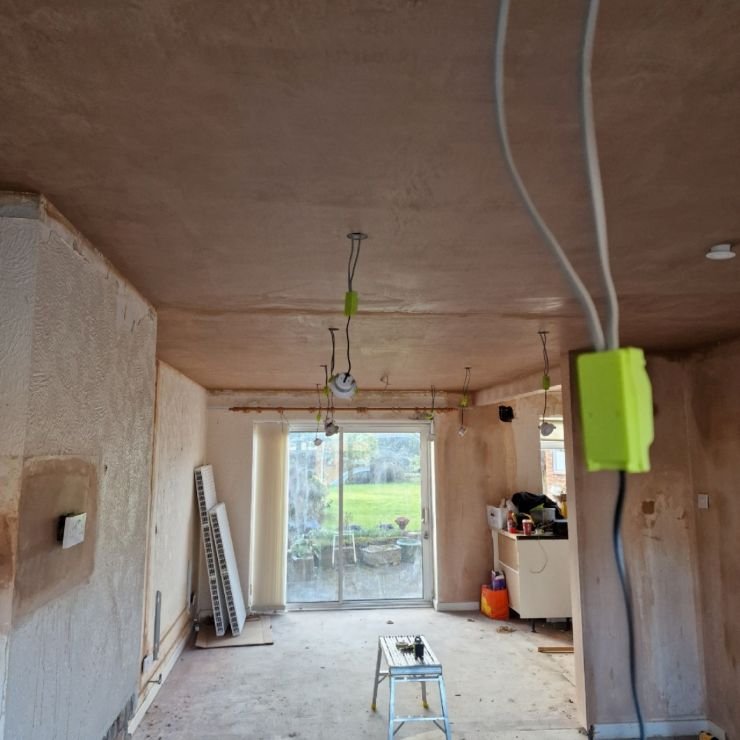
Rewirable fuses or older cable types are reasons to assess the installation, not proof that a full rewire is required. Condition, protection and test findings should guide repair, partial rewiring or full rewiring recommendations. Leave covers in place and do not touch suspect wiring.
A rewire’s scope should identify which circuits, cables and accessories will be replaced, retained or disconnected. Agree the specification, access, making good and documentation before work begins.
2. Consumer Unit Upgrades
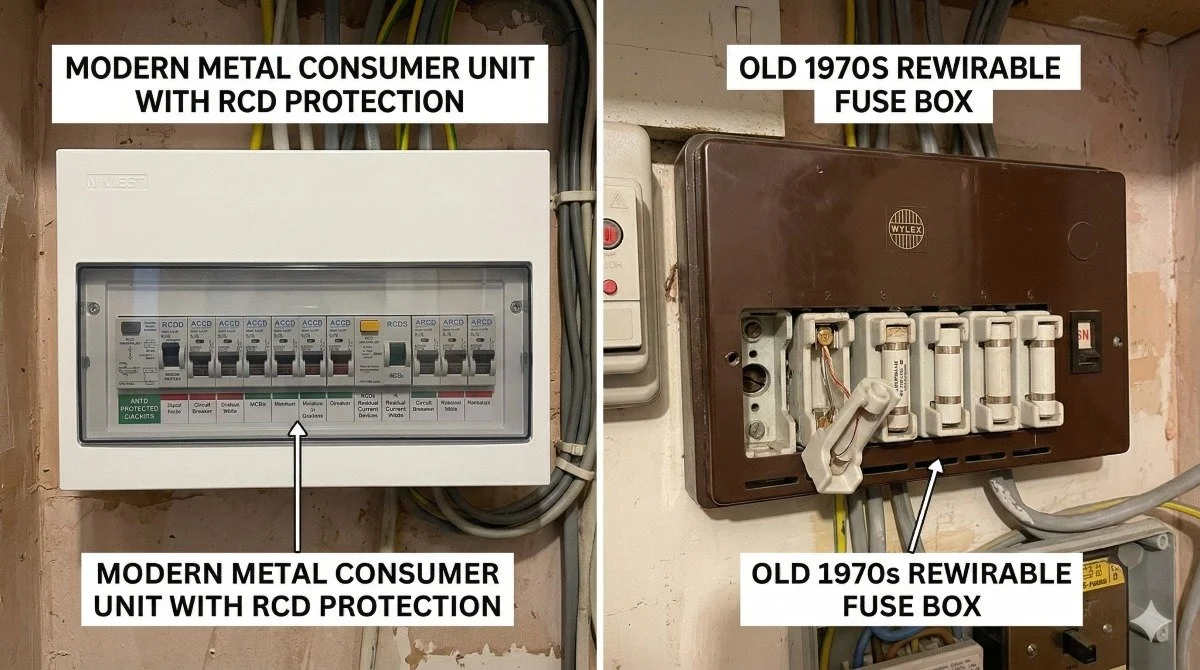
A consumer unit distributes and protects circuits. Its design and protective devices should suit the installation; no board eliminates every electrical risk.
RCBOs: These combine residual-current and overcurrent protection. A fault may disconnect its own circuit while other circuits remain supplied, depending on the arrangement and upstream coordination.
SPDs: These help limit transient overvoltages. Their selection depends on the installation and applicable requirements; they cannot guarantee protection against every surge.
3. Emergency Fault Finding
Electrical faults don't wait for a convenient time. They hit on a rainy Friday night or right in the middle of preparing a family meal. A professional fault-finding service uses advanced diagnostic equipment to trace anomalies across a ring main, pinpointing loose connections, moisture ingress, or broken conductors without tearing down your walls unnecessarily.
How to Avoid "Cowboy" Tradespeople on Merseyside
Protecting yourself from rogue traders requires a structured approach to vetting. When looking for the right team to handle your project, look out for these classic warning signs.
Clear invoices and payment terms: Ask for a written quotation and an invoice showing the work, agreed price and payment terms. Cash payment alone does not establish whether a business is legitimate. VAT depends on registration: only VAT-registered businesses can issue VAT invoices. Dan Electrician is not VAT registered, so no VAT is added.
Refusal to Provide a Written Quote: A verbal quote over the phone is practically worthless. Insist on a fully itemised written breakdown detailing exactly what materials are included, the labour costs, and whether building control notification fees are covered.
Lack of Local Reviews: A genuine electrician in Liverpool should have an established digital footprint. Check their Google Business Profile, look for verified 5-star reviews from local residents in your neighbourhood, and check for photographic proof of recent, tidy installations.
Frequently Asked Questions (FAQ)
How much does a domestic electrician charge per hour in Liverpool?
Dan Electrician’s scheduled work, Monday–Friday, 9am–5pm, is £80 for travel, attendance and the first hour, then £55 per further hour. Emergency attendance is £120 for the first hour on weekdays, 9am–5pm, or £150 at nights and weekends. Any emergency follow-on rate is agreed before continuing.
Planned installations are quoted for the agreed scope. Dan Electrician is not VAT registered, so no VAT is added. Confirm the work and applicable charge before booking.
Do I need an electrical certificate to sell my house in the Wirral or Liverpool?
For a property sale, keep certificates, reports and Building Regulations records for the work carried out. The buyer’s enquiries and legal requirements depend on the circumstances. Ask the conveyancer what documentation is needed; do not assume a missing record forces a price reduction.
Why does my modern consumer unit keep tripping unexpectedly?
Repeated tripping needs investigation. Do not keep resetting a device, bypass protection or recreate a fault. Tell the electrician which device operated and what was happening, using observations made safely.
What is the difference between an EIC and an EICR?
An Electrical Installation Certificate (EIC) is issued following the completion of new electrical installation work, confirming it was designed and constructed safely. An Electrical Installation Condition Report (EICR) is an official assessment of an existing installation, highlighting any deterioration, damage, or dangerous defects that require remedial action.
Secure Your Merseyside Home with Dan Electrician
Your home deserves the highest standard of technical expertise and professional care. Don't leave your property's safety to guesswork or outdated standards.
Dan Electrician serves homeowners, landlords and businesses across Liverpool, Birkenhead and the Wirral. Work is assessed and quoted for the agreed scope, with appropriate testing, documentation and notification arrangements explained.
Whether you need an immediate fault diagnosed, a beautiful new lighting layout designed, or a complete system safety overhaul, our friendly, local team is ready to help.
Ready to secure your home’s power?
Call Dan Electrician Today on 07400238767
Click Here to Request Your Free, Transparent Digital Quote
External Authoritative References: