

Electrical Fault Finding in Liverpool & Birkenhead
RCD keeps tripping? Part of the house lost power? Got an electrical fault that comes and goes?
Dan Electrician provides professional electrical fault finding across Liverpool, Birkenhead and the Wirral, using electrical testing to identify the cause of problems rather than replacing parts at random.
From faulty circuits and damaged wiring to intermittent faults, lighting problems and unexplained power loss, we’ll investigate the installation, explain what we find and recommend the appropriate repair.
NICEIC Registered · Fully Insured
30+ Years’ Electrical Experience
Professional Testing & Fault Diagnosis
When Do You Need Electrical Fault Finding?
Some electrical problems have an obvious cause. Others can trip a circuit one day, disappear the next and return several weeks later.
Fault finding is the process of testing the electrical installation systematically to narrow down where the problem is occurring and what is causing it.
RCD or RCBO Keeps Tripping
If an RCD or RCBO repeatedly switches off, it is usually responding to an electrical condition somewhere on the installation or connected equipment.
Possible causes can include damaged wiring, moisture, faulty appliances or excessive leakage current.
Rather than repeatedly resetting the device, the cause should be investigated.
Flickering or Intermittent Electrics
Lights that flicker, sockets that occasionally stop working or electrical equipment that behaves differently at different times can indicate an intermittent fault.
These problems can be more difficult to diagnose because they may not be present continuously, but proper testing can often help identify the cause.
Circuit Breaker Keeps Tripping
A circuit breaker that repeatedly operates may indicate a fault, overload or problem with the equipment connected to that circuit.
Testing can help determine whether the issue is within the fixed wiring or something connected to it.
Fault After Building Work or a Water Leak
Electrical faults can sometimes appear after drilling, renovation work, plumbing leaks or water entering part of the installation.
Damaged or wet wiring may cause protective devices to trip and affected circuits may need to remain isolated until they have been inspected and tested.
Part of the Property Has Lost Power
If one room, group of sockets or particular circuit has stopped working while the rest of the property still has electricity, the fault may be confined to one part of the installation.
We can test the affected circuit and protective devices to narrow down where the problem is occurring.
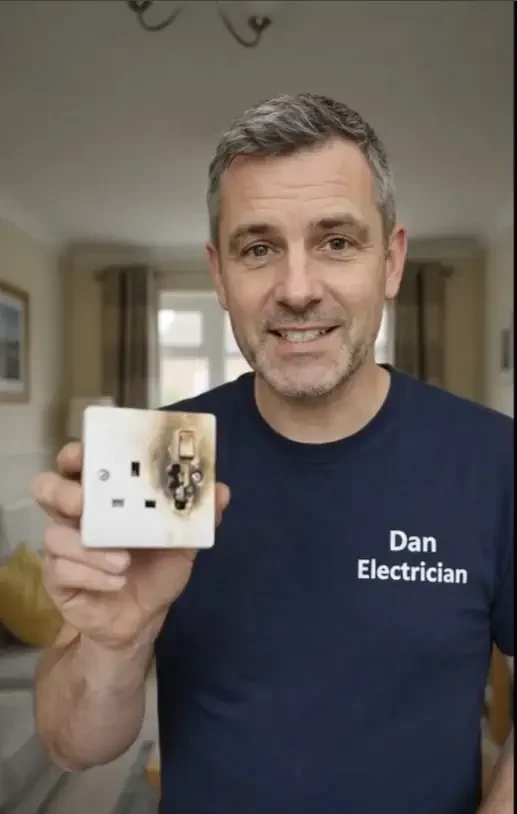
Burning Smell, Heat or Electrical Damage
Unusual heat, scorching, melting or a burning smell around electrical accessories should not be ignored.
Stop using affected equipment where practical and arrange for the installation to be checked.
If there is an active fire or immediate danger to life, contact the emergency services first.
Electrical fault finding is about identifying the cause before deciding on the repair.
A tripping circuit does not automatically mean you need a new consumer unit or a full rewire.
How Electrical Fault Finding Works
Electrical fault finding is a process of narrowing down the problem step by step until the cause can be identified.
The exact tests depend on the symptoms and the type of installation, but the aim is always the same: find the fault before deciding what needs to be repaired or replaced.
1. We Start With the Symptoms
We’ll ask what has been happening and when the fault occurs.
Useful information can include:
Which circuit or area is affected
Whether an RCD, RCBO or breaker trips
Whether the fault is constant or intermittent
Whether an appliance was being used when it happened
Whether there has been recent building work or a water leak
Whether there are signs of heat, burning or damage
This helps point the investigation in the right direction.
2. Visual Inspection
Before testing begins, we check the accessible parts of the installation for obvious problems.
This can include the consumer unit, sockets, switches, accessories, damaged cables and any area connected with the reported fault.
3. Safe Isolation
Where necessary, the affected circuit is safely isolated before electrical testing or inspection is carried out.
This allows the fault to be investigated without creating unnecessary risk.
4. Electrical Testing
Testing is then used to narrow down the problem.
Depending on the fault, this may include checks on:
Continuity
Insulation resistance
Polarity
Protective devices
Earthing
Individual circuits
Connected equipment
The results help show whether the fault is in the fixed wiring, an accessory, protective device or connected equipment.
5. Narrowing Down the Fault
Once the affected area has been identified, the circuit can be divided into smaller sections until the source of the problem is located.
This is particularly useful with intermittent faults or problems that are not visible during a basic inspection.
6. Repair or Recommendation
If the fault can be repaired safely during the visit, we’ll explain what is required before carrying out the work.
If a permanent repair needs additional parts, further access or more extensive work, we’ll explain what has been found and what the next step should be.
Good fault finding is not about guessing. It is a process of testing, narrowing down the problem and repairing the actual cause rather than simply replacing parts.
Common Electrical Faults We Diagnose
Electrical faults can show up in different ways, and the visible symptom is not always the real cause.
Dan Electrician provides fault diagnosis across Liverpool, Birkenhead and the Wirral for domestic, rental and small commercial properties, using testing to identify where the problem is coming from.
RCD, RCBO or Breaker Tripping
Repeated tripping can be caused by damaged wiring, faulty equipment, moisture, insulation breakdown or other electrical issues.
Testing helps determine whether the fault is within the fixed installation or something connected to the circuit.
Consumer Unit Problems
Buzzing, overheating, damaged protective devices or unexplained tripping at the consumer unit can all require investigation.
Testing helps determine whether the problem is within the board itself or on one of the circuits it supplies.
Faults After Water Leaks
Water entering sockets, lighting, junctions or concealed wiring can cause insulation problems and repeated tripping.
Affected circuits may need to remain isolated until they have been inspected and tested.
Faults After Renovation or Drilling
Building work can sometimes damage concealed cables or disturb existing electrical connections.
If a circuit begins tripping or stops working after renovation work, fault finding can help locate the affected area.
Socket Circuits Not Working
A group of sockets that stops working may be caused by a fault on the circuit, a damaged connection, a protective device operating or another issue within the installation.
We can test the circuit to narrow down the problem.
Intermittent Electrical Faults
Some faults only appear occasionally, which can make them harder to trace.
Intermittent problems may be linked to loose connections, damaged cables, temperature changes, moisture or equipment that only causes the fault under certain conditions.
Lighting Circuit Faults
Lighting faults can include flickering, intermittent operation, breakers tripping when lights are switched on or complete loss of lighting to part of the property.
The problem may be within a fitting, switch, connection or the circuit itself.
Electric Shower or Cooker Tripping
High-load equipment such as electric showers and cookers can sometimes cause protective devices to operate.
The fault may be within the appliance, the connection, the circuit or the protective device, so the installation needs to be tested before parts are replaced.
Earthing or Bonding Issues
Problems with earthing or protective bonding can affect the safety of the installation and may be identified during testing.
Where an issue is found, we’ll explain what needs to be corrected and why.
Unexplained Power Loss
If part of the property loses power but the cause is not obvious, testing can help isolate the fault to a particular circuit, accessory or section of wiring.
The same symptom can have several different causes. Proper fault finding is about testing the installation before deciding what needs to be repaired.
What Equipment Is Used for Electrical Fault Finding?
Electrical fault finding relies on proper test equipment as well as experience. Different faults require different tests, so there is no single meter reading that can diagnose every electrical problem.
The equipment used depends on the symptoms, the circuit involved and what the initial inspection reveals.
RCD & RCBO Testing
Where an RCD or RCBO is involved in the fault, testing can help determine whether the protective device is operating correctly.
A device that trips repeatedly may be responding correctly to a fault elsewhere, so replacing it without testing the circuit does not necessarily solve the problem.
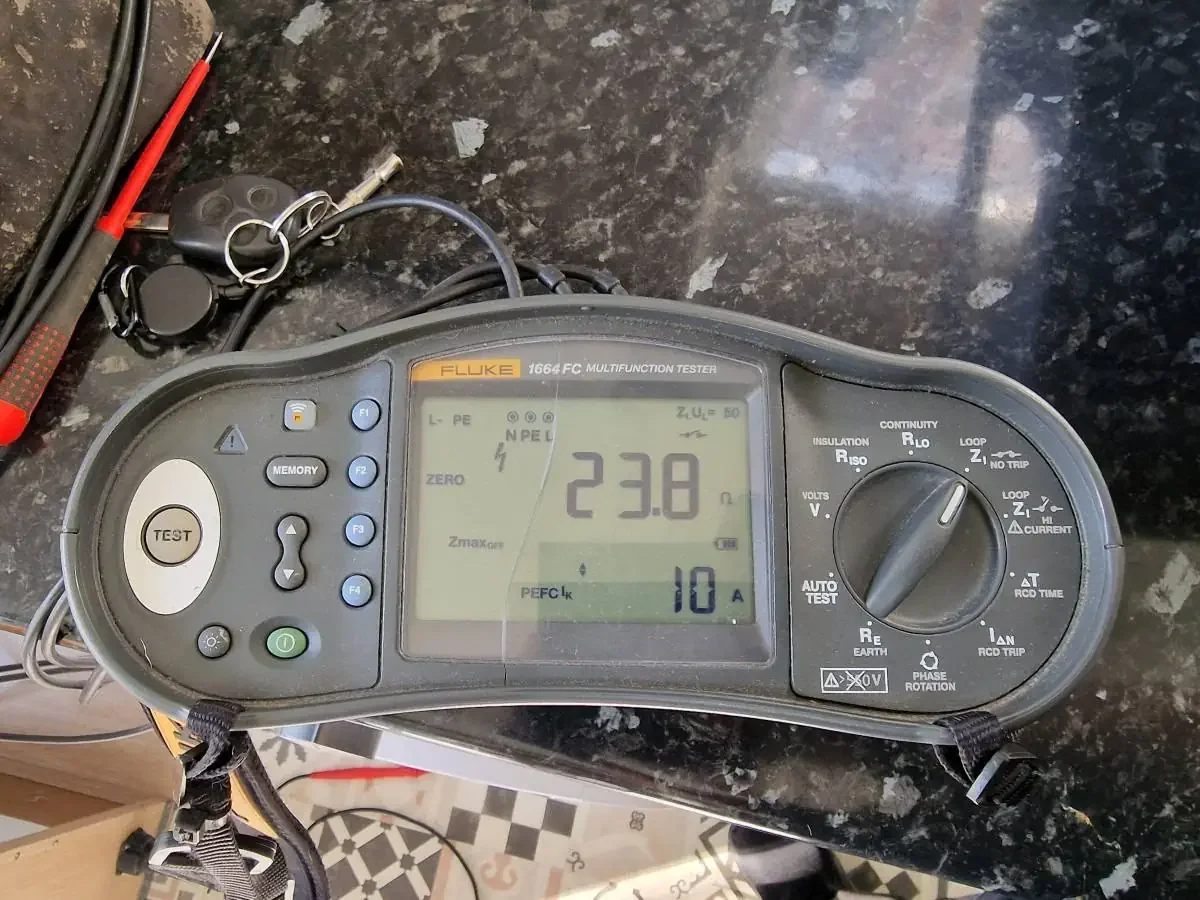
Multifunction Tester
A multifunction tester is one of the main tools used for electrical fault diagnosis.
Depending on the installation and fault, it can be used for checks such as:
Continuity
Insulation resistance
Polarity
Earth fault loop impedance
RCD testing
Protective conductor testing
The results help build a picture of how the circuit is behaving and whether the protective measures are operating as expected.
Clamp Meter & Current Measurements
A clamp meter allows electrical current to be measured without disconnecting the conductor.
Depending on the fault, this can help assess circuit loading, leakage current or how electrical equipment is behaving while operating.
Insulation Resistance Testing
Insulation resistance testing can help identify deterioration, moisture or damage affecting the insulation around electrical conductors.
Low readings can indicate that current is leaking somewhere it should not, which may help explain repeated RCD or RCBO tripping.
Continuity Testing
Continuity testing checks whether electrical conductors form a complete path.
This can be useful when tracing broken conductors, damaged connections or faults affecting socket and lighting circuits.
Voltage Testing
Voltage measurements can help confirm whether a supply is present and whether power is reaching the expected points within the circuit.
This can be particularly useful when tracing partial power loss or locating where a circuit has stopped supplying equipment.
Visual Inspection & Experience
Meters are only part of the fault-finding process.
Signs such as heat damage, loose connections, corrosion, moisture, damaged accessories and previous alterations can provide important clues before testing even begins.
The electrical test results then need to be interpreted alongside what is actually found at the property.
The test equipment provides the measurements. Experience is what turns those measurements into a useful diagnosis.
Why Does My RCD Keep Tripping?
An RCD is designed to disconnect the electricity supply when it detects certain types of electrical leakage or fault conditions.
If it trips repeatedly, the important question is not simply how to reset it — it is why the device is operating in the first place.
Faulty Appliances
A faulty appliance can sometimes cause an RCD to trip, particularly when heating elements, motors or equipment containing moisture are involved.
Testing can help determine whether the fault is within the fixed electrical installation or something connected to it.
Faulty RCD or Protective Device
Protective devices can develop faults, but the RCD itself should not automatically be blamed simply because it keeps tripping.
The installation and connected equipment should be tested first so the device is not replaced unnecessarily.
Loose Connections
A loose electrical connection can behave differently depending on load, vibration or temperature.
This can lead to flickering lights, intermittent sockets, overheating or circuits that appear to fail and then start working again.
Damaged Cables
A cable that has been partially damaged may not produce a permanent fault.
Movement, temperature changes or vibration can cause the problem to appear intermittently, especially where cables have been affected by building work, fixings or previous alterations.
Moisture or Water Ingress
Water entering outdoor sockets, lighting, junction boxes, appliances or concealed wiring can reduce insulation resistance and cause repeated RCD operation.
Faults of this type can sometimes appear only during damp weather or after a leak.
Several Small Leakage Currents
Modern homes can contain many electronic devices that naturally produce small amounts of leakage current.
Individually these may not cause a problem, but together they can contribute to unwanted RCD operation, particularly where several circuits share one device.
Moisture-Related Faults
Water or condensation can create electrical problems that only appear during wet weather, after a leak or when moisture reaches part of the installation.
When the area dries, the symptoms may disappear temporarily even though the underlying problem remains.
Faulty Appliances or Equipment
Some appliances only develop a fault during a particular operating cycle.
Heating elements, motors, pumps and electronically controlled equipment can all behave normally at one moment and cause tripping at another.
Damaged Wiring
Cables damaged by drilling, screws, rodents, heat or previous building work can create leakage paths or intermittent faults.
The damage may not be visible without testing and further investigation.
Fault on One Particular Circuit
If the RCD trips only when a particular circuit is switched on, fault finding can concentrate on that part of the installation.
Testing can then narrow the problem further to a cable, accessory, appliance or section of the circuit.
Should I Keep Resetting the RCD?
If the RCD trips once and resets normally, the cause may have been temporary.
If it repeatedly trips, refuses to reset or operates whenever a certain circuit or appliance is used, further investigation is sensible.
Repeatedly resetting a protective device without finding the cause can hide an underlying electrical problem.
The RCD is often doing exactly what it is supposed to do. Fault finding is about discovering what is making it operate.
Want the Full Explanation?
For a more detailed explanation of RCD faults, common causes and what you can safely check yourself, read our dedicated guide:
Intermittent Electrical Faults — Why They Can Be Difficult to Find
Some electrical faults are easy to reproduce. Others appear for a few minutes, disappear and then return days or weeks later.
These intermittent faults can take longer to diagnose because the problem may not be present when testing begins. The electrician often has to combine test results with the history of the fault to narrow down the likely cause.
Heat-Related Faults
Some electrical faults only become noticeable after equipment or connections warm up.
A circuit may work normally when first switched on and then begin to trip, flicker or fail after being under load for a period of time.
Multiple Circuits Sharing Protection
Where several circuits share one RCD, a problem may be harder to identify because the device can trip without making it immediately obvious which circuit caused it.
Testing each circuit individually can help narrow down the source.
Keeping a Record Can Help
If the fault is intermittent, it can be useful to note:
What time it happened
Which circuit or equipment was being used
Whether it had been raining
Whether heating or high-load equipment was running
Which protective device operated
Whether the fault reset immediately or only after some time
This information can help make the fault-finding process more efficient.
An intermittent fault is still a real fault. The fact that the problem disappears does not necessarily mean it has repaired itself.
Electrical Fault Finding After Water Leaks or Flooding
Water and electrical installations do not mix well. A leak from a bathroom, roof, pipe, appliance or heating system can affect wiring and electrical accessories even when there is little visible damage.
If water has reached sockets, lighting, junctions, cables or the consumer unit, the affected part of the installation may need to remain isolated until it has been inspected and tested.
RCD or RCBO Tripping After a Leak
One of the first signs of water affecting an electrical circuit can be repeated RCD or RCBO operation.
Moisture can reduce insulation resistance and allow current to leak where it should not, causing the protective device to disconnect the supply.
Outdoor Electrical Faults
Outdoor sockets, garden lighting and other external electrical equipment are exposed to more demanding conditions.
Damaged seals, deteriorated enclosures or water entering connections can result in intermittent faults that become worse during wet weather.
Water Inside Sockets or Switches
Water can enter electrical accessories directly or travel along walls and cables from somewhere else.
Do not remove covers or attempt to dry electrical accessories while they are energised.
The affected circuit should be assessed before the equipment is returned to normal use.
Can Electrics Be Used Again Once They Have Dried?
Not automatically.
An electrical accessory or cable appearing dry does not prove that its insulation or connections are in satisfactory condition.
Inspection and electrical testing can help determine whether the affected circuit is safe to return to service or whether equipment needs repairing or replacing.
Ceiling Leaks & Lighting Circuits
A leak from a bathroom, roof or pipework above a ceiling can affect light fittings, junctions and concealed wiring.
Even when the fitting looks dry later, testing may still be necessary to determine whether moisture has affected the circuit.
Finding Where the Water Has Affected the Circuit
Fault finding may involve dividing the circuit into sections and testing insulation resistance to narrow down where the problem is occurring.
Depending on the installation, this may involve checking:
Sockets and switches
Light fittings
Junction boxes
Fixed equipment
Outdoor accessories
Individual sections of wiring
The aim is to identify the affected part rather than unnecessarily replacing the whole circuit.
What Should You Do After a Leak?
If water is still entering the property, deal with the source of the leak first where this can be done safely.
Avoid touching wet electrical equipment, particularly if you are standing in water.
If a circuit has tripped following water ingress, do not repeatedly reset it simply to see whether it now works.
Water-related electrical faults can disappear as an area dries and then return when damp conditions come back. Testing helps determine whether the installation is genuinely safe rather than relying on the fault temporarily disappearing.
Can Electrical Fault Finding Avoid a Rewire or Consumer Unit Replacement?
Sometimes, yes.
A tripping circuit, intermittent power loss or damaged accessory does not automatically mean the property needs a full rewire or a new consumer unit.
Proper fault finding helps identify the actual cause first, so any larger recommendation is based on evidence rather than assumption.
When the Problem Is Localised
Many faults affect only one part of the installation.
For example, the cause may be:
A damaged socket or switch
A loose electrical connection
A faulty light fitting
One damaged section of cable
Moisture affecting a particular circuit
A faulty appliance
A defective protective device
If the fault is confined to one area, a targeted repair may be all that is required.
Partial Repairs Can Sometimes Be Enough
Electrical installations do not always fail as one complete system.
One circuit may require repair while the rest of the installation remains satisfactory.
Where appropriate, repairing or replacing the affected section can be a more practical solution than carrying out unnecessary work elsewhere in the property.
When a Consumer Unit Does Not Need Replacing
An older consumer unit can still be serviceable.
If testing shows that the board is in satisfactory condition and the fault lies elsewhere, replacing the consumer unit would not solve the underlying problem.
A consumer unit upgrade should be recommended because the installation needs it — not simply because the board is old.
When a Rewire May Be Appropriate
A full or partial rewire may be considered where testing identifies wider deterioration or significant problems across the installation.
This could include extensive damaged wiring, serious insulation deterioration, multiple unsafe alterations or an installation that is no longer suitable for continued use.
Even then, the recommendation should be based on the condition of the wiring and test results rather than age alone.
Testing Before Spending Money
Fault finding gives you better information before committing to larger electrical work.
If a major upgrade is genuinely required, we’ll explain what the testing has shown and why the recommendation is being made.
The aim is not to find the biggest job. The aim is to find the fault, understand its cause and recommend the most appropriate repair.
Areas We Cover for Electrical Fault Finding
Dan Electrician provides electrical fault finding across Liverpool, Birkenhead and the wider Wirral.
For local area information, visit: