

Plastic Consumer Units: Are They Safe or Should You Replace Yours?
What Is a Plastic Consumer Unit?
A consumer unit (sometimes still called a fuse box) is where all the electrical circuits in your home are controlled and protected.
Inside you'll usually find:
Circuit breakers (MCBs)
RCDs or RCBOs
Neutral and earth bars
Incoming supply connections
Older versions were commonly housed inside a plastic enclosure.
Modern consumer units are almost always made from steel. Why Were Plastic Consumer Units Used?
For many years, plastic consumer units met the standards that applied at the time.
They were popular because they were:
lightweight
inexpensive
easy to install
resistant to corrosion
electrically insulating
Millions were installed across the UK without any problems; the issue wasn't usually the plastic itself.
It was what could happen if a fault developed inside.
Plastic Consumer Units: Should You Be Worried?
If you've opened the cupboard under the stairs and noticed your fuse box is made of white plastic, you're not alone.
Thousands of homes across Liverpool, Wirral and the UK still have plastic consumer units fitted. In fact, until fairly recently, they were the standard choice for new homes.
So does having a plastic consumer unit mean your home is dangerous?
Not necessarily.
The internet is full of scare stories saying every plastic fuse box needs replacing immediately. The truth is a bit more balanced than that.
As an electrician with 30 years in the trade, I still see plenty of plastic consumer units that are perfectly serviceable—and others that I wouldn't leave energised for another day.
Let's explain why.
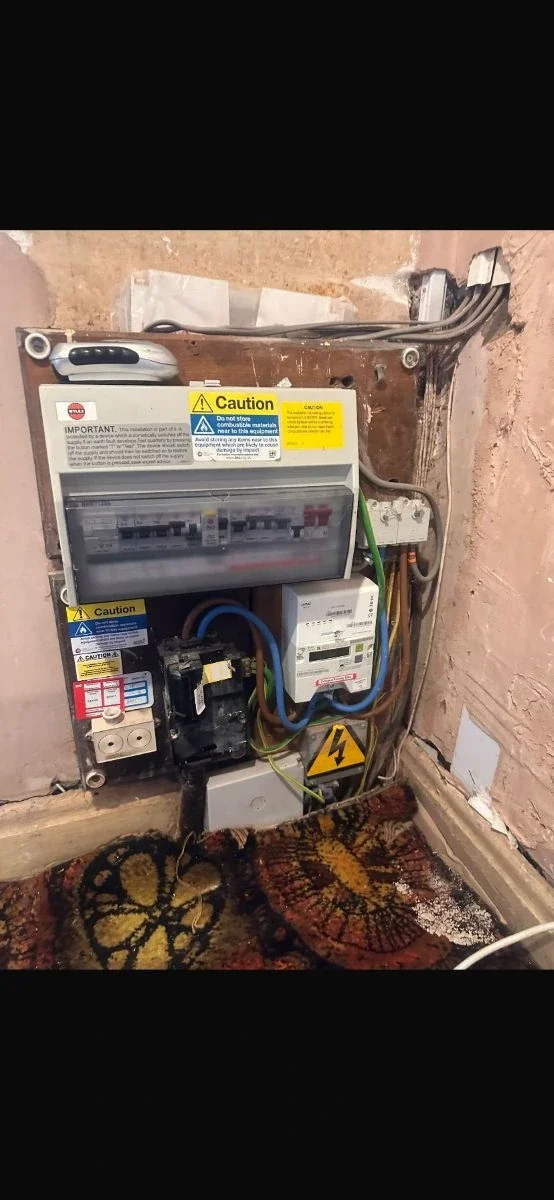
Why Did the Rules Change?
Electrical fires involving consumer units were investigated over a number of years. Although they weren't common, some fires started because of loose electrical connections inside the consumer unit. Loose terminals can create resistance; resistance creates heat. Enough heat can eventually melt insulation and ignite surrounding materials. A metal enclosure helps contain that fire for longer, reducing the chance of flames spreading into the property. That's why the Wiring Regulations changed. Modern consumer units installed in domestic properties are generally required to have a non-combustible enclosure, which is why steel units have become the standard.
Does That Mean Plastic Consumer Units Are Unsafe?
No.
This is probably the biggest misunderstanding. A plastic consumer unit isn't automatically dangerous simply because it's plastic; many continue to operate safely.
The real questions are:
Is it in good condition?
Has it been installed correctly?
Are all the connections secure?
Has it been tested?
Does it provide suitable protection?
Age alone doesn't condemn it.
Condition matters.
When Can a Plastic Consumer Unit Become Dangerous?
Loose Connections
This is one of the biggest causes of overheating; even a slightly loose terminal can generate a surprising amount of heat over time. You usually won't notice until there's damage inside.
Overloaded Circuits
Modern homes use far more electricity than houses built thirty or forty years ago.
Think about everything plugged in today:
Air fryers
Tumble dryers
Heat pumps
Home offices
Gaming PCs
Older installations weren't always designed with these loads in mind.
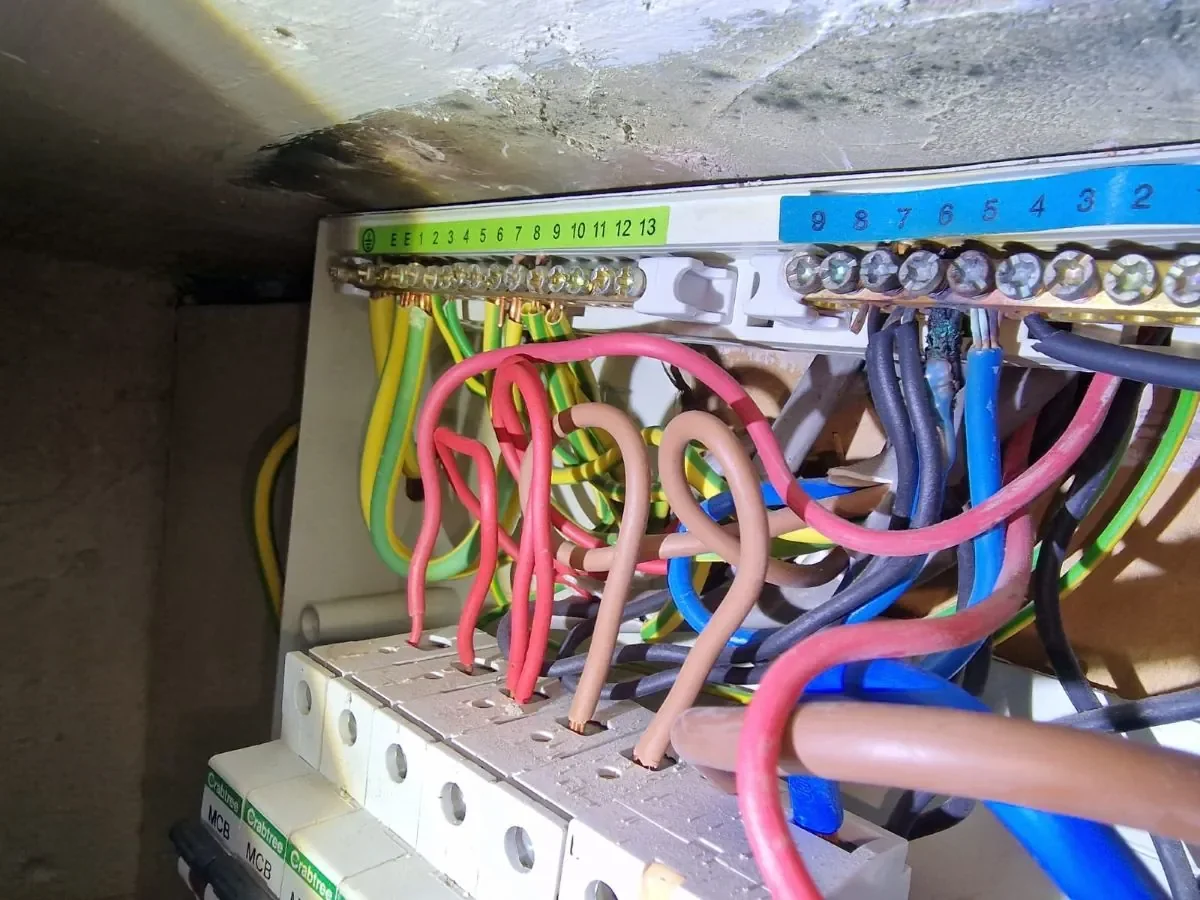
Poor DIY Work
Sadly, this is something we still see every workday
Signs include:
cables forced into terminals
mixed breaker brands
damaged insulation
loose conductors ( permanent consumer box damage after overheating) 90% of any fault location, dangerous and life-threatening fault as I've found over 30 years
missing blanks
overcrowded wiring
It's amazing what some people will have a go at after watching a five-minute video online.
Electricity doesn't hand out second chances.
Signs of Overheating
Watch out for:
burning smells
buzzing sounds
brown staining
melted plastic
scorch marks
breakers that feel unusually warm
If you notice any of these, what about fire risk?
Let's keep this in perspective.
The vast majority of plastic consumer units never catch fire.
Most problems occur because of:
loose connections
poor workmanship
damaged components
lack of maintenance
ageing installations
A metal enclosure reduces the consequences if an internal fault does occur.
That's why the regulations changed. Switch the power off if it's safe to do so and arrange an inspection.
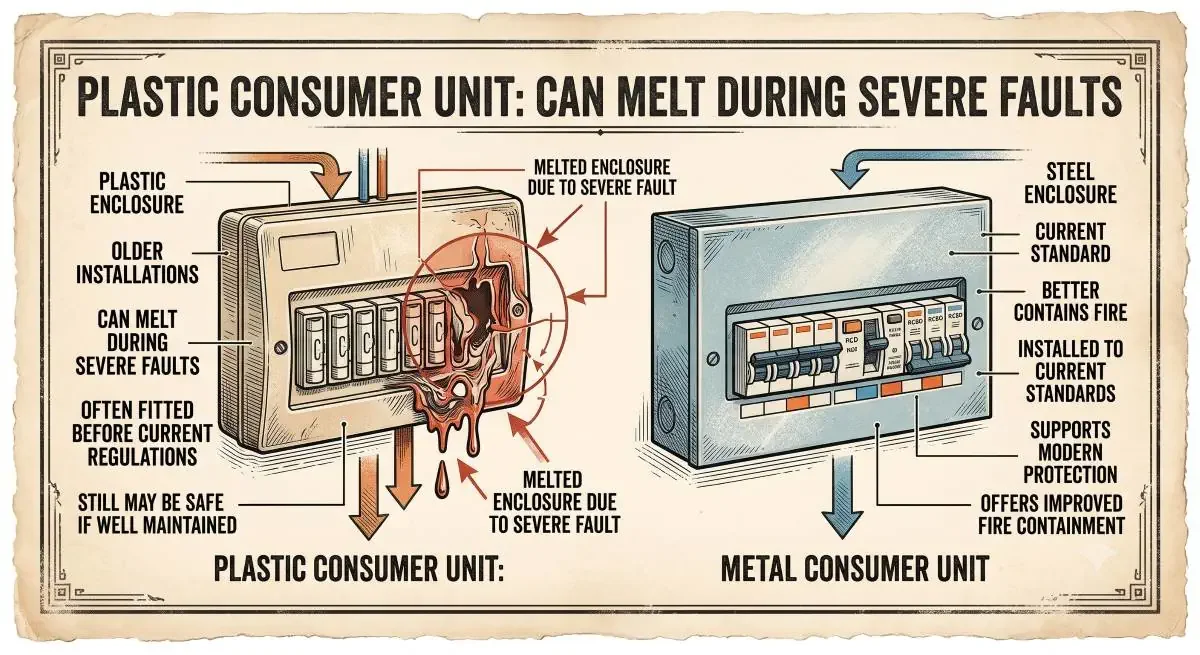
What About Fire Risk?
Let's keep this in perspective: the vast majority of plastic consumer units never catch fire.
Most problems occur because of:
loose connections
poor workmanship
damaged components
lack of maintenance
ageing installations
A metal enclosure reduces the consequences if an internal fault does occur.
That's why the regulations changed.
Should You Replace a Plastic Consumer Unit?
Sometimes yes.
Sometimes no.
Replacement may be worth considering if:
it's over 20–25 years old
it has no RCD protection where required
it's showing signs of overheating
breakers are obsolete
replacement parts are unavailable
you're carrying out major electrical work
an inspection identifies significant safety defects
If it's in good condition and continues to provide appropriate protection, there isn't a rule that says every plastic consumer unit must be replaced immediately.
The right answer comes from an inspection—not guesswork.
Can a Plastic Consumer Unit Pass an EICR?
Yes.
An Electrical Installation Condition Report (EICR) assesses the safety and condition of the electrical installation as a whole.
A plastic enclosure alone does not automatically mean the installation fails.
The outcome depends on the condition of the installation, the protective devices fitted, and any defects identified during the inspection.
Can You Upgrade Without Rewiring the House?
Often, yes.
Many homes can have a consumer unit replaced without a full rewire.
However, before replacing a consumer unit, the existing installation should be inspected and tested to confirm it is suitable for connection to a new unit. If faults are found, remedial work may be needed before the upgrade can be completed safely.
A Local Electrician's View
Around Liverpool and Wirral, I'd say a fair number of houses I visit still have plastic consumer units. Some are absolutely fine.
Others have loose terminals, outdated protection, or signs of overheating that you can't spot until the cover comes off.
That's why guessing isn't the answer; a proper inspection tells you exactly where you stand.
If everything checks out, brilliant; if it doesn't, you'll know what needs putting right before it becomes an emergency.
Frequently Asked Questions
Are plastic consumer units banned?
No. Existing plastic consumer units are not banned. The change in wiring regulations mainly affects the installation of new consumer units in domestic premises, which are generally required to have non-combustible (typically steel) enclosures.
Do insurance companies require a metal consumer unit?
Most don't specifically require one. However, insurers expect the electrical installation to be safe and properly maintained. If you're unsure, check your policy or ask your insurer.
Can I keep my plastic fuse box?
If it's safe, in good condition, and continues to provide appropriate protection, it may not need immediate replacement. An inspection is the best way to assess its condition. However, in my opinion, plastic housings can be used in the garage; I personally would not expose my family to risk
How long do consumer units last?
There's no fixed lifespan. Some remain in good condition for decades, while others may need replacing sooner due to wear, damage, or outdated protection.
Will replacing it make my house safer?
A modern metal consumer unit can improve protection, particularly when it includes current protective devices such as RCBOs, surge protection, and—where appropriate—Arc Fault Detection Devices (AFDDs). Whether it significantly improves safety depends on the condition of the existing installation.
Final Thoughts
If you've got a plastic consumer unit, don't panic—and don't assume it's perfectly fine either.
The enclosure material is only one part of the picture. What really matters is the condition of the consumer unit, the quality of the installation, and whether it's providing the level of protection your home needs today.
A quick inspection by a qualified electrician can often tell you more in an hour than weeks of searching online.
For homeowners in Liverpool, Wirral and the surrounding areas, it's a sensible way to make sure your electrical installation is safe, reliable, and ready for modern living.