

LED Lighting Installation & Upgrades in Liverpool & Birkenhead
Old lighting can use more energy than necessary, give poor light quality and make a room feel dated.
Dan Electrician provides LED lighting installation and upgrades across Liverpool, Birkenhead and the Wirral, including replacement fittings, downlights, kitchen lighting, bathroom lighting, outdoor lighting and lighting fault finding.
We can help with a single light fitting, a room upgrade or a larger property renovation.
NICEIC Registered · Fully Insured
30+ Years’ Electrical Experience
LED Downlights · Kitchen Lighting · Bathroom Lighting · Upgrades & Repairs
Why Upgrade to LED Lighting?
LED lighting can provide better light output while using less electricity than many older lamp types.
A well-planned upgrade can also improve how a room looks and how practical the lighting is for everyday use.
Lower Energy Use
LED lamps and fittings generally use less electricity than traditional incandescent or halogen lighting.
That can make a noticeable difference in homes with a large number of lights or fittings that are used for long periods.
Less Heat Than Older Lighting
Older halogen lamps can become extremely hot.
LED lighting usually produces much less heat at the fitting, which can make it a more practical choice in many modern installations.
The fitting still needs suitable ventilation and installation in accordance with the manufacturer’s requirements.
Longer Lamp Life
Good-quality LED products can last considerably longer than older lamp technologies.
That can reduce the need for frequent lamp replacement, particularly in areas with:
High ceilings
Downlights
Stairwells
Outdoor lighting
Commercial spaces
LED Lighting for Renovations
A renovation is a good opportunity to rethink the lighting layout.
Instead of simply replacing old fittings in the same positions, we can consider:
Room use
Furniture layout
Work areas
Feature lighting
Switching
Dimming
Future changes
This can produce a more useful lighting setup than a straight like-for-like replacement.
Better Light Quality
LED lighting is available in different:
Colour temperatures
Brightness levels
Beam angles
Dimming options
Fitting styles
This makes it easier to choose lighting that suits the room rather than simply fitting the brightest lamp available.
Do I Need to Rewire to Upgrade to LED?
Not automatically.
In many cases, existing lighting circuits can be retained if they are in satisfactory condition and suitable for the new fittings.
We check the existing wiring and circuit before recommending additional work.
A good LED upgrade is not just about changing lamps. The fitting type, light level, colour temperature, switching and existing wiring all affect the final result.
LED Downlight Installation
LED downlights are a popular choice for kitchens, bathrooms, hallways, living areas and renovation projects because they can provide clean, even lighting without bulky fittings.
The best result depends on more than simply choosing the number of downlights. Position, beam angle, ceiling type, insulation, switching and the existing lighting circuit all need to be considered.
Where Are LED Downlights Commonly Installed?
LED downlights are often used in:
Kitchens
Bathrooms
Hallways
Living rooms
Bedrooms
Utility rooms
Extensions
Loft conversions
Home offices
The layout should suit how the room is actually used.
Fire-Rated Downlights
Where the ceiling forms part of a fire-resisting construction, suitable fire-rated downlights may be required.
This can be relevant in:
Flats
Multi-storey homes
Some extensions
Certain ceilings between floors
The fitting should be suitable for the construction it is installed into.
Colour Temperature
LED downlights are available in different colour temperatures.
Common choices include:
Warm white
Neutral white
Cool white
The best choice depends on the room and the atmosphere you want.
Warm white is often preferred in living areas and bedrooms, while neutral white can suit kitchens and work areas.
How Many Downlights Do I Need?
There is no single number that works for every room.
We consider:
Room size
Ceiling height
Natural light
Furniture layout
Work surfaces
Beam angle
Light output
Colour temperature
Whether the lights are dimmed
Too few fittings can leave dark areas. Too many can make a room feel harsh and over-lit.
Downlights and Loft Insulation
Insulation around downlights needs to be considered carefully.
Some fittings are designed for use with insulation, while others need specific clearance or protection.
We check the fitting manufacturer’s requirements and the ceiling construction before installation.
Replacing Old Halogen Downlights
Older halogen downlights can often be replaced with modern LED fittings.
Before replacement, we check:
Existing wiring
Transformer arrangement
Ceiling condition
Hole size
Circuit protection
Dimmer compatibility
This helps avoid problems such as flickering, overheating or incompatible controls.
Downlight Spacing
Good spacing helps create more even lighting.
We look at the relationship between:
Walls
Cabinets
Kitchen worktops
Furniture
Doorways
Ceiling features
Existing fittings
The aim is to place the lights where they are useful rather than following a rigid grid regardless of the room.
Dimmable LED Downlights
Dimmable LED downlights can give more control over the room.
They can be useful in:
Living rooms
Bedrooms
Dining areas
Kitchens
Open-plan spaces
The dimmer and LED fittings need to be compatible to avoid flicker, buzzing or poor dimming performance.
Downlight Fault Finding
Common downlight faults can include:
Flickering
Intermittent operation
Failed drivers
Loose connections
Incompatible dimmers
Water damage
Heat damage
Poor previous installation
If several fittings are affected, the issue may be with the circuit or controls rather than the individual light.
Kitchen LED Lighting Installation
Good kitchen lighting should do more than make the room bright.
A practical kitchen usually needs a combination of general lighting, task lighting and, where wanted, feature lighting.
Dan Electrician installs and upgrades LED kitchen lighting across Liverpool, Birkenhead and the Wirral, including downlights, under-cabinet lighting, worktop lighting, pendant fittings and lighting controls.
Main Ceiling Lighting
The main ceiling lighting should give even coverage across the room without leaving large dark areas.
Depending on the kitchen, this may include:
LED downlights
Surface-mounted LED fittings
Pendant lighting
Track lighting
Combined lighting zones
The best layout depends on the kitchen size, ceiling height and furniture arrangement.
Separate Lighting Zones
Larger kitchens often benefit from more than one lighting circuit or switching zone.
For example:
Main downlights
Under-cabinet lights
Island pendants
Dining area lighting
Feature lighting
This gives more control and avoids having every light on at the same time.
Under-Cabinet LED Lighting
Under-cabinet lighting can make worktops much easier to use and can also improve the overall appearance of the kitchen.
It is particularly useful around:
Food preparation areas
Sinks
Worktops
Coffee stations
Breakfast areas
The fittings should be positioned so they light the work surface effectively without causing glare.
Dimming in Kitchens
Dimming can be useful in open-plan kitchens where the same space is used for cooking, eating and relaxing.
The LED fittings and dimmer controls need to be compatible to avoid:
Flickering
Buzzing
Poor low-level dimming
Lights failing to switch off properly
Kitchen Worktop Lighting
Worktop lighting is task lighting.
That means the aim is not just atmosphere, but making it easier to see clearly when preparing food or using appliances.
We consider:
Cabinet depth
Worktop position
Shadows
Light output
Colour temperature
Switching
Cable routes
Colour Temperature for Kitchen Lighting
Neutral white is often popular for task areas because it gives a clean, practical light.
Warmer lighting may suit dining or feature areas.
Using different colour temperatures without planning can make the room look inconsistent, so it is usually better to choose a coordinated scheme.
Pendant Lighting Over Islands
Pendant fittings can work well over kitchen islands or breakfast bars.
They can provide both useful lighting and a strong visual feature.
The final position should take account of:
Island size
Ceiling height
Seating
Sight lines
Number of pendants
Light output
Replacing Old Fluorescent Kitchen Lighting
Older kitchens sometimes still use fluorescent fittings or older strip lights.
These can often be replaced with modern LED alternatives that provide:
Better light quality
Lower energy use
Reduced maintenance
Cleaner appearance
The existing wiring should still be checked before replacement.
Lighting During a Kitchen Renovation
If the kitchen is being refurbished, lighting should ideally be planned before cabinets and ceilings are fully finished.
This makes it easier to coordinate:
Downlight positions
Under-cabinet feeds
Pendant locations
Switching
Dimming
Cable routes
The best kitchen lighting usually combines general lighting, task lighting and feature lighting rather than relying on one type of fitting for everything.
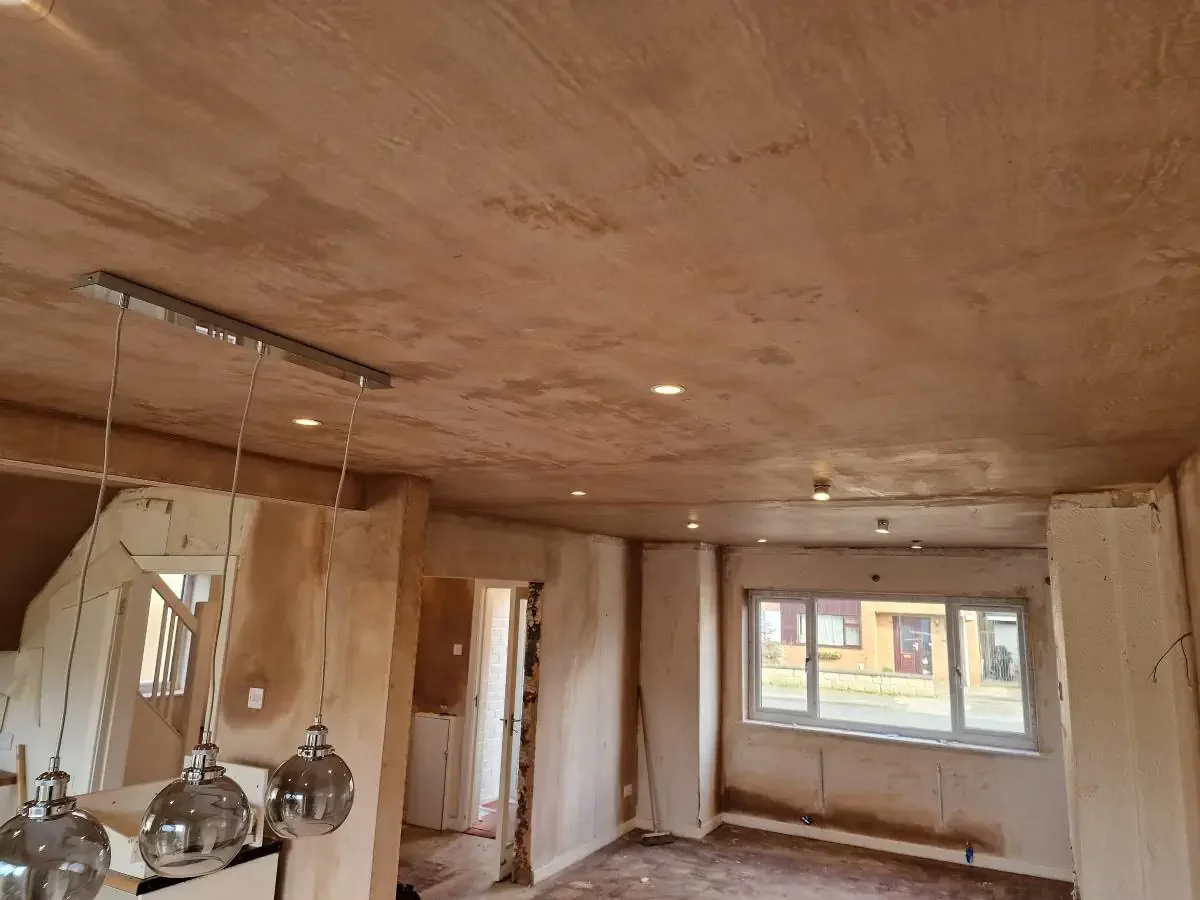
Recent LED Lighting Project
Kitchen LED Lighting Upgrade in Birkenhead
We recently upgraded the lighting in this kitchen with new LED fittings to improve brightness around the work areas and give the room a cleaner, more modern finish.
The existing lighting layout was assessed first, then the new fittings were positioned to provide more even coverage without over-lighting the room.
Work included:
New LED lighting
New cables and boxes
Improved light positioning
Testing after installation
Neat final finish
Real project completed by Dan Electrician.
Bathroom LED Lighting Installation
Bathroom lighting needs a little more care because fittings are installed in an environment where moisture is present.
The right lighting should give good visibility, suit the room layout and use fittings appropriate for the area where they are installed.
Dan Electrician installs and upgrades bathroom LED lighting across Liverpool, Birkenhead and the Wirral, including downlights, mirror lighting, ceiling fittings and replacement of older bathroom lights.
Bathroom Lighting Zones
Bathrooms are divided into electrical zones based on how close fittings are to baths and showers.
The fitting used needs to be suitable for the location where it is installed.
This is especially important for lights:
Above showers
Near baths
Close to wet areas
In low ceilings
We check the location before selecting or fitting the light.
IP Ratings for Bathroom Lights
An IP rating indicates how well electrical equipment is protected against things such as moisture and water.
The required level depends on the position of the fitting.
Rather than choosing a light because it is simply advertised as a “bathroom fitting”, we check whether its rating is suitable for the intended location.
Bathroom Lighting and Extractor Fans
Lighting work sometimes sits alongside extractor fan upgrades, particularly during bathroom renovations.
If the ceiling is already being altered, it can be a useful opportunity to review:
Lighting positions
Fan location
Switching
Existing wiring
Controls
This can avoid making separate alterations later.
Mirror & Vanity Lighting
Good mirror lighting can make a big difference in bathrooms.
It can be useful for:
Shaving
Makeup
General grooming
Improving visibility around the basin
Options can include:
Illuminated mirrors
Mirror lights
Wall-mounted LED fittings
Integrated vanity lighting
The lighting should avoid excessive glare or strong shadows where possible.
Replacing Older Bathroom Lights
Older fittings can sometimes suffer from:
Corrosion
Water damage
Failed drivers
Discoloured covers
Flickering
Poor light output
Before replacement, we check the existing wiring and make sure the new fitting is suitable for the bathroom location.
Warm White or Cool White?
The colour temperature can change how the bathroom feels.
Warm white can create a softer atmosphere, while neutral white can give a cleaner, brighter appearance.
The choice often depends on the rest of the room finishes and how the bathroom is used.
Dimmable Bathroom Lighting
Dimming can work well in bathrooms where softer lighting is wanted in the evening.
The fittings and controls need to be compatible, and the overall installation still needs to suit the bathroom environment.
Bathroom Renovations
If the bathroom is being completely refurbished, lighting should ideally be planned before ceilings, tiles and fitted furniture are finished.
This makes it easier to coordinate:
Downlights
Mirror lighting
Extractor fans
Switching
Cable routes
Final fitting positions
Bathroom lighting should combine good visibility, suitable fitting selection and careful positioning around wet areas.
LED Lighting Controls, Dimmers & Smart Switching
Good lighting is not only about the fittings themselves.
The way the lights are switched and controlled can make a big difference to how practical a room feels, especially in kitchens, living areas, bedrooms and open-plan spaces.
Dan Electrician installs and upgrades lighting controls across Liverpool, Birkenhead and the Wirral, including dimmer switches, multi-way switching, timers and suitable smart lighting controls.
LED Dimmer Switches
LED lighting needs a compatible dimmer.
Older dimmers designed for halogen or incandescent lamps can sometimes cause problems with modern LEDs.
Common symptoms include:
Flickering
Buzzing
Lights not dimming smoothly
Lights staying faintly illuminated
Poor low-level dimming
Premature lamp or driver failure
If the fittings are dimmable, the control also needs to suit the electrical load and LED technology being used.
Separate Lighting Zones
Larger rooms can be more practical when the lighting is divided into zones.
For example, an open-plan kitchen could have separate control for:
Main ceiling lights
Kitchen island lighting
Under-cabinet lights
Dining lighting
Feature lighting
This gives more flexibility than switching every fitting on together.
PIR Motion Sensors
PIR sensors can automatically switch lighting when movement is detected.
They can be useful in:
Hallways
Utility rooms
Garages
Outdoor areas
Entrances
Some commercial spaces
The sensor position and detection area need to be considered carefully to avoid nuisance switching.
Can Existing Dimmer Switches Be Reused?
Sometimes.
We check:
Existing dimmer type
LED fitting compatibility
Total connected load
Minimum and maximum dimmer load
Wiring arrangement
Number of fittings
If the old control is unsuitable, replacing the dimmer may solve the problem without changing the entire lighting installation.
Smart Lighting Controls
Smart lighting can allow compatible fittings to be controlled through:
Wall switches
Apps
Timers
Voice control
Automation schedules
Other compatible smart-home systems
The important point is making sure the smart equipment suits the existing wiring and lighting load.
Dusk-to-Dawn Controls
Photocell or dusk-to-dawn controls can switch suitable lighting automatically as daylight levels change.
These are commonly used for:
Exterior wall lights
Driveway lighting
Entrance lighting
Security lighting
For larger outdoor lighting projects, see:
Two-Way & Multi-Way Lighting
Some rooms benefit from being able to control the same lights from more than one position.
This is common in:
Hallways
Staircases
Bedrooms
Large kitchens
Open-plan areas
Rooms with more than one entrance
Existing switching can often be retained or altered where the wiring is suitable.
Lighting Control Faults
If lights flicker, fail to switch correctly or behave unpredictably, the problem may be with the control rather than the LED fitting.
Possible causes include:
Incompatible dimmer
Failed switch
Loose connection
Faulty driver
Smart control issue
Incorrect load
Existing wiring fault
Testing helps identify the real cause before components are replaced unnecessarily.
Good lighting control should make the room easier to use. The switch, dimmer or smart control needs to be compatible with the LED fittings and the wiring already in the property.
Replacing Old Halogen & Fluorescent Lighting With LED
Older halogen and fluorescent lighting can often be upgraded to modern LED fittings.
This can improve energy efficiency, reduce maintenance and give the room a cleaner, more consistent light.
Dan Electrician provides LED lighting upgrades across Liverpool, Birkenhead and the Wirral, including replacement of halogen downlights, fluorescent fittings, strip lights and older decorative lighting.
Replacing Halogen Downlights With LED
Halogen downlights were common in many homes, but they use more electricity and generate much more heat than modern LED alternatives.
Before replacing them, we check:
Existing fitting type
Transformer arrangement
Ceiling cut-out size
Cable condition
Dimmer compatibility
Fire rating where relevant
Insulation around the fitting
In some cases, the existing fitting can be adapted. In others, replacing the complete downlight is the better option.
Why Do Old Halogen Lights Get So Hot?
Halogen lamps produce a significant amount of heat.
This can affect:
Fittings
Ceiling materials
Insulation
Transformers
Nearby wiring
An LED upgrade can reduce heat output considerably, but the new fitting still needs to be suitable for the ceiling and installation conditions.
Replacing Old Kitchen Strip Lights
Older kitchens often have fluorescent strip lights or under-cabinet fittings that have become dim, yellowed or unreliable.
These can be replaced with modern LED alternatives for:
Worktop lighting
Under-cabinet lighting
General ceiling lighting
Utility areas
The new lighting can usually be planned to give better coverage than a straight like-for-like replacement.
Replacing Fluorescent Lighting
Fluorescent fittings are still found in:
Kitchens
Garages
Utility rooms
Workshops
Offices
Commercial areas
They can often be replaced with LED fittings that offer:
Lower energy use
Instant start-up
Less maintenance
Better light quality
Cleaner appearance
LED Upgrades in Garages & Workshops
Garages and workshops often benefit from brighter, more efficient LED lighting.
Possible upgrades include:
LED battens
Surface-mounted fittings
Motion-controlled lights
Task lighting
Additional switching
The layout should match how the space is used rather than simply replacing the old fittings in exactly the same positions.
Fluorescent Tubes vs Complete LED Fittings
Sometimes an old fluorescent fitting can accept an LED replacement tube.
However, replacing the complete fitting may be the better long-term option if:
The fitting is old
The diffuser is damaged
The control gear is failing
The wiring is poor
The light output is uneven
The fitting no longer suits the room
We assess the existing fitting before deciding which approach makes sense.
LED Upgrades for Landlords
Landlords may choose LED upgrades when:
Older fittings fail
Properties are refurbished
Tenants report poor lighting
Maintenance becomes frequent
Energy use needs reducing
A good upgrade can make future lamp replacement and maintenance simpler.
Can Existing Wiring Be Reused?
Often, yes.
If the existing lighting circuit is in satisfactory condition and suitable for the new fittings, there may be no need to rewire the circuit.
Read more about Consumer Units
We check:
Cable condition
Earthing
Connections
Circuit protection
Switching
Existing faults
before connecting the new lighting.
Problems After DIY LED Replacement
Sometimes LED problems appear after older lamps are replaced without checking the rest of the system.
Common issues include:
Flickering
Buzzing
Poor dimming
Lights glowing when switched off
Failed drivers
Incompatible transformers
Loose connections
These problems usually need the system to be checked rather than simply trying another lamp.
A good LED upgrade should improve the lighting, reduce unnecessary energy use and work properly with the existing electrical installation.
LED Lighting Fault Finding & Repairs
LED lighting is generally reliable, but faults can still develop in the fittings, drivers, controls or the circuit supplying them.
Dan Electrician provides LED lighting fault finding and repairs across Liverpool, Birkenhead and the Wirral, from a single flickering fitting to problems affecting several lights on the same circuit.
Why Do LED Lights Flicker?
Flickering can be caused by:
Loose connections
Failing LED drivers
Incompatible dimmer switches
Poor-quality lamps or fittings
Voltage or supply issues
Faulty transformers on older systems
Problems elsewhere on the lighting circuit
If several fittings flicker together, the cause may be upstream rather than a fault with every individual light.
One LED Light Has Stopped Working
A single failed light may be caused by:
Failed lamp
Failed driver
Faulty fitting
Loose connection
Damaged cable
Local switching problem
Testing can usually determine whether the fault is limited to the fitting or connected to the wider circuit.
Why Do LED Lights Buzz?
Buzzing can come from:
LED drivers
Dimmer switches
Transformers
Loose connections
Incompatible controls
A small amount of electronic noise can occur with some equipment, but persistent or loud buzzing is worth checking.
Several Lights Have Stopped Working
If multiple lights stop working together, the issue may involve:
Circuit protective device
Switch or dimmer
Junction connection
Cable fault
Shared driver or transformer
Circuit supply
This is where electrical fault finding is especially useful.
Outdoor LED Lighting Faults
Outdoor lighting can develop problems because of:
Water ingress
Failed seals
Damaged cables
Corroded connections
Faulty PIR sensors
Failed photocells
For larger outdoor lighting problems, see:
Why Do LED Lights Glow When Switched Off?
Some LED fittings can remain faintly illuminated after switching off.
Possible causes include:
Electronic dimmers
Smart switches
Induced voltage
Incorrect switching arrangement
Control compatibility issues
The exact cause depends on the circuit and the controls being used.
LED Downlights Cutting In and Out
Downlights that work intermittently can be affected by:
Overheating
Driver faults
Loose terminals
Poor connections
Insulation around unsuitable fittings
Failing transformers on older installations
The fitting and surrounding installation should be checked before replacement.
Why Do LED Lights Keep Blowing or Failing Early?
Repeated LED failure can point to more than just a poor lamp.
Possible causes include:
Overheating
Driver failure
Poor ventilation
Loose connections
Incompatible dimming
Supply problems
Unsuitable fittings
If replacement lamps continue to fail, it is better to investigate the cause than keep changing them.
Dimmer Problems
LED dimming faults are common when the fittings and dimmer are not properly matched.
Symptoms can include:
Flickering
Buzzing
Sudden changes in brightness
Poor low-level dimming
Lights not switching off fully
A compatible dimmer may solve the issue without replacing the lighting.
Electrical Fault Finding for Lighting Circuits
Where the cause is not obvious, fault finding may include:
Visual inspection
Continuity testing
Insulation resistance testing
Polarity checks
Protective device checks
Driver and control testing
Circuit tracing
A flickering or failed LED light is a symptom. The right repair starts with identifying whether the problem is the fitting, control, connection or circuit.
What Happens During an LED Lighting Installation?
A good LED lighting installation starts with understanding how the room is used and what the existing electrical setup can support.
Whether we are replacing one fitting or redesigning the lighting for a whole room, the aim is to make the finished installation practical, neat and suitable for the property.
1. Discuss the Lighting You Want
We start with what you want to improve.
That might include:
Brighter general lighting
Better kitchen task lighting
New downlights
Bathroom lighting
Feature lighting
Dimmable lighting
Smart controls
Replacing old halogen or fluorescent fittings
The right solution depends on the room, not just the fitting style.
2. Check the Existing Lighting Circuit
Before making changes, we assess the existing installation.
Depending on the job, this can include checking:
Circuit condition
Existing wiring
Earthing
Protective device
Switching arrangement
Existing transformers or drivers
Dimmer compatibility
Previous alterations
If the existing circuit is suitable, it can often be retained.
3. Plan the Lighting Layout
For new or redesigned lighting, we look at:
Room size
Ceiling height
Furniture position
Work areas
Natural light
Beam angles
Light output
Switching zones
Dimming
This is especially important for kitchens, bathrooms and open-plan rooms.
4. Choose Suitable LED Fittings
The fitting needs to suit both the room and the installation.
Depending on the location, we may consider:
Downlights
Pendants
Surface fittings
LED battens
Under-cabinet lighting
Bathroom-rated fittings
Outdoor fittings
Dimmable products
The fitting should also be compatible with any existing controls.
5. Plan the Cable Route
If new wiring is needed, we work out the most practical route.
Possible routes can include:
Ceiling voids
Loft spaces
Existing cable routes
Wall chases
Surface containment
Cabinet voids
Accessible floor or ceiling spaces
The best route depends on the construction of the property and the finish you want.
6. Install the Lighting
Once the layout and fittings are agreed, the new lighting is installed.
This may include:
New fittings
New cable
New switches
Dimmer controls
Drivers
Transformers where applicable
Smart controls
Additional lighting zones
Where possible, the installation is planned to minimise unnecessary disruption.
7. Check Existing Connections
If we are using existing wiring, switches or junction points, we check the connections we are relying on.
This can help identify issues such as:
Loose terminals
Heat damage
Poor previous alterations
Damaged cable
Failed connectors
Old transformers
Incorrect switching
It is better to correct these issues before connecting new LED fittings.
8. Test the Electrical Work
After installation, the altered lighting circuit is inspected and tested as appropriate.
This can include checks relating to:
Continuity
Polarity
Insulation resistance
Earthing
Protective devices
Functional operation
Dimming and switching
Interlinked controls where used
9. Final Setup and Handover
Before finishing, we check that:
The lights operate correctly
Dimmers work smoothly
Switching is logical
Fittings are secure
The light level suits the room
Any smart controls are functioning properly
Where appropriate, the relevant electrical documentation is provided.
A good LED lighting installation is not just about fitting new lights. It is about matching the fittings, layout, controls and existing circuit so the whole system works properly.
Testing & Certification for LED Lighting Installation
Once new LED lighting has been installed or an existing lighting circuit has been altered, the work should be checked and tested before the installation is considered complete.
The exact testing depends on whether we are replacing a fitting, altering an existing circuit or installing new wiring.
What Is Tested After LED Lighting Work?
Depending on the work carried out, testing can include checks relating to:
Continuity
Polarity
Insulation resistance
Earthing
Protective devices
Switching
Dimmer operation
Functional operation of the fittings
Existing circuit condition
The purpose is to confirm that the new lighting is connected correctly and that the circuit remains suitable for continued use.
Bathroom Lighting Testing
Bathroom lighting requires additional care because fittings are installed in an environment where moisture is present.
The installation should be checked for:
Suitable fitting selection
Correct positioning
Appropriate protection
Sound electrical connections
Correct operation
Will I Receive an Electrical Certificate?
Where electrical installation work requires certification, the appropriate documentation is provided after satisfactory inspection and testing.
For smaller additions or alterations to an existing lighting circuit, a Minor Electrical Installation Works Certificate may be appropriate.
For a completely new lighting circuit, an Electrical Installation Certificate would normally be used.
Outdoor LED Lighting Testing
Outdoor lighting should also be tested after installation or alteration.
This can include checking:
Weatherproof connections
Protective devices
RCD or RCBO operation where applicable
Functional operation
Controls such as PIRs or photocells
Cable conditio
What About New Downlights?
If new downlights involve altering the fixed wiring, the work should be inspected and tested as appropriate.
This can include checking:
Existing circuit condition
Earthing
Cable routes
Connections
Switching
Dimmer compatibility
Protective device operation
Existing Faults Found During Testing
Sometimes testing reveals an issue that existed before the new lighting work.
Possible examples include:
Loose connections
Damaged cable
Poor polarity
Earthing issues
Failed protective devices
Previous poor alterations
If we find something that needs attention, we explain it before carrying out additional repair work.
Testing Dimmers & Smart Controls
Where dimmers or smart lighting controls are installed, the final checks should confirm that they operate correctly with the LED fittings.
This includes checking for:
Flicker
Buzzing
Poor low-level dimming
Incorrect switching
Unwanted glow when switched off
Compatibility issues
Why Keep the Certificate?
Any electrical certificate provided should be kept with the property records.
It can be useful for:
Future electrical work
EICRs
Property sales
Landlord records
Troubleshooting later alterations
A lighting installation is finished when the fittings work correctly, the altered circuit has been checked and the appropriate documentation has been provided where required.
How Much Does LED Lighting Installation Cost?
As a general guide:
Replacing an existing light fitting — from £80
New light installation, from an existing wiring point — from £68
These are starting prices for straightforward jobs. The final cost depends on the number of fittings, whether new cable routes are needed, ceiling access, and whether dimmers or smart controls are included.
What Affects the Price?
The main factors include:
Number of lights
Type of LED fitting
Downlights, pendants or surface fittings
Kitchen or bathroom installation
Dimmable or standard controls
Smart switching
New cable routes
Ceiling access
Existing circuit condition
Replacement of old transformers or drivers
Testing
Certification where appropriate
Replacing One Existing Light Fitting
If the existing wiring is in satisfactory condition, replacing one standard fitting can often be straightforward.
The cost can increase if we find:
Damaged connections
Old or brittle wiring
Failed ceiling accessories
Earthing problems
Poor previous alterations
The condition of the existing installation matters as much as the new fitting itself.
LED Upgrade From Halogen or Fluorescent
Replacing older lighting with LED can be relatively simple where the existing wiring and fittings are suitable.
The price can increase where we need to remove:
Old transformers
Failed control gear
Damaged fittings
Incompatible dimmers
Poor previous connections
Sometimes replacing the complete fitting is a better long-term option than adapting an old one.
Installing New LED Downlights
New downlight installation normally involves more planning and labour.
The price depends on:
Number of downlights
Ceiling type
Access above the ceiling
Cable routes
Existing lighting circuit
Fire-rated fitting requirements
Insulation around the fittings
Dimming requirements
A completely new layout will usually cost more than simply replacing existing downlights in the same positions.
Dimmers & Smart Controls
Dimmers and smart controls usually add to the cost because the existing wiring and compatibility need to be checked.
The price depends on:
Control type
Number of lighting zones
Existing switch wiring
Whether a neutral is available
LED compatibility
Smart-home integration
Kitchen Lighting Cost
Kitchen lighting can range from a simple fitting replacement to a full lighting upgrade.
Possible work may include:
Ceiling downlights
Under-cabinet lighting
Island pendants
Separate lighting zones
Dimmer controls
New switching
The final price depends on how much of the existing wiring can be reused.
Does a Fault Increase the Cost?
Sometimes.
If the existing lighting circuit has a fault, it should be dealt with before new fittings are installed.
Possible issues include:
Loose connections
Damaged cable
Failed drivers
Incorrect switching
Earthing problems
Poor previous alterations
We explain the issue before carrying out additional repair work.
Clear Quote Before Work Starts
A proper LED lighting quote should make clear what is included.
Depending on the job, this may cover:
Labour
LED fittings
Cable
Switches
Dimmers
Drivers
Surface containment
Wall or ceiling access
Testing
Certification
Additional repair work where agreed
LED lighting cost is influenced by the layout, cable routes and condition of the existing circuit just as much as by the price of the fittings themselves.
LED Lighting Installation Across Liverpool, Birkenhead & the Wirral
Dan Electrician provides LED lighting installation, upgrades and fault finding across Liverpool, Birkenhead and the wider Wirral.
We work on everything from replacing one old fitting to complete lighting upgrades for kitchens, bathrooms, renovations and commercial spaces.
LED Lighting Installation in Liverpool
We install and upgrade LED lighting across Liverpool for homeowners, landlords and suitable commercial properties.
Typical work includes:
LED downlights
Kitchen lighting
Bathroom lighting
Under-cabinet lighting
Pendant fittings
Dimmers
Smart controls
Halogen-to-LED upgrades
Fluorescent-to-LED upgrades
Lighting fault finding
Where the existing lighting circuit is suitable, it can often be retained rather than replaced unnecessarily.
Lighting for Home Renovations
Renovations are a good time to rethink lighting properly.
Before ceilings, walls and furniture are finished, we can plan:
Downlight positions
Pendant locations
Lighting zones
Switch positions
Dimmers
Smart controls
Cable routes
Feature lighting
Planning early usually gives a cleaner final result.
LED Lighting for Small Businesses
We can also install and upgrade lighting in suitable commercial premises.
Typical work may include:
Offices
Shops
Staff areas
Workshops
Storage areas
Communal spaces
LED batten upgrades
Faulty lighting repairs
The lighting should suit how the space is used rather than simply replacing old fittings like-for-like.
LED Lighting Across the Wirral
Coverage extends across the Wirral, including areas such as:
Prenton
Oxton
Bebington
Wallasey
Upton
Bromborough
Heswall
West Kirby
Hoylake
We can help with both straightforward fitting replacements and larger lighting projects.
LED Lighting for Landlords
We also provide LED lighting upgrades for rental properties across Liverpool, Birkenhead and the Wirral.
This can include:
Replacing failed fittings
Upgrading old halogen lights
Kitchen lighting
Bathroom lighting
Landlord maintenance work
Lighting faults
Energy-efficient upgrades
Where the existing circuit is satisfactory, we aim to retain what can reasonably stay in service.
Planning a Full Lighting Upgrade?
If several rooms are being updated, it can make sense to plan the lighting as one project.
This can help coordinate:
Fitting styles
Colour temperature
Switching
Dimming
Smart controls
Cable routes
Final room layout
From one LED fitting to a complete property lighting upgrade, the best result comes from matching the lighting design to the room, the existing wiring and the way the space is actually used.
LED Lighting FAQs
-
Yes.
Older halogen fittings can often be replaced with modern LED alternatives.
Before changing them, we check the existing fitting type, transformers, wiring, dimmer compatibility and ceiling condition so the new LEDs work properly.
-
Not usually.
If the existing lighting circuit is in satisfactory condition and suitable for the new fittings, it can often be retained.
A rewire is only considered where the existing wiring actually requires it.
-
Yes.
We install LED downlights in kitchens, bathrooms, hallways, bedrooms, living rooms, extensions and renovation projects.
The layout should suit the room rather than simply placing fittings in a fixed grid.
-
There is no single number that works for every room.
The quantity depends on:
Room size
Ceiling height
Beam angle
Light output
Natural light
Furniture layout
Work areas
Whether the lighting is dimmed
We plan the layout around how the room is used.
-
Yes, where suitable fittings are used.
Bathroom lighting needs to be selected and positioned with the electrical zones and moisture exposure in mind.
The fitting’s IP rating must be appropriate for where it is installed.
-
Yes.
The LED fittings and dimmer controls need to be compatible.
Using the wrong dimmer can cause flickering, buzzing or poor dimming performance.
-
Possible causes include:
Incompatible dimmer
Failing LED driver
Loose connection
Old transformer
Poor-quality fitting
Fault elsewhere on the lighting circuit
Testing helps identify the actual cause before parts are replaced.
-
Buzzing can come from:
LED drivers
Dimmer switches
Transformers
Loose connections
Incompatible controls
If the noise is persistent or noticeable, it is worth having the circuit checked.
-
Some LEDs can remain faintly illuminated because of:
Electronic dimmers
Smart controls
Induced voltage
Incorrect switching arrangements
The exact cause depends on the wiring and the controls being used.
-
Yes.
Old fluorescent fittings in kitchens, garages, workshops and commercial spaces can often be replaced with LED alternatives.
Sometimes an LED tube can be used, but in many cases replacing the complete fitting gives a cleaner and more reliable result.
-
Yes.
Under-cabinet lighting can improve visibility on worktops and also add feature lighting to the kitchen.
The position, switching and cable route should be planned before fitting.
-
Yes.
Pendant lighting or dedicated LED fittings can work well over kitchen islands.
The layout should consider island size, ceiling height, seating and sight lines.
-
Yes.
Renovation is often the best time to plan a lighting upgrade because cable routes, switch positions and fitting locations can be decided before ceilings and walls are finished.
-
Yes, where suitable.
Smart switches and controls need to be compatible with the existing wiring and LED fittings.
Some smart controls require a neutral conductor at the switch position, so the wiring should be checked first.
-
Yes.
PIR sensors can be useful in areas such as:
Hallways
Garages
Utility rooms
Entrances
Outdoor areas
The sensor needs to be positioned properly to avoid nuisance switching.
-
Yes.
We install and upgrade outdoor lighting, including wall lights, pathway lighting, security lights, PIR lighting and feature lighting.
For larger outdoor projects, see:
-
Yes.
We provide fault finding for problems such as:
Flickering
Buzzing
Dead fittings
Failed drivers
Dimmer faults
Intermittent operation
Lighting circuits that keep tripping
-
Yes.
Where fixed wiring is added or altered, the relevant electrical checks and tests are completed before the installation is put into normal use.
-
Where certification is appropriate for the work carried out, the relevant documentation is provided after satisfactory inspection and testing.
-
It depends on the job.
Replacing one fitting can be straightforward, while a full kitchen or downlight redesign can take longer because of cable routes, ceiling access and testing.
-
Yes.
If you already have the fittings, send the product details or photos.
We can check whether they are suitable for the intended location and installation.
-
Call Dan on 07400 238767 or send a quote request.
For a useful initial assessment, send:
Your postcode
Photos of the room
Number of lights
Existing fitting type
Preferred style
Whether you want dimming
Whether the room is a kitchen, bathroom or outdoor area
Photos of the consumer unit if relevant
Not sure whether your existing lighting can be upgraded to LED? We can assess the circuit and fittings first and recommend the practical options.