

Signs Your Fuse Box Is Dangerous: Warning Signs Every Liverpool Homeowner Should Know
Most people never think about their fuse box until something goes wrong.
The lights start flickering. A breaker keeps tripping. You notice a burning smell coming from the cupboard under the stairs. Maybe you've still got one of those old fuse boxes with wire fuses that was fitted years ago.
If any of that sounds familiar, don't ignore it.
Your fuse box (consumer unit) is the heart of your home's electrical system. When it's damaged, outdated or overloaded, it can increase the risk of electric shock, electrical fires and expensive repairs.
As a local electrician working across Liverpool, Wirral and Merseyside, I've seen plenty of dangerous consumer units that looked ok from the outside.
Let's look at the warning signs.
What Does a Fuse Box Actually Do?
Every electrical circuit in your home starts here.
Your consumer unit protects your wiring by switching off the electricity if it detects:
Overloads
Earth faults
Dangerous leakage currents
Modern units also include devices that provide extra protection against electric shock and electrical fires.
If yours can't do that, it's probably time for an upgrade.
12 Signs Your Fuse Box Could Be Dangerous
1. You've Still Got Rewireable Fuses
This is probably the biggest warning sign.
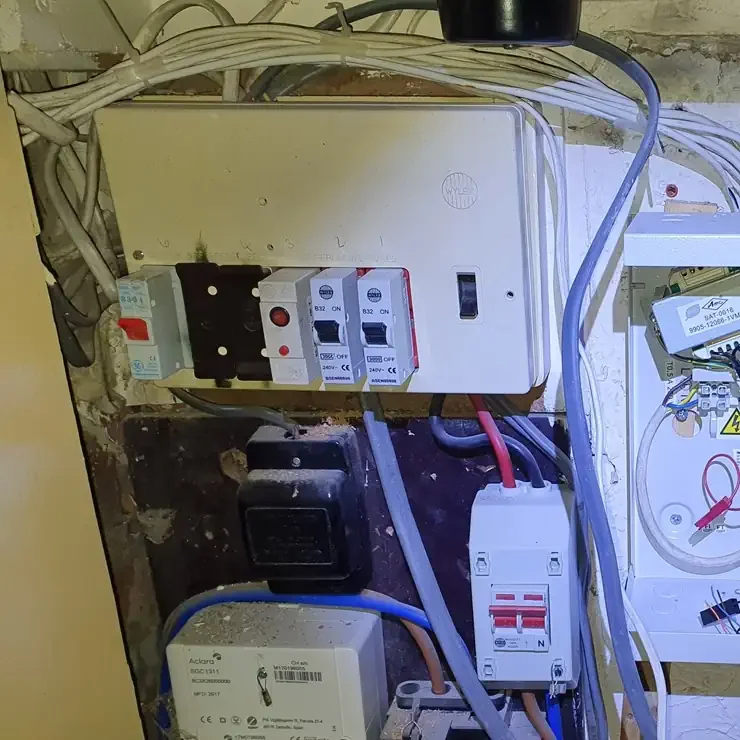
If your fuse box has little ceramic fuse carriers that you replace with fuse wire, it's well past retirement age.
These old systems:
don't provide RCD protection
are slower to disconnect dangerous faults
often fail modern safety standards
They're still found in plenty of older Liverpool terraces.
Just because it still works doesn't mean it's safe.
2. Your Fuse Box Feels Warm
A consumer unit should never become hot.
Warm cables or slight warmth under heavy load can be normal.
But if the front cover feels hot, something isn't right.
Possible causes include:
loose connections
overloaded circuits
damaged breakers
failing terminals
Heat is one of the first signs of an electrical fire developing.
3. You Smell Burning Plastic
Never ignore this.
A burning smell often means:
melting insulation
overheating cables
damaged breakers
loose electrical connections
Even if the smell disappears after a while, the damage usually doesn't.
Turn off the power if it's safe to do so and call an electrician immediately.
4. Breakers Keep Tripping
Circuit breakers are meant to trip.
They're protecting you.
But if one keeps tripping every few days or every time you boil the kettle, something needs investigating.
Common causes include:
faulty appliances
overloaded circuits
damaged wiring
moisture
failing breakers
Resetting it over and over isn't fixing the problem.
5. Flickering Lights
Not every flickering light means a dangerous fuse box.
Sometimes it's just a loose lamp.
But if lights flicker throughout the house, especially when appliances switch on, it could indicate:
loose connections
overloaded circuits
failing consumer unit components
voltage issues
It's worth getting checked before it becomes something more serious.
6. Buzzing or Crackling Noises
Electricity should be almost silent.
If your fuse box makes:
buzzing
crackling
sizzling
popping sounds
there could be electrical arcing inside.
Arcing creates extremely high temperatures and is one of the leading causes of electrical fires.
That's definitely not something to leave until next week.
7. Rust or Water Damage
Water and electricity don't get on.
Signs include:
rust
corrosion
damp marks
water stains
This often happens where consumer units are fitted under leaking stairs, near pipes or in damp garages.
Water damage can cause hidden faults that become dangerous months later.
8. Scorch Marks Around Breakers
Black marks are never "normal."
They usually mean overheating has already happened.
The cause could be:
loose terminals
overloaded circuits
damaged breakers
internal faults
If you see burn marks, switch off the supply if safe and arrange an inspection.
9. Your Consumer Unit Is Over 25 Years Old
Age alone doesn't always make it unsafe.
But older units usually lack:
RCD protection
Surge Protection Devices (SPDs)
Arc Fault Detection Devices (AFDDs), where appropriate under current standards
Electrical safety has improved massively over the past two decades.
An older unit may have worked perfectly for years, but it won't offer the same level of protection as a modern installation.
10. DIY Wiring Inside
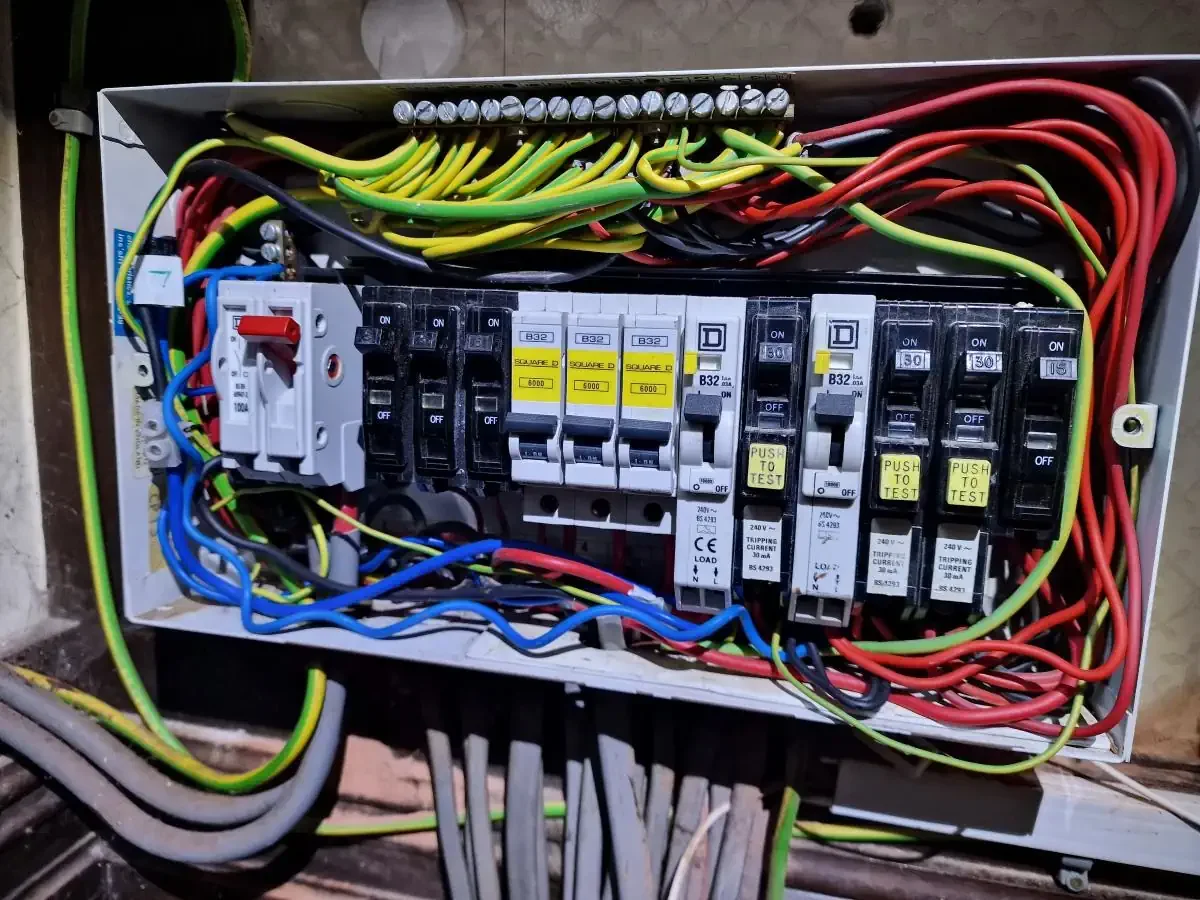
I've opened plenty of fuse boxes where someone has clearly thought, "That'll do."
Inside I've found:
taped cables
mixed cable sizes
loose conductors
incorrect breakers
damaged busbars
If you've inherited DIY electrical work, it's worth getting everything checked properly.
It could save a lot more than money.
11. Your Lights Dim When Appliances Start
Does the kettle make the lights dip?
What about the shower?
Or the oven?
Small changes can happen occasionally.
Large or frequent voltage drops often point towards:
overloaded circuits
poor connections
supply issues
ageing electrical equipment
12. There's No RCD Protection
RCDs save lives.
They disconnect the electricity in milliseconds if they detect dangerous leakage current.
Without one, the risk of serious electric shock is much higher.
If pressing the TEST button doesn't switch the power off, or there isn't one at all, have it inspected.
Test your RCD every few months following the manufacturer's guidance.
Can an Old Fuse Box Fail an EICR?
Yes.
During an Electrical Installation Condition Report (EICR), an electrician assesses whether your installation is safe for continued use.
An older fuse box may receive observations because of missing safety features or defects. Whether the overall result is satisfactory depends on the condition of the installation and the specific findings—not simply its age.
Should You Replace It Immediately?
Not always.
A replacement is normally recommended if:
it's damaged
there's evidence of overheating
it has no RCD protection where required
breakers are faulty
it's unsafe
you're carrying out major electrical work
an inspection identifies significant issues
Every property is different, so the best starting point is a professional inspection.
How Much Does a Consumer Unit Replacement Cost?
The cost depends on:
number of circuits
condition of existing wiring
testing required
additional protection devices
whether remedial work is needed
A proper quotation should always include inspection, testing and certification—not just swapping the box.
If someone offers to change a consumer unit in an hour for a bargain price, I'd be asking a few questions.
A Quick Word from a Dan
Around Liverpool, we still come across plenty of homes with fuse boxes that have been soldiering on since the 1970s or 80s.
Some are still working.
Some are one fault away from causing a serious problem.
The tricky bit is that dangerous electrical issues often stay hidden until something finally gives up. That's why it's worth having your installation checked before it turns into an emergency.
Frequently Asked Questions
Is an old fuse box illegal?
No. An older fuse box isn't automatically illegal simply because of its age. However, it may not meet current safety standards or provide the level of protection expected in modern homes.
Can a fuse box catch fire?
Yes. Loose connections, overloaded circuits, damaged components and electrical arcing can all generate enough heat to start a fire.
How often should a consumer unit be inspected?
Homeowners should have their electrical installation inspected periodically, particularly if the property is older or you're buying a home. Landlords have separate legal inspection requirements.
Should I press the TEST button?
Yes. Modern RCDs should be tested periodically in line with the manufacturer's instructions. If the device doesn't trip, arrange for an electrician to investigate.
Is replacing a fuse box a big job?
Most replacements can be completed in a day, but they also require inspection, testing and certification. Sometimes additional remedial work is needed if faults are discovered.
Final Thoughts
Your fuse box quietly protects your home every single day. Most of the time, you don't even notice it's there—and that's exactly how it should be.
But if it's showing signs of overheating, tripping constantly, making strange noises, or it's still one of the old rewireable types, don't put it on the long finger. Getting it checked now is a lot cheaper, and a lot less stressful, than dealing with the aftermath of an electrical fire.
If you're in Liverpool, Wirral or the surrounding areas, a professional inspection can quickly tell you whether your consumer unit is safe, needs repairs, or has reached the point where replacement is the sensible option.