

EV Charger Installation in Liverpool & Birkenhead
Ready to charge your electric car at home?
Dan Electrician provides professional EV charger installation across Liverpool, Birkenhead and the Wirral, with the existing electrical installation assessed before the charging point is fitted.
From choosing a suitable location and cable route to checking the electrical supply, protective devices and final testing, we’ll make sure the charger installation is planned around your property and the way you use your vehicle.
NICEIC Registered · Fully Insured
30+ Years’ Electrical Experience
Home EV Charger Installation · Testing & Certification
Is Your Home Ready for an EV Charger?
Installing an EV charger involves more than fixing a charging unit to the wall.
The existing electrical installation needs to be considered so the charger, supply cable and protective equipment are suitable for the property.
In many homes, an EV charger can be installed without major electrical alterations. Where improvements are genuinely needed, we’ll explain what has been found before recommending additional work.
Existing Electrical Supply
The electrical supply to the property needs to be suitable for the additional demand created by EV charging.
The assessment considers the existing installation and other significant electrical loads within the home before the charger arrangement is finalised.
Charger Location
The position of the charger affects both convenience and installation.
We’ll consider:
Where the vehicle is normally parked
Charging cable reach
Driveway or parking arrangement
Cable route from the electrical supply
Exposure to outdoor conditions
Safe and practical access to the charger
Consumer Unit
The existing consumer unit and available circuit arrangements are checked before a new EV charging circuit is connected.
An older consumer unit does not automatically mean it must be replaced simply because you are installing an EV charger.
Where additional protection or alteration is required, we’ll explain why.
Earthing & Electrical Protection
The earthing arrangements and protective measures need to be suitable for the EV charging installation.
The exact protection depends on the charger, electrical installation and design of the circuit.
Dedicated EV Charging Circuit
A home EV charger normally requires an appropriately designed electrical circuit rather than being treated like an ordinary socket-outlet.
The cable, protective device and installation method are selected to suit the charger and the route through the property.
Cable Route
Some charger installations have a simple cable route from the consumer unit to the driveway.
Others may require cables to pass through garages, loft spaces, external walls or other parts of the property.
Planning the route beforehand helps keep the installation neat and avoids unnecessary disruption.
An EV charger should be designed around the electrical installation already in the property. A consumer unit upgrade or other major work should only be recommended where the assessment shows it is actually required.
What Happens During an EV Charger Installation?
A home EV charger installation should be planned around the property, the existing electrical installation and where the vehicle is normally parked.
The exact process varies from one home to another, but a typical installation follows these stages.
1. Electrical Assessment
Before installation, we assess the existing electrical supply, consumer unit, earthing arrangements and available capacity.
This helps determine whether the charger can be connected to the existing installation or whether any additional electrical work is genuinely required.
Read more about Home Rewiring
4. Charger Installation
The charging unit is securely mounted and connected to the new circuit.
Any manufacturer-specific protective requirements and installation instructions are taken into account.
2. Charger Location & Cable Route
We agree a practical charger position based on where the vehicle is parked and how the charging cable will be used.
The cable route from the electrical supply to the charger is then planned to keep the installation safe, tidy and as unobtrusive as practical.
5. Inspection & Testing
Once installed, the circuit and charging equipment are inspected and electrically tested.
This confirms that the protective measures and electrical installation are operating as intended before the charger is put into service.
read more about Testing and Certification
3. Dedicated Charging Circuit
The charger is supplied by an appropriately designed electrical circuit.
The cable size, protective device and installation method are selected to suit the charger, circuit length and installation conditions.
6. Setup & Handover
Where required, the charger is configured and connected to the relevant app or control system.
We’ll explain how to use the charger, any important settings and the main protective devices associated with the installation.
A good EV charger installation is not just about mounting the unit on the wall. The supply, circuit protection, cable route and testing all need to work together as one properly designed installation.
Do I Need a New Consumer Unit for an EV Charger?
Not necessarily.
Installing an EV charger does not automatically mean your existing consumer unit has to be replaced. The important question is whether the current installation can safely accommodate the new charging circuit and the protective measures required for the charger.
The consumer unit, available ways, existing protective devices and overall condition of the installation should be assessed before deciding whether any upgrade is needed.
When the Existing Consumer Unit May Be Suitable
If the consumer unit is in satisfactory condition, has suitable protective arrangements and there is an appropriate way to connect the new EV circuit, the charger may be installed without replacing the entire board.
The final decision depends on the actual installation and the charger being fitted.
What Is Open PEN Protection?
Many UK homes use a PME earthing arrangement.
For EV charging, additional measures may be required to protect against an open PEN conductor fault. Modern charging equipment may incorporate this protection, while other installations may require a separate device or alternative design solution. Current IET guidance recognises dedicated open PEN detection devices for this purpose.
When Additional Protection May Be Needed
EV charging equipment has specific electrical protection requirements.
Depending on the charger and installation, this can include appropriate RCD protection, overcurrent protection and measures associated with open PEN conductor faults on PME supplies. The exact arrangement must be designed around the charger and current wiring requirements.
When Might a Consumer Unit Upgrade Be Recommended?
An upgrade may be worth considering where:
There is no suitable way to add the EV charging circuit
Existing protective equipment is unsuitable
The consumer unit is damaged or in poor condition
Testing identifies other issues that need correcting
The installation requires additional equipment that cannot reasonably be accommodated
A wider electrical upgrade is already planned
What About RCD Protection?
The charging point requires appropriate residual-current protection, but that protection may be built into the EV charger itself or provided elsewhere in the installation.
This should be confirmed from the charger manufacturer’s information rather than assuming an additional RCD is always required in the consumer unit.
Read more about RCD protection
Could a Separate EV Consumer Unit Be Used?
Sometimes a separate distribution arrangement can be a practical option instead of replacing the main consumer unit.
Whether that is appropriate depends on the supply arrangement, location, protective devices and the design of the installation.
We Check Before Recommending an Upgrade
The existing consumer unit should be assessed before additional work is recommended.
If your current board can safely support the EV charging installation, there is no reason to replace it simply because you are fitting a charger.
Which EV Charger Is Right for Your Home?
The best EV charger is not simply the most powerful or most expensive unit.
It should suit the vehicle, the electrical installation, where the car is parked and how you normally charge.
7 kW Home EV Chargers
For many UK homes, a 7 kW single-phase charger is the practical standard for overnight charging.
The exact charging speed also depends on the vehicle’s onboard charger, so fitting a more powerful unit does not always mean the car will charge faster.
Solar-Compatible Charging
If you already have solar PV, or you are considering it in the future, some EV chargers can be configured to make greater use of surplus solar generation.
Compatibility varies between charger models and energy systems, so this should be considered before choosing the unit.
Tethered vs Untethered Chargers
A tethered charger has a charging cable permanently attached to the unit.
This is convenient because the cable is always ready to use, but the cable remains visible at the charger.
An untethered charger uses a removable cable.
This can give a neater appearance when the charger is not in use, but you need to connect and store the cable separately.
Load Management
Some properties benefit from a charger with load-management capability.
This can monitor the electrical demand within the property and reduce the EV charging load when other high-demand equipment is being used.
It can be particularly useful where the available supply capacity needs to be managed carefully.
Read more about Shower installation
Smart EV Charging
Modern home chargers can include smart features such as:
Scheduled charging
Off-peak tariff charging
App control
Energy-use monitoring
Remote charging controls
Load management
Smart charging can help you take advantage of cheaper electricity periods where your energy tariff supports them.
Charger Location & Appearance
The physical design of the charger also matters.
Think about:
Where it will be mounted
Whether the cable reaches the vehicle comfortably
How visible the unit will be from the road
Whether the parking arrangement may change
Exposure to weather
Whether a tethered cable can be stored neatly
Choose the Charger Around the Property as Well as the Car
Your current vehicle may change long before the electrical installation does.
Where practical, it makes sense to choose a charger and circuit arrangement that works with the property and provides sensible flexibility for future vehicles.
The right EV charger should suit your car, your home and the electrical installation — not simply whichever model has the longest feature list.
How Much Does an EV Charger Installation Cost?
Installation typically starts from £300, up to around £1,700, covering labour, parts, testing, VAT and certification —
this excludes the EV charger unit itself, which is priced and supplied separately depending on the make and model you choose.
Where your installation falls within that range depends on the cable route, the condition of the existing consumer unit, any additional protective equipment required, and the complexity of the parking arrangement.
What Can Affect the Price?
Type and brand of EV charger
Length and complexity of the cable route
Charger location
Distance from the consumer unit
Existing consumer unit condition
Additional protective equipment required
Earthing and supply arrangements
Load-management requirements
Outdoor cable protection or trenching
App setup or smart-charging configuration
What if the Consumer Unit Needs Work?
If the existing consumer unit cannot safely accommodate the charging circuit, additional work may be required.
That does not automatically mean a complete consumer unit replacement.
Depending on the installation, the solution may involve additional protective equipment or a separate distribution arrangement.
Any extra work should be explained before it is carried out.
Standard Installation vs More Complex Installation
A standard installation may involve a relatively short cable route, suitable existing electrical equipment and straightforward access between the consumer unit and charging point.
A more complex installation may require longer cable runs, external routing, additional protective equipment, load management or changes to the existing electrical installation.
Longer Cable Routes
The distance between the electrical supply and parking space can have a significant effect on the installation cost.
A charger mounted next to a garage consumer unit will normally be simpler than one requiring cable to run around the outside of a property, through a loft or across several areas of the building.
Load Management & Additional Equipment
Where the available electrical supply needs to be managed, a charger may require load-management equipment or compatible monitoring devices.
This can increase the installation cost but may help avoid unnecessary upgrades to the incoming electrical supply.
Does the Charger Price Include Installation?
Not always.
Some EV chargers are sold separately from installation, while other packages combine the charger and electrical work.
When comparing prices, check whether the quotation includes:
EV charger itself
Dedicated charging circuit
Protective devices
Cable and containment
Installation labour
Electrical testing
Charger setup
Certification
Any required additional electrical work
Clear Quote Before Installation
Once the property, charger location and existing electrical installation have been assessed, we can provide a quotation based on the work actually required.
A proper EV charger quotation should explain the charger, circuit, protective equipment, cable route, testing and any additional electrical work — not just give one headline price with important extras added later.
EV Charger Installation, Testing & Certification
An EV charger installation is not complete when the unit is simply mounted on the wall and switched on.
The new charging circuit needs to be inspected and tested, the protective measures verified and the relevant electrical documentation completed before the charger is handed over for normal use.
Electrical Inspection & Testing
Once the charging circuit is installed, the electrical work is inspected and tested.
Depending on the installation, this can include checks on:
Continuity
Insulation resistance
Polarity
Earthing
Protective devices
RCD operation where applicable
Earth fault loop impedance
Correct operation of the EV charging equipment
The aim is to confirm that the new circuit and its protective measures operate as intended.
Electrical Installation Certificate
A dedicated EV charging circuit is new electrical installation work, so following satisfactory testing an Electrical Installation Certificate (EIC) should be issued for the work.
For OZEV-authorised installations, current government requirements specifically require installers to issue a BS 7671 Electrical Installation Certificate to the customer.
What You Receive After Installation
Installed and tested EV charger
Electrical Installation Certificate
Building Regulations notification/compliance documentation where applicable
Charger commissioning and setup
Explanation of the charging controls and protective equipment
DNO notification handled where required
Part P Building Regulations
In England, installing a new electrical circuit in a dwelling is notifiable work under Part P of the Building Regulations.
That means a typical home EV charger installation supplied by a new dedicated circuit will normally require Building Regulations notification. The IET confirms that installation of a new circuit is notifiable work under Part P.
Where the installer is registered with an appropriate Competent Person Scheme, the Building Regulations notification can normally be handled through that scheme.
Current EV Charging Requirements
EV charging installations should be designed and installed in accordance with the current electrical requirements, including BS 7671, relevant EV charging standards and the IET Code of Practice for Electric Vehicle Charging Equipment Installations. Current GOV.UK specifications for eligible residential chargepoints explicitly reference BS EN 61851, BS 7671 and the IET EV charging Code of Practice.
The current edition of the Wiring Regulations is BS 7671:2018+A4:2026.
DNO Notification
The Distribution Network Operator may need to be informed about the EV charger installation.
For a single domestic charger, the installer should follow the relevant network connection process to determine whether the DNO needs to be contacted before installation or notified afterwards.
For OZEV-authorised installations, installers are required to notify the relevant DNO of installed chargepoints and retain evidence of that notification.
Charger Commissioning & Setup
Once the electrical installation has passed testing, the charger is commissioned and checked for correct operation.
Where applicable, this can include:
Connecting the charger to Wi-Fi or mobile data
Setting up the manufacturer’s app
Configuring scheduled charging
Setting load-management parameters
Checking smart charging functions
Confirming the vehicle can charge correct
A professional EV charger installation should leave you with a properly tested charging circuit, the relevant electrical documentation and a charger that is ready to use — not simply a box fixed to the wall.
Do I Need Permission to Install an EV Charger?
For many homes with private off-street parking, installing an EV charger in England can fall under permitted development rights, which means a separate planning application is often not required.
However, permission can still be needed depending on the property, parking arrangement and where the charger will be installed. (planningportal.co.uk)
Homes With Off-Street Parking
Where you have a driveway or other private off-street parking, a wall-mounted EV charger will often qualify as permitted development provided the installation meets the relevant conditions.
For example, permitted development rights can be restricted around listed buildings, scheduled monuments and certain designated areas. (planningportal.co.uk)
Listed Buildings & Conservation Areas
Additional planning restrictions can apply to listed buildings, conservation areas and properties where normal permitted development rights have been restricted.
If the property falls into one of these categories, check with the local planning authority before installation. (planningportal.co.uk)
Can I Charge an EV From a Normal 3-Pin Socket?
Yes — some electric vehicles can be charged using a portable charging lead fitted with a standard UK 13 A plug.
This is commonly referred to as Mode 1 or Mode 2 charging. However, charging an electric vehicle places a sustained electrical load on the socket for a long period, so it should not automatically be treated in the same way as plugging in an ordinary household appliance.
The IET specifically distinguishes between an ordinary domestic socket and a BS 1363-2 socket intended for EV charging, which is subject to additional requirements and testing.
READ MORE ABOUTE SOCKETS INSTALLATION
Why Is 3-Pin Charging Slower?
A domestic socket provides considerably less charging power than a typical dedicated home EV chargepoint.
Dedicated residential charging equipment is designed specifically for EV charging and current government technical specifications recognise standard AC home charge points in the 3.5 kW to 7 kW range.
For regular home charging, that can make a substantial difference to how conveniently the vehicle can be recharged overnight.
Is Every 13 A Socket Suitable for EV Charging?
No assumption should be made simply because the plug fits.
The IET notes that where a BS 1363 socket-outlet is specifically intended as an EV charging point, it must meet the relevant EV requirements of BS 1363-2 and be appropriately marked. These EV-rated sockets undergo additional testing compared with an ordinary domestic 13 A socket.
If you regularly charge an EV from an existing socket, it is sensible to have the electrical installation and socket arrangement assessed rather than assuming it is suitable for prolonged charging.
Flats & Leasehold Properties
If you live in a flat or leasehold property, you may need permission from the freeholder, landlord or property management company before installation.
Current government guidance for renters and flat owners specifically requires applicants to have the legal right to use the parking space and evidence of any necessary permissions, such as permission from a freeholder. (gov.uk)
What if You Park on the Street?
On-street parking is more complicated.
A charging cable should not simply be run across a public pavement without an approved arrangement. Cross-pavement charging solutions can involve highways permissions, licences and planning requirements depending on the local authority and installation. Current government guidance says private chargepoints serving on-street parking areas require planning permission unless a suitable local development order applies.
Why Does Continuous Load Matter?
EV charging can keep a circuit supplying a relatively high load for several hours.
That makes the condition of the socket, connections, wiring and protective devices particularly important.
Signs such as unusual heat, discolouration, burning smells or damaged plugs and sockets should never be ignored.
Rented Properties
Tenants should obtain permission from the landlord or other relevant property owner before an EV charger is installed.
The parking space also needs to be one that you have the legal right to use.
Cross-Pavement Charging
Some councils are introducing approved cable channels or other cross-pavement solutions that allow residents without driveways to charge vehicles parked on the road.
These arrangements are controlled by the local highway authority, so permission should be obtained before any work affects the pavement or public highway. (gov.uk)
Landlords Installing Chargers
Landlords can install EV charging infrastructure at eligible rental properties, but they need the legal right to the parking spaces and any land crossed by cables or equipment.
Current government grant guidance specifically requires proof of the necessary legal rights and permissions before installation work begins. (gov.uk)
Check Before Installation
If there is any uncertainty about ownership, lease restrictions, listed-building status or use of the public highway, it is better to confirm the necessary permissions before the charger installation is booked.
For a straightforward home installation on your own driveway, planning permission is often not required. Flats, rented homes, listed buildings and properties without off-street parking can require additional permissions.
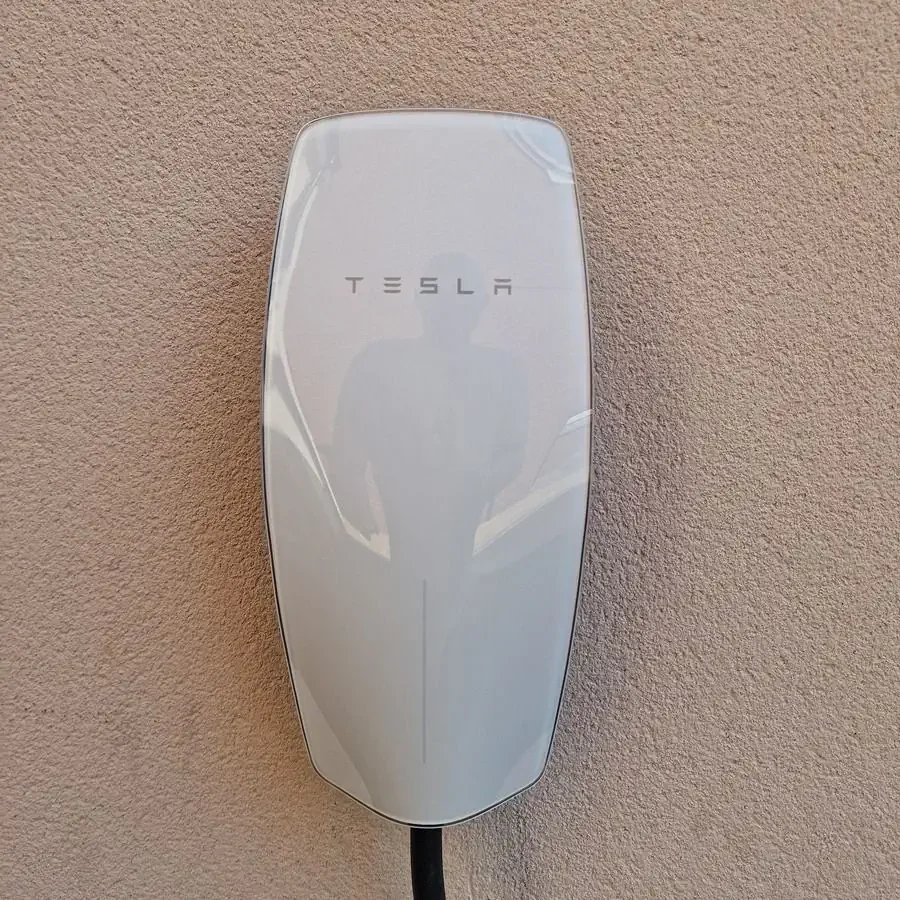
Portable Charger vs Dedicated Wall Charger
A portable 3-pin charging lead can be useful in some situations, but a dedicated wall-mounted chargepoint is designed specifically for regular EV charging.
A professionally installed charger can provide:
A dedicated electrical circuit
Appropriate EV charging protection
Faster charging
Smart scheduling
Load management where required
App monitoring on compatible chargers
Neater cable management
A permanent charging location
Current government specifications require dedicated chargepoint installations to comply with standards including BS EN 61851, BS 7671 and the IET Code of Practice for Electric Vehicle Charging Equipment Installations.
What if I Only Charge Occasionally?
If your vehicle manufacturer provides a compatible portable charging lead, occasional 3-pin charging may be possible.
However, if you expect to charge at home regularly, it is worth assessing whether a dedicated EV charger would provide a safer, faster and more practical long-term arrangement.
Already Charging From a Garage Socket?
Before assuming the existing socket is suitable, we can check the circuit, protective devices, socket condition and electrical installation.
You may find that the existing installation is perfectly serviceable — or testing may identify something that should be corrected before the socket continues to be used for prolonged vehicle charging.
Do I Need a 7 kW Charger?
Not necessarily.
The appropriate charger depends on the vehicle, property, available electrical supply and your normal charging routine.
For many homes, a 7 kW single-phase charger is a practical solution, but there is little benefit in choosing equipment simply because it has the highest advertised output if the vehicle or electrical installation cannot make use of it.
A 3-pin plug may charge the car, but a dedicated EV chargepoint is designed specifically for the job. For regular home charging, the electrical installation should be assessed and the charging method chosen around the vehicle and the property.
Can I Install an EV Charger With Solar Panels or Battery Storage?
Yes. An EV charger can be installed at a property that already has solar PV, battery storage or both.
In fact, some smart charging systems can work alongside onsite generation to help make better use of electricity produced by your solar panels rather than exporting all of the surplus energy to the grid. Government guidance specifically recognises combining EV charging with solar PV, battery storage and smart charging to optimise onsite electricity use.
The important thing is to look at the property as one electrical system rather than treating the charger, solar panels and battery as completely separate installations.
EV Charging With Battery Storage
A home battery can also form part of the overall energy arrangement.
Depending on how the system is configured, battery storage may hold surplus solar electricity for use later or help manage when electricity is imported from the grid.
Government guidance recognises battery storage alongside solar PV and smart charging as one way of managing electricity consumption more flexibly.
Load Management Still Matters
Solar panels do not automatically mean the property has unlimited electrical capacity.
The incoming supply, household demand, EV charger, battery system and other significant electrical loads still need to be considered when designing the installation.
Where appropriate, load management can reduce charging power when the rest of the property is using more electricity.
Smart Chargers & Energy Management
Smart EV chargers can provide functions such as scheduled charging, tariff-based charging and energy monitoring.
Smart charge points sold for private domestic and workplace use in Great Britain are subject to smart charging regulations intended, among other things, to allow charging at times of lower electricity demand or greater renewable availability.
Where the charger supports solar integration or dynamic load management, additional monitoring equipment may be required depending on the manufacturer and installation.
Existing Solar or Battery Equipment
If you already have solar PV or battery storage, tell us before the EV charger installation is planned.
Useful information includes:
Solar inverter make and model
Battery make and model
Existing generation capacity
Consumer unit arrangement
Location of the inverter and battery equipment
Whether you want surplus-solar charging
Whether you use a time-of-use electricity tariff
This helps determine which charger and control arrangement will work sensibly with the existing system.
READ MORE ABOUTE SOLAR INSTALLATION FAULTS
Solar panels, battery storage and EV charging can work very well together, but they should be considered as one coordinated electrical installation. The charger should be selected around the property, existing energy equipment and the way you want to charge the car.
EV Charger Installation Across Liverpool, Birkenhead & the Wirral
Dan Electrician installs home EV chargers across Liverpool, Birkenhead and the wider Wirral.
Whether you already own an electric vehicle or are preparing for one, we can assess the property, plan the cable route and install a dedicated charging circuit suited to the electrical installation.
EV Charger Installation Across the Wirral
Coverage extends across the Wirral, including areas such as Wallasey, Prenton, Bebington, Upton, Heswall, West Kirby, Hoylake and Bromborough.
We install chargers for properties with driveways, garages and other suitable private parking arrangements.
EV Charger Installation in Birkenhead
Dan Electrician is based in Birkenhead and provides EV charger installations throughout the local area.
We can assess the existing electrical installation, available capacity and parking arrangement before recommending the most practical charging setup.
Chargers for Existing EV Owners
If you currently rely on public chargers or occasional 3-pin charging, a dedicated home charger can make regular charging more convenient.
We can assess the existing installation and explain what electrical work is actually required before the charger is fitted.
Preparing for Your First Electric Vehicle
You do not need to wait until the car arrives before thinking about the electrical installation.
If you are ordering an EV, we can assess:
Consumer unit capacity
Likely charger location
Cable route
Earthing arrangement
Parking position
Future load-management requirements
Planning in advance can make the final installation much simpler.
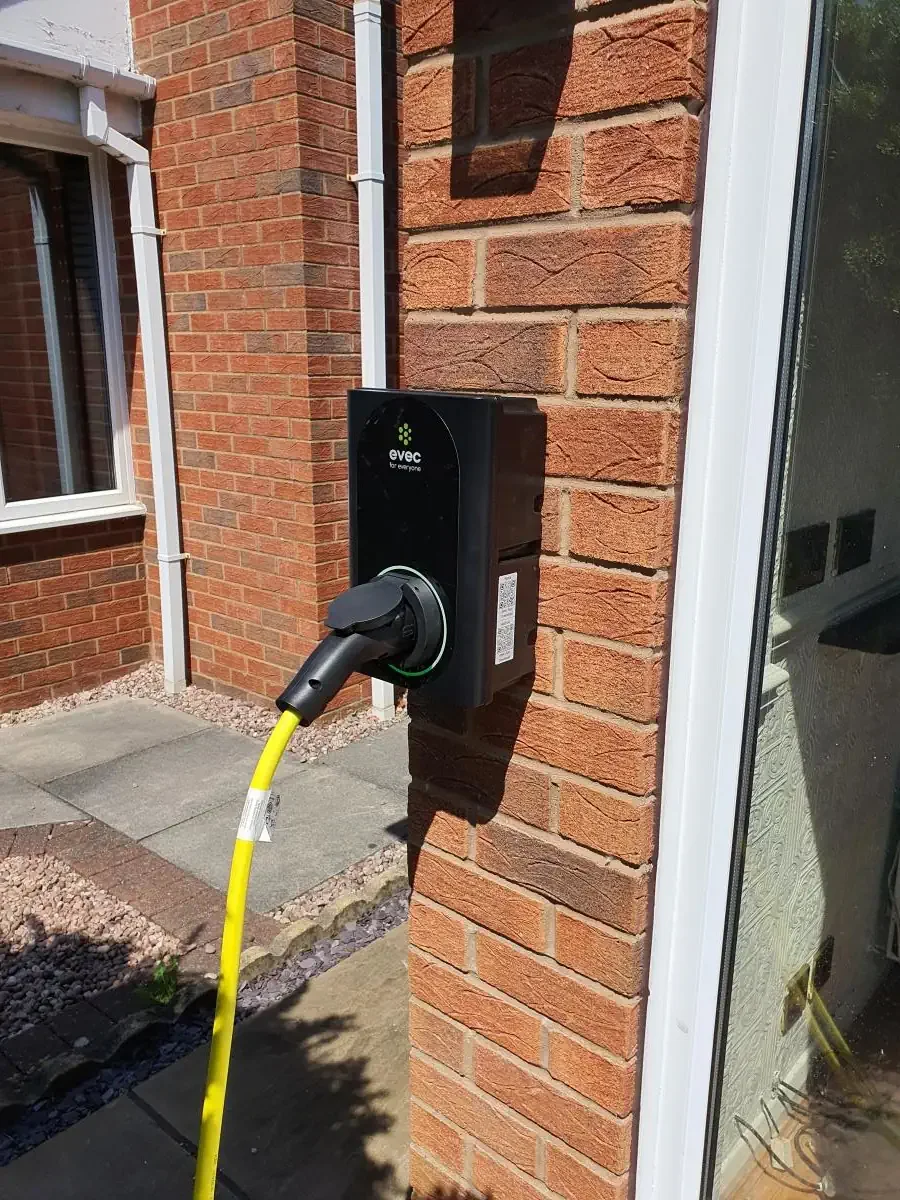
EV Charger Installation in Liverpool
Dan Electrician provides home EV charger installations across Liverpool for homeowners, landlords and suitable business premises.
We assess the existing electrical installation, available supply capacity, consumer unit and parking arrangement before planning the charging circuit. The cable route and charger position are agreed around the property so the finished installation is practical, tidy and suitable for regular home charging.
Installations can include:
Dedicated EV charging circuit
Consumer unit and supply assessment
Appropriate circuit protection
Load management where required
Indoor or external cable routing
Charger installation and commissioning
Electrical testing and certification
An EV charger should suit both the vehicle and the property. We assess the existing electrics first and only recommend additional upgrades where they are actually required.
EV Charging for Landlords & Businesses
EV charging can also be considered for rental properties and suitable commercial premises where there is a clear parking arrangement and the necessary permissions are in place.
The electrical supply and expected charging demand should be assessed before deciding on the number or type of chargerpoints.
Not sure whether your property is suitable for an EV charger? Tell Dan what vehicle you have, where you park and where the consumer unit is located, and we can advise on the likely installation requirements.
EV Charger Installation FAQs
-
The installation time depends mainly on the charger location, cable route and the existing electrical installation.
A straightforward installation with a short, accessible cable route can usually be completed much more quickly than a job requiring a long external cable run, additional distribution equipment or alterations to the existing electrics.
We’ll assess the likely installation before the work starts and explain what is involved.
-
Many UK homes with a suitable single-phase electrical supply can use a 7 kW home charger.
However, the available supply capacity, existing electrical demand, charger specification and vehicle all need to be considered before deciding on the final arrangement.
More advertised charger power does not automatically mean your particular car will charge faster.
-
Not automatically.
If the existing consumer unit is in satisfactory condition and can safely accommodate the new EV charging circuit, replacing the whole board may not be necessary.
Where additional protection or distribution equipment is required, we’ll explain the reason before recommending any upgrade.
-
A permanently installed home EV charger will normally have a dedicated electrical circuit designed for the charging equipment.
The cable, protective device and installation method are selected around the charger and the conditions of the installation.
-
Some vehicles can use a compatible portable charger connected to a suitable 13 A socket.
However, EV charging places a sustained load on the electrical installation for long periods.
For regular home charging, a properly installed dedicated chargepoint normally provides a faster and more practical arrangement.
-
There is no single distance that applies to every installation.
Longer cable routes are possible, but the route, cable size, installation method, voltage drop and physical protection all need to be considered during the design.
A longer or more difficult cable route can also increase the installation cost.
-
Yes.
An EV charger can be installed at a property with solar PV, and some compatible smart chargers can make greater use of surplus solar generation.
If you want solar-integrated charging, tell us before choosing the charger so the existing inverter, monitoring and electrical arrangements can be considered.
-
Yes.
EV charging, solar PV and home battery storage can all operate at the same property.
The important thing is to consider the overall electrical demand and how the different systems are intended to work together.
-
Load management allows a compatible EV charger to adjust its charging demand according to the electricity being used elsewhere in the property.
For example, the charger may temporarily reduce charging power while other high-demand equipment is operating.
This can help manage the available electrical supply without unnecessarily limiting normal household use.
-
Neither is automatically better.
A tethered charger has its cable permanently attached, making everyday charging very convenient.
An untethered charger uses a removable cable and can look neater when it is not being used.
The best choice depends largely on personal preference, parking arrangement and how you want to use the charger.
-
Yes, although it is sensible to check that the charger is suitable for the property and electrical installation before buying it.
Different chargers have different requirements and features, including load management, solar integration, connectivity and protective measures.
Checking first can prevent buying equipment that is difficult or unnecessarily expensive to install.
-
For many straightforward installations at houses with private off-street parking, separate planning permission may not be necessary.
Different considerations can apply to flats, leasehold properties, listed buildings, rented homes and installations involving public pavements or on-street parking.
Where permissions may be required, these should be confirmed before installation.
-
Yes.
After satisfactory installation and testing, the appropriate electrical certification is provided for the new charging circuit.
Where Building Regulations notification is applicable, the relevant compliance documentation should also follow.
-
Where notification or an application to the Distribution Network Operator is required for the EV charging installation, the appropriate process should be followed as part of the installation.
The exact process depends on the electrical supply and charging equipment being installed.
-
Yes.
EV chargers can be installed at suitable rental and commercial properties where the electrical supply, parking arrangements and necessary permissions allow.
For multiple charging points, the expected electrical demand becomes particularly important and should be considered during the design stage.
-
Call Dan on 07400 238767 or send us a quote request.
It helps if you can provide:
Your postcode
Vehicle make and model
Charger make and model, if already chosen
Where the vehicle is parked
Approximate location of the consumer unit
Whether you have solar PV or battery storage
A photo of the consumer unit if available
You do not need to understand the electrical details yourself. We can assess what is required and explain the options clearly.