

RCD vs RCBO: What's the Difference and Which Is Better for Your Home
Electrical safety has changed dramatically over the past two decades. Modern consumer units now offer far greater protection against electric shock, electrical fires, and dangerous faults than older fuse boxes ever could.
One of the most common questions homeowners ask is:
"What's the difference between an RCD and an RCBO?"
Although they perform similar safety functions, they work differently and provide different levels of protection.
In this guide, you'll learn:
What an RCD is
What an RCBO is
The key differences between them
Which is better for your home
Whether upgrading is worth the investment
How the latest BS 7671 Wiring Regulations influence modern consumer units
Whether you're replacing an old fuse box, renovating your property, or simply want to improve your home's electrical safety, this guide will help you make an informed decision.
What Is an RCD?
RCD stands for Residual Current Device.
Its purpose is to protect people from electric shock and reduce the risk of electrical fires caused by earth leakage faults.
It constantly monitors the electricity flowing through a circuit.
Under normal conditions:
Electricity flows out through the live conductor
Returns through the neutral conductor
The current is balanced
If electricity leaks somewhere it shouldn't—perhaps through damaged insulation, faulty appliances, or even a person—the RCD detects the imbalance.
Within milliseconds, it disconnects the power.
What Does an RCD Protect Against?
An RCD helps protect against:
Electric shock
Faulty electrical appliances
Damaged wiring
Cable damage
Earth leakage
Some electrical fires
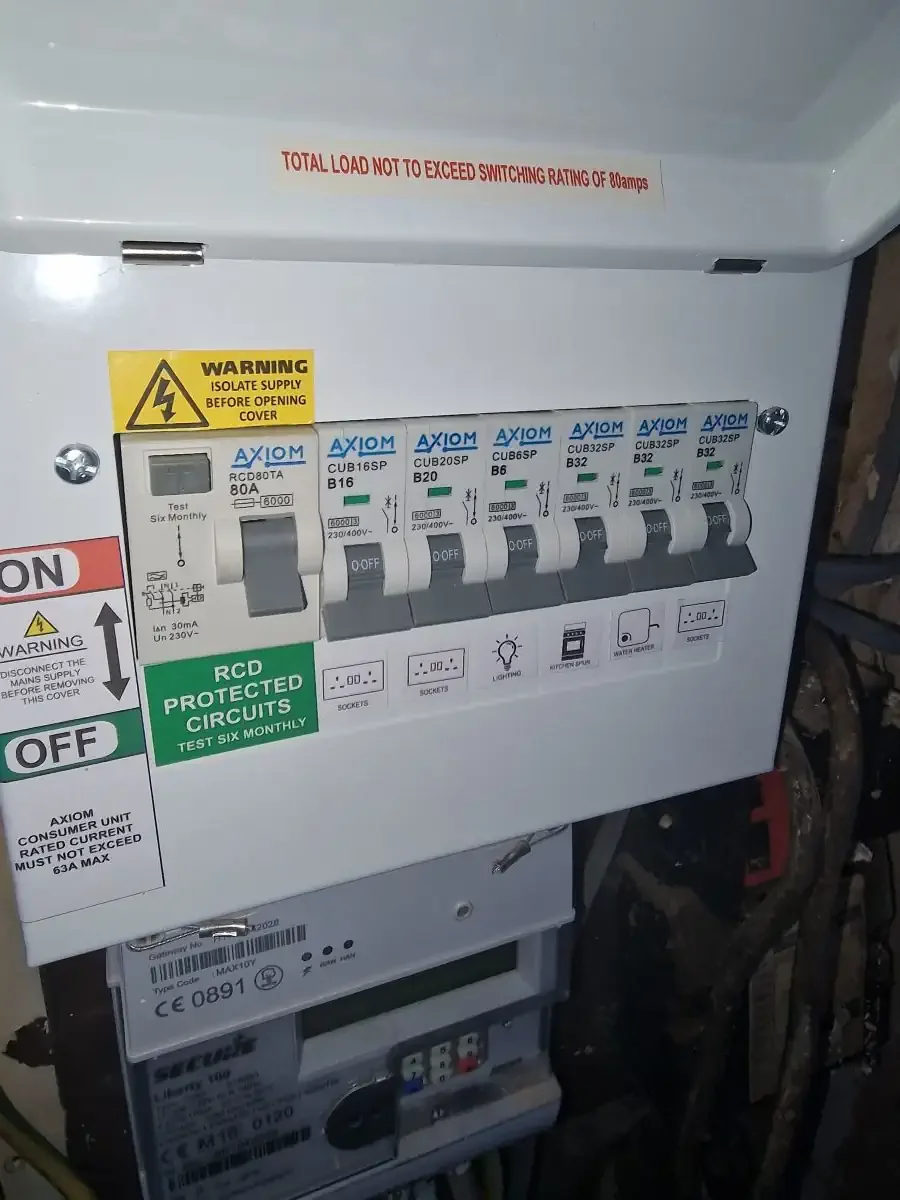
How Does an RCD Work?
Imagine electricity flowing through a pipe.
Everything that leaves should return.
If some escapes, something is wrong.
An RCD measures:
Outgoing current = Returning current
If the difference exceeds approximately 30mA, it disconnects the supply in around 30 milliseconds.
That speed can literally save lives.
What Is an RCBO?
RCBO stands for:
Residual Current Breaker with Overcurrent Protection
Think of it as combining two devices into one.
An RCBO protects against:
Electric shock
Earth faults
Overloads
Short circuits
Unlike an RCD, every circuit has its own dedicated protection.
How Does an RCBO Work?
Each RCBO continuously monitors its own circuit.
If it detects:
Earth leakage
Overload
Short circuit
It disconnects only that circuit, leaving the rest of the property unaffected.
For example:
If your garden socket develops a fault:
Garden sockets switch off
Kitchen stays on
Lighting remains on
Fridge keeps running
Boiler continues working
This is one of the biggest advantages of RCBO protection.
Why RCBOs Are Becoming the Standard
Modern consumer units increasingly use RCBOs instead of shared RCDs.
Why?
Because they provide:
Greater convenience
Better fault isolation
Improved electrical safety
Easier maintenance
Less nuisance tripping
Instead of one fault shutting down half the property, only the affected circuit trips.
What Happens When an RCD Trips?
In many homes, one RCD protects several circuits.
For example:
RCD 1 might protect:
Kitchen
Garage
Outdoor sockets
A fault anywhere on those circuits can disconnect everything.
You could suddenly lose:
Internet
Fridge freezer
Kitchen appliances
Home office equipment
Finding the faulty circuit can take time.
What Happens When an RCBO Trips?
An RCBO isolates only the faulty circuit.
Example:
Your washing machine develops an earth fault.
With RCBO protection:
Washing machine circuit trips
Lights stay on
Oven still works
Heating remains operational
Wi-Fi stays connected
Fault diagnosis becomes much quicker.
Why Electricians Prefer RCBO Consumer Units
Professional electricians generally recommend RCBO consumer units because they:
Minimise inconvenience
Improve fault diagnosis
Increase overall safety
Reduce unnecessary power loss
Comply with modern installation practices
They also make future additions much simpler.
Are RCBOs Safer Than RCDs?
In most situations: Yes.
Both protect against electric shock.
However, RCBOs also protect against overcurrent and short circuits, and individual circuit faults
That extra protection makes them the preferred solution for modern domestic installations.
RCD vs RCBO Cost Comparison
Although RCBO consumer units usually cost more initially, many homeowners find the additional investment worthwhile.
Benefits include:
Better protection
Fewer nuisance trips
Easier fault finding
Reduced inconvenience
Improved reliability
Considering a consumer unit often lasts 20 years or more, the long-term value is excellent.
Where Are RCDs Still Used?
RCDs remain suitable for:
Main switch protection
Certain commercial installations
Temporary electrical supplies
Individual socket protection
Many existing homes continue to use RCD protection safely.
However, when replacing a consumer unit, RCBOs are usually the preferred choice.
How AFDDs Fit Into Modern Consumer Units
Modern electrical safety doesn't stop with RCDs and RCBOs.
The latest edition of BS 7671 (IET Wiring Regulations) introduced increased use of Arc Fault Detection Devices (AFDDs) under Regulation 421.1.7.
An AFDD detects dangerous electrical arcing that traditional protective devices may not identify.
Electrical arcs can occur because of:
Loose electrical connections
Damaged cables
Crushed wiring
Worn accessories
Ageing electrical installations
These faults can generate intense heat and potentially lead to electrical fires.
What Does an AFDD Protect Against?
AFDDs are designed to detect:
Series arc faults
Parallel arc faults
Dangerous sparking
Hidden wiring faults
Fire risks caused by arcing
Signs You Should Consider Upgrading
Your consumer unit may need replacing if:
It still uses rewireable fuses
It has no RCD protection
Circuits trip regularly
The consumer unit is over 20–25 years old
You're carrying out a home renovation
You're installing an EV charger, heat pump, or solar system
Your electrician has identified safety concerns during an Electrical Installation Condition Report (EICR)
Upgrading to a modern consumer unit with RCBOs—and, where appropriate, AFDDs—can significantly improve safety and reliability.
Which Is Best for Liverpool and Wirral Homes?
For most homeowners across Liverpool and the Wirral:
RCBO consumer units are usually the best option.
They provide:
Better electrical safety
Less disruption
Faster fault finding
Individual circuit protection
Greater convenience
Improved compliance with current wiring standards
If you're already replacing your consumer unit, it's worth discussing RCBO and AFDD options with your electrician to future-proof your installation.
Frequently Asked Questions
Is an RCBO better than an RCD for home electrical safety?
Yes. An RCBO combines earth leakage, overload, and short-circuit protection into a single device, while also protecting individual circuits independently. This generally provides greater safety and convenience.
Can I replace an RCD with an RCBO?
In many cases, yes. However, compatibility depends on your existing consumer unit. An electrician can advise whether individual RCBOs can be installed or if a complete consumer unit replacement is the better option.
Why does my whole house lose power when one circuit has a fault?
This often happens because several circuits share one RCD. A fault on any protected circuit can trip the RCD and disconnect power to multiple areas of the home. RCBOs minimise this issue by protecting each circuit individually.
Are AFDDs required in domestic consumer units?
BS 7671 Regulation 421.1.7 recommends or requires AFDDs in certain circumstances, depending on the installation. Many homeowners choose to include them when upgrading a consumer unit for enhanced fire protection.
Should I upgrade my old fuse box to an RCBO consumer unit?
If your consumer unit is over 20 years old, still uses rewireable fuses, or lacks modern protective devices, upgrading to an RCBO-based consumer unit can improve safety, reliability, and compliance with current electrical standards.