Fuse Box vs Consumer Unit: What's the Difference?
Many homeowners still refer to their electrical panel as a fuse box, but modern homes are fitted with a consumer unit. While both serve the same basic purpose—distributing electricity safely throughout your home—they are very different in terms of technology, safety, and convenience.
If your property still has an old-style fuse box, upgrading to a modern consumer unit could significantly improve your electrical safety and help your installation comply with current UK regulations.
What Is a Fuse Box?
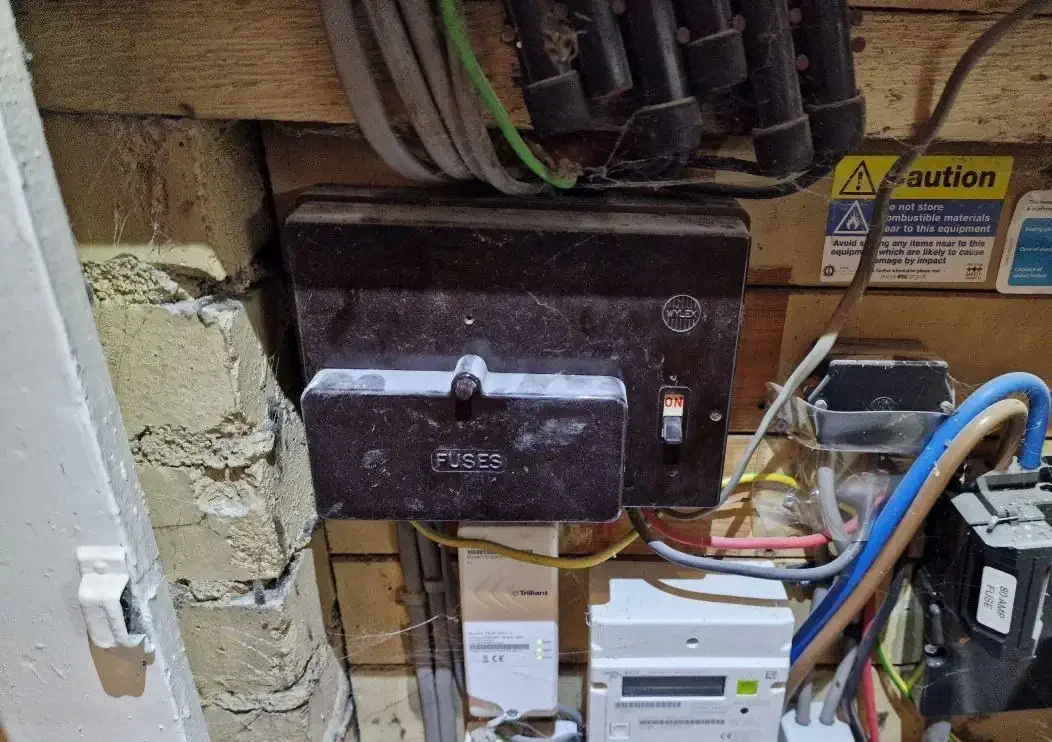
A traditional fuse box is an older electrical distribution board that uses replaceable wire fuses or cartridge fuses to protect electrical circuits.
When a fault occurs, the fuse wire melts ("blows"), cutting off power to prevent overheating or fire.
Characteristics of Old Fuse Boxes
Rewireable fuses
Ceramic fuse carriers
No RCD protection
Limited protection against electric shock
Slower fault isolation
Requires manual replacement of fuse wire
Although many older fuse boxes still function, they do not offer the level of protection expected under modern electrical standards.
What Is a Consumer Unit?
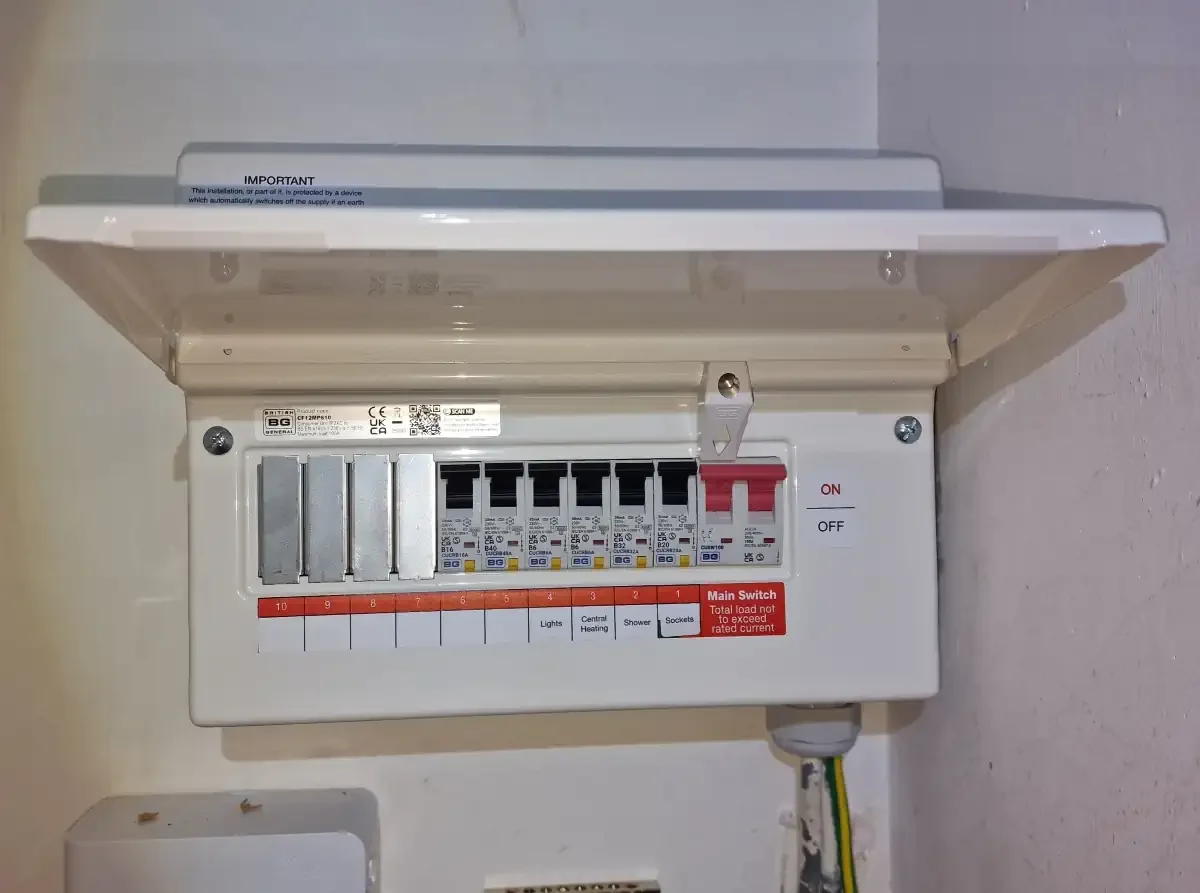
A consumer unit is the modern version of a fuse box.
Instead of replaceable fuse wire, it uses Miniature Circuit Breakers (MCBs), Residual Current Devices (RCDs), RCBOs, and Surge Protection Devices (SPDs) to protect your home.
Modern consumer units automatically disconnect faulty circuits almost instantly, helping to prevent:
Electric shock
Electrical fires
Cable overheating
Appliance damage
Dangerous faults
Why Modern Consumer Units Are Safer
Electrical regulations have improved significantly over the last few decades.
Today's consumer units provide multiple layers of protection that simply didn't exist when older fuse boxes were installed.
RCD Protection
Residual Current Devices monitor electricity flowing through your circuits.
If electricity begins leaking—perhaps through a damaged cable or a person—the RCD disconnects the power in milliseconds.
This greatly reduces the risk of serious electric shock.
MCB Protection
Miniature Circuit Breakers replace old fuse wire.
Instead of replacing a blown fuse, you simply reset the breaker once the fault has been repaired.
This makes fault recovery much quicker and safer.
RCBO Protection
Many premium consumer units now use RCBOs.
An RCBO combines:
Overload protection
Short circuit protection
Earth leakage protection
Each circuit is protected individually, meaning one fault won't shut down the entire property.
Surge Protection
Modern consumer units can include Surge Protection Devices (SPDs).
These help protect:
TVs
Computers
Smart home equipment
Boilers
Kitchen appliances
from voltage spikes caused by switching events or lightning-related surges.
Arc Fault Detection Devices (AFDDs)
One of the latest advancements in electrical safety is the Arc Fault Detection Device (AFDD).
Unlike circuit breakers or RCDs, an AFDD is specifically designed to detect dangerous electrical arcing. Arcing can occur when a cable is damaged, a connection becomes loose, or a conductor begins to deteriorate. These faults may not draw enough current to trip a standard circuit breaker, yet they can generate extremely high temperatures capable of starting a fire.
AFDDs continuously monitor the electrical waveform and disconnect the circuit if they detect the unique characteristics of a dangerous arc fault.
Common causes of arc faults include:
Loose electrical terminals
Damaged extension leads
Nails or screws penetrating hidden cables
Rodent damage
By detecting these hidden faults before they develop into a fire, AFDDs provide an additional layer of protection beyond conventional circuit breakers and RCDs.
BS 7671 Regulation 421.1.7
The current edition of BS 7671 recommends or requires consideration of Arc Fault Detection Devices (AFDDs) under Regulation 421.1.7 in specific types of premises where the consequences of fire are particularly serious.
These include locations such as:
Higher Risk Residential Buildings (HRRBs)
Houses in Multiple Occupation (HMOs)
Purpose-built student accommodation
Care homes
Certain residential buildings constructed from combustible materials
Although AFDDs are not mandatory for every domestic property, many electricians now recommend them for new consumer unit installations and rewires because they provide the highest level of fire protection currently available.
The Modern Consumer Unit: Five Layers of Protection
Today's premium consumer units can provide five independent layers of electrical protection:
MCB protects against overloads and short circuits
RCD protects against electric shock caused by earth leakage
RCBO combines MCB and RCD protection for individual circuits
SPD protects appliances from transient overvoltages and power surges
AFDD Detects dangerous arc faults that could lead to electrical fires
Together, these devices offer a comprehensive safety system that far exceeds the capabilities of traditional fuse boxes.
Signs You Still Have an Old Fuse Box
You may need an upgrade if you notice:
Ceramic fuse holders
Fuse wire that needs replacing
Wooden backboard installation
No test buttons
No RCD protection
Burning smell
Signs of overheating
Frequently blown fuses
Loose fuse carriers
If you're unsure, a qualified electrician can identify the type of installation during an inspection.
Is It Dangerous to Keep an Old Fuse Box?
Not every older fuse box is immediately unsafe.
However, older installations generally provide far less protection than modern consumer units.
Risks include:
Increased chance of electric shock
Higher fire risk
Lack of modern fault protection
No surge protection
Difficulty obtaining replacement parts
Many insurance companies and buyers also view outdated fuse boxes as a reason to recommend upgrades.
When Should You Replace a Fuse Box?
A consumer unit replacement is recommended when:
Buying an older property
Adding new circuits
Your fuse box has no RCD protection
An Electrical Installation Condition Report (EICR) identifies safety concerns
Does Replacing a Fuse Box Require Certification?
Yes.
Replacing a consumer unit is notifiable electrical work under Building Regulations Part P in England.
A registered electrician should:
Test the entire electrical installation
Install the new consumer unit
Complete all required certification
Notify Building Control where applicable
This ensures the installation is safe and compliant with current wiring regulations (BS 7671).
Benefits of Upgrading to a Modern Consumer Unit
Upgrading provides numerous advantages:
Improved electrical safety
Better protection against electric shock
Reduced fire risk
Easier resetting after trips
Individual circuit protection
Compatibility with modern appliances
Better support for EV chargers and solar installations
Increased property value
Greater peace of mind
Frequently Asked Questions
Is a fuse box the same as a consumer unit?
Not exactly. A consumer unit is the modern replacement for the traditional fuse box. It offers significantly improved safety features, including circuit breakers and RCD protection.
How much does it cost to replace a fuse box?
The cost depends on the size of your property, the number of circuits, and any additional work required. An electrician can provide a quotation after inspecting your existing installation.
Can I replace my own fuse box?
No. Consumer unit replacement should only be carried out by a qualified electrician, as it involves testing, certification, and compliance with UK electrical regulations.
How long does a consumer unit replacement take?
Most installations are completed within one working day, although larger or more complex properties may take longer.
Will my power be turned off?
Yes. The electricity supply will need to be isolated while the old fuse box is removed and the new consumer unit is installed.
Upgrade Your Electrical Safety with Dan Electrician
If your home still has an old fuse box, upgrading to a modern consumer unit is one of the best investments you can make for your family's safety. At Dan Electrician, we provide professional consumer unit replacements across Liverpool, Wirral, Birkenhead, Wallasey, Bebington, Heswall, West Kirby, Formby, Crosby, and surrounding areas.
As a NICEIC-registered electrician, we install high-quality consumer units that comply with the latest BS 7671 Wiring Regulations, complete with full testing and certification. Whether you're replacing an outdated fuse box, renovating your home, or preparing for an EV charger or solar installation, we can help.
Need advice or a free quotation? Contact Dan Electrician today and upgrade your home's electrical safety with confidence.